


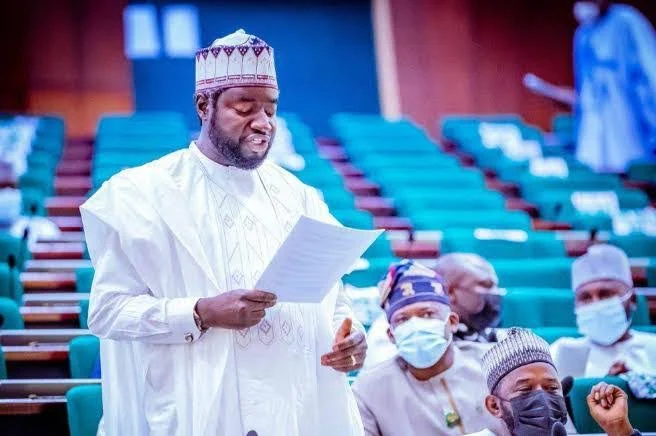
Fresh concerns have emerged over the House of Representatives’ investigation into the controversial Presidential Foreign Investment Promotion Council (PFIPC), with lawmakers and civil society groups accusing the panel of conducting an incomplete and one-sided probe ahead of its final report.
The House of Representatives ad hoc committee investigating the controversial Presidential Foreign Investment Promotion Council (PFIPC) has come under renewed criticism as it prepares to conclude its assignment in the coming weeks.
A member of the House, who spoke anonymously, questioned the decision to appoint the committee chairman, Yusuf Gagdi, to lead the investigation after he was the lawmaker who initially sponsored the motion calling for the probe.
According to the lawmaker, it was unusual for the person who initiated the investigation to also head the panel.
He also criticised the committee for failing to invite the President’s Chief of Staff, Femi Gbajabiamila, despite allegations linking him to the matter.
The lawmaker argued that the committee’s claim that signatures on documents differed from those on Gbajabiamila’s official correspondence was not enough to dismiss the allegations, noting that many public officials use multiple signatures.
He further accused the panel of conducting a one-sided investigation and shutting down attempts by other members to ask critical questions during public hearings.
Former Secretary-General of the Arewa Consultative Forum, Anthony Sani, also called for a more comprehensive investigation.
He said the circumstances surrounding the death of Dolapo Tanimola, who was reportedly identified as an intermediary in the alleged scandal, should be thoroughly examined.
Also Read: http://Navy Destroys Illegal Refineries, Recovers 61,000 Litres
Similarly, the Executive Director of the Civil Society Legislative Advocacy Centre (CISLAC), Ibrahim Rafsanjani, said the committee had not carried out a sufficiently independent or comprehensive investigation.
According to him, the investigation should go beyond determining whether an appointment letter was forged and instead establish how the disputed council gained access to government institutions, whether public funds were involved, and whether any senior public officials played a role.
Rafsanjani also faulted the committee for not thoroughly investigating the reported death of Tanimola, who was allegedly connected to the movement of ₦400 million reportedly linked to the controversy.
He stressed that investigators should trace the alleged funds through bank records, financial intelligence reports and other evidence, warning that failure to do so would leave significant gaps in the investigation.
He further urged the committee to invite every principal actor connected to the allegations, regardless of political status, and, if necessary, extend its mandate until all outstanding issues are addressed.
Public affairs analyst Jackson Ojo also questioned the credibility of the investigation, saying a proper probe required testimony from everyone directly linked to the allegations.
According to him, the absence of key individuals from the proceedings leaves important questions unanswered.
For the past three weeks, the 12-member committee has questioned several top government officials, including the Head of the Civil Service of the Federation, officials of the Central Bank of Nigeria, the Budget Office, and the Nigeria Police Force.
However, the committee has not invited the Chief of Staff to the President, Femi Gbajabiamila, who was accused by self-acclaimed PFIPC Director-General, Adeyemi Adeniyi, of receiving ₦400 million through the late Dolapo Tanimola.
Tanimola reportedly died in a fire incident at a hotel in Abuja where the alleged transaction was said to have taken place.
Meanwhile, Adeyemi, through his lawyer, Festus Akhigbe, has challenged the committee to allow him to appear before it, insisting that any report produced without allowing him to testify would violate his constitutional right to a fair hearing.
The controversy has continued to generate public interest as the committee moves closer to presenting its findings to the House of Representatives.
