


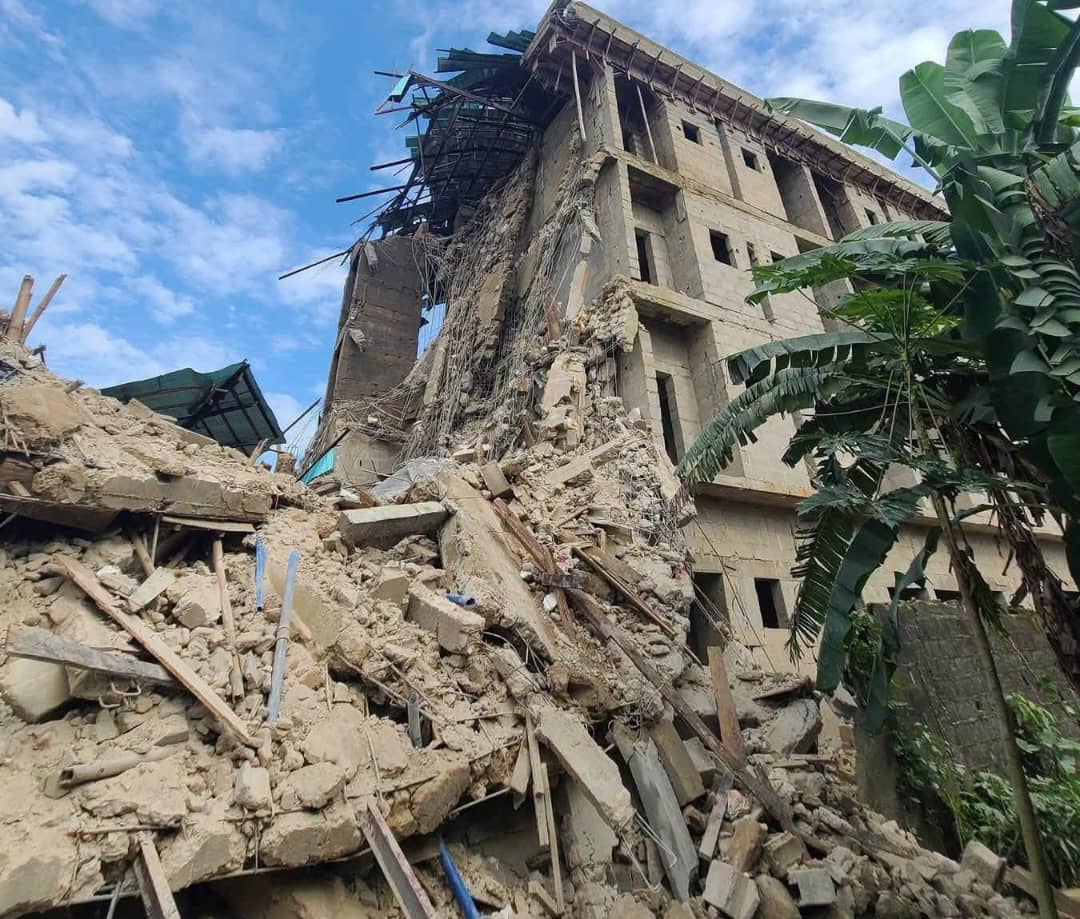
The collapse of a building is rarely just the failure of concrete and steel. More often, it is the failure of systems, regulations, professionalism, and accountability. When such incidents occur twice within 48 hours in the same city, they cease to be isolated accidents and instead become a reflection of deeper structural problems that demand urgent attention.
That is the uncomfortable reality, following the collapse of two buildings under construction within two days.
The first incident occurred on Monday along Slaughter Road, off Iwofe Road at Aker Junction, where part of a three-storey building gave way. Thankfully, no workers were inside the structure at the time, and no lives were lost.
Barely had the dust settled before another tragedy unfolded on Wednesday along Peter Odili Road near the Eterna Filling Station. A five-storey building under construction suddenly collapsed, trapping construction workers beneath the rubble and triggering frantic rescue operations by emergency responders and residents.
Heart-rending cries from victims trapped beneath the debris served as a painful reminder of how quickly a construction site can become the scene of a disaster.
Although the causes of both incidents remain under investigation, the recurrence of building failures within such a short period raises fundamental questions about the quality of construction, the enforcement of building regulations, and the level of professional oversight on projects across Rivers State.
In recent years, Port Harcourt has witnessed significant physical development, with residential estates, commercial complexes and high-rise buildings transforming the city’s landscape.
While this growth reflects economic expansion and increasing urbanisation, it also places greater responsibility on developers, regulatory agencies and construction professionals to ensure that every structure is built in accordance with approved engineering and safety standards.
Unfortunately, the pursuit of rapid development has, in many instances, been accompanied by cost-cutting measures that compromise structural integrity. Developers seeking to maximise profit sometimes engage unqualified personnel, substitute approved materials with cheaper alternatives or ignore established engineering specifications. Such decisions may reduce construction costs in the short term, but they significantly increase the risk of structural failure.
Also see: Rivers POCACOV Warns Drug Abuse Threatens Safety
The growing prevalence of quackery within the construction industry further compounds the problem. Individuals without the requisite qualifications continue to present themselves as engineers, architects and builders, undertaking projects that demand specialised technical expertise. In an industry where every calculation determines the stability of a structure, incompetence is not merely unprofessional—it is potentially fatal.
Equally concerning is the question of regulatory enforcement. Building approvals should not represent the end of government oversight. Construction sites require routine inspections to verify compliance with approved designs, assess the quality of materials being used and ensure that established safety procedures are being followed. Regulatory agencies must move beyond paperwork and embrace proactive monitoring capable of identifying problems before they evolve into disasters.
The implications of repeated building collapses extend beyond the immediate loss of property or human life. They undermine public confidence in the real estate sector, discourage investment and leave residents questioning the safety of buildings around them.
Construction workers, many of whom rely on daily wages to support their families, are forced to carry out their duties under the constant fear that the next collapse could claim their lives.
The fortunate outcome of the Iwofe incident should not diminish the seriousness of what occurred. Rather, it should be viewed as a narrow escape. The Peter Odili Road collapse illustrates what can happen when fortune no longer intervenes.
Where negligence is established, those responsible, whether developers, contractors or professionals who failed in their obligations, must be held accountable. Anything less would only reinforce a culture of impunity that has contributed to similar tragedies across the country.
