


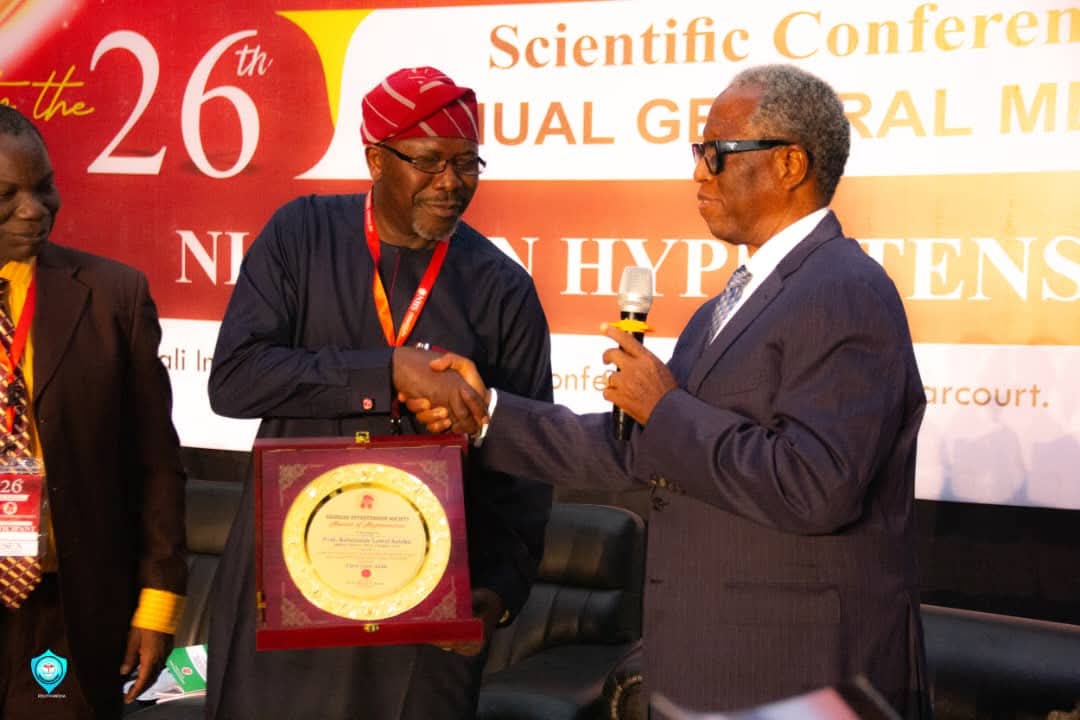
Medical practitioners have called for urgent, practical measures to be taken in addressing the increasing problem of hypertension in Nigeria.
The call stressed that it is now too late for awareness campaigns to effectively reduce the cases and complications arising from the condition in the country.
This demand emanated from the concluding session of the 26th Annual Scientific Conference of Nigerian Hypertension Society (NHS) organized recently at Rivers State University Teaching Hospital (RSUTH), Port Harcourt.
Specialists from all the six geopolitical zones of Nigeria met for the three-day event to review the hypertensive problems confronting the country.
An interesting point in the scientific session on the last day included a presentation which focused on the effects of hypertension on different geographical locations. It was revealed by the specialists that, although it is a nationwide problem, the causes of hypertension are quite different in each region of the nation.
Specialists who reviewed the situation in the South-South, for instance, cited urbanization, poor feeding habits and excess intake of salt as some of the main causes of hypertension in the region.
In the North East, the presentation was on the effect of insecurity and conflicts on accessibility to health care in the area and thereby the management of hypertension in the area. The experts in the North West cited cultural practices in terms of diet as the major contributors to the burden in the area.
Addressing the issue of the North Central region, Dr. Oladipupo Fasan spoke on the growing disparity between the rural and urban areas in terms of accessing primary healthcare, calling on the need for government intervention in order to help communities in accessing hypertension screening and treatment.
Also see: RSU Bans Student Driving After Fatal Campus Accident
Poorly controlled blood pressure was also another factor discussed at the conference, with Prof. Satonye Dodiyi-Manuel speaking on the adverse effects on the vital organs, such as the kidney, the heart, and the brain, among others, without the knowledge of patients.
Dr. Ernest Nwazor presented a very interesting topic on the acute stroke in patients and how it needs to be managed clinically by balancing lowering of blood pressure in patients.
Technology and health care was another aspect discussed at the conference through the presentation of Dr. Ovundah Nyeche.
According to him, artificial intelligence-based risk prediction, telehealth, and digital tools would go a long way in improving early diagnosis and long-term care even for patients in low-resource environments.
The event came to its conclusion with the Annual General Meeting of the Nigerian Hypertension Society, where new members were formally admitted into the organization. The leaders of the society expressed their optimism about the membership as a result of the increasing interest in hypertension among the nationals.
The three-day event was hosted by Prof. Chizindu Alikor, the Chief Medical Director of Rivers State University Teaching Hospital.
Delegates, researchers, and clinicians who were present made their renewed commitment to the fight against hypertension in Nigeria.
