


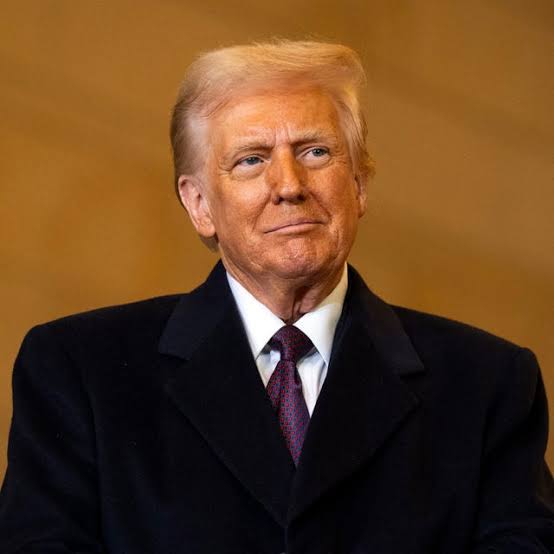
Something historic happened at the G7 summit in Évian-les-Bains, France, this past Tuesday, and most of the world’s commentariat has completely missed what it means.
Donald Trump, the most unconditionally pro-Israel American president in living memory, the man who moved the embassy to Jerusalem, recognised the Golan Heights, and gave Benjamin Netanyahu everything he asked for during his first term, publicly dressed down the Israeli Prime Minister on the world stage.
He called Israel’s strikes on Lebanon “vicious” and “too much.” He told Netanyahu he “has to be more responsible with respect to Lebanon.” He dismissed Hezbollah as “a little pinprick” and suggested Syria could handle them better than Israel has. He said, flatly: “Israel is fighting Hezbollah for too long, and too many people are being killed.”
Unprecedented does not begin to cover it.
The analysts are scrambling. The explainers are multiplying. The theories range from Trump’s Iran deal diplomacy to his transactional instincts to his mercurial temperament. They are all missing the simplest, most human explanation of all.
Donald Trump has a Lebanese grandson.
On the 15th of May this year, Tiffany Trump and her husband, Michael Boulos, welcomed their first child, Alexander Trump Boulos, into the world. Michael Boulos is Lebanese. His father, Massad Boulos, born in the northern Lebanese village of Kfaraakka — is now Trump’s Senior Adviser for Arab and African Affairs, the most senior American official handling the entire African continent and the Arab world simultaneously.
Every bomb that Israeli jets drop on Lebanese civilian infrastructure, every apartment block reduced to rubble in Beirut’s southern suburbs, every family displaced from Tyre or Sidon, these are falling on the ancestral homeland of Trump’s own grandchild. Blood is not a metaphor. It is the oldest political reality there is.
Netanyahu, in his tactical arrogance, failed to account for this. He has been so accustomed to unconditional American cover that he forgot to ask a simple question: who is now whispering in Trump’s ear about Lebanon? The answer, of course, is a man who grew up there, whose family is still there, whose entire political DNA is Lebanese — and who happens to be the father-in-law of the President’s daughter.
Massad Boulos has contacts across Lebanon’s entire fractured political landscape, from the Lebanese Forces to allies of Hezbollah itself. He is not an ideologue. He is an operator. And operators with a grandchild in the equation do not stay neutral.
Israel should have seen this coming. They didn’t.
But here is where my interest — and Nigeria’s — becomes acute.
Because Massad Boulos is not only a Lebanese patriarch advising Trump on Middle East affairs. He is a Nigerian businessman of thirty years’ standing, the longtime Managing Director and CEO of SCOA Nigeria PLC, a heavy truck and industrial equipment company that has spent those three decades supplying the machinery that builds Nigeria’s roads, construction sites, and infrastructure projects.
And among SCOA’s most significant clients, confirmed in the company’s own public statements, not in anonymous leaks, is the Chagoury Group.
Let that land.
The Chagoury Group. The conglomerate co-founded by Gilbert Chagoury, the man President Bola Tinubu has publicly called his “confidante,” the man who was secretly conferred Nigeria’s second-highest national honour, the GCON, in a ceremony so discreet it was hidden from the public record for weeks. The same Chagoury Group whose construction arm, Hitech Construction, was awarded the Lagos-Calabar Coastal Highway contract — thirteen billion dollars, no competitive bid, no tender process, no public scrutiny.
And Hitech Construction, per multiple Nigerian reports, depends significantly on SCOA Nigeria for the machinery it uses on that very project.
The man advising Trump on Africa is the man whose company supplies equipment to the contractor building Tinubu’s most politically loaded infrastructure project, which is itself financed by Tinubu’s most powerful financial patron.
I will let you draw your own conclusions about the geometry of that arrangement. But I will note this: Massad Boulos was required by law to file a financial disclosure before advising the President of the United States on matters affecting his own commercial interests. That disclosure — his OGE Form 278e — is not publicly available. The White House took its disclosure page offline.
Nobody has seen what he filed. Nobody knows whether the Chagoury connection was declared. Nobody knows whether any ethics agreement exists to govern how he handles Nigerian policy.
That is not a footnote. That is the ballgame.
Now, recall what Trump was saying about Nigeria just seven months ago.
In November 2025, he threatened military intervention. He redesignated Nigeria a Country of Particular Concern for religious freedom violations. He posted, with characteristic menace, that he would go into Nigeria “guns-a-blazing” to protect persecuted Christians. He ordered the Pentagon to begin planning. Congress followed with a bipartisan joint report delivered to the White House recommending sanctions, funding withholdings, and a bilateral protection agreement for Christian communities.
The noise was deafening.
And then, silence. Total, complete, inexplicable silence.
No sanctions implemented. No aid actually cut. No bilateral agreement signed. No follow-through of any kind. Trump, who had positioned himself as the champion of Nigeria’s beleaguered Christian communities, the people of Plateau State, Kaduna, Benue, dying in numbers that shame the international community, simply went quiet.
The question Nigeria must ask, loudly and without apology, is this: Who turned the volume down?
The answer, I submit, is not difficult to identify. Once Massad Boulos was installed as Africa adviser, once his son’s Lebanese-Nigerian business empire became entangled with the political interests of the Tinubu administration, once SCOA’s machinery began rolling on Chagoury’s no-bid highway, the incentive structure changed. Dramatically.
Tinubu’s people are not unsophisticated. Someone in Aso Rock, or more likely in the Lebanese-Nigerian commercial world that bridges both men, understood this geometry and acted on it. Keep the Boulos business comfortable. Keep the Chagoury contracts flowing. Keep Trump’s son-in-law’s commercial world prosperous in Nigeria. And Trump stays quiet, about the Christians, about the FOIA case, about the FBI and DEA files, about all of it.
This is what corruption looks like when it operates at the highest levels of geopolitics. It does not announce itself. It simply makes noise disappear.
I want to be precise about what I am and am not alleging.
I am not alleging that Massad Boulos has engaged in any illegal act. I am alleging that a structural conflict of interest exists that is visible to anyone willing to look, that the disclosure which should have made that conflict transparent is unavailable to the public, and that the pattern of Trump’s sudden silence on Nigeria, following Boulos’s installation as Africa adviser, demands an explanation that has not been offered.
I am alleging that Nigeria’s Christians, whose suffering Trump theatrically championed and then quietly abandoned, deserve to know why their champion went silent.
And I am alleging that Nigeria, its civil society, its diaspora, its media, its lawmakers, needs to be asking these questions with far more urgency than it currently is.
The Boulos connection is, in one sense, a story about how personal relationships shape the foreign policy of great powers — something that has always been true but is nakedly, unusually visible in the Trump era. The man governs by instinct and loyalty, and his loyalties run through family. Netanyahu forgot that. He forgot that the Lebanese people Trump was watching being bombed on television now include, however distantly, his own bloodline. That was a catastrophic miscalculation.
But for Nigeria, the Boulos connection is a story about something darker: about how commercial interests embedded in a web of political patronage can neutralise accountability, muffle the cries of the persecuted, and insulate a government from consequences it richly deserves.
The Christians of the Middle Belt are still dying. The FOIA case is still proceeding in a Washington courtroom. The FBI and DEA files on Tinubu are still, somewhere, in existence. The Lagos-Calabar Highway contract is still untendered, still unexplained, still connected to a man whose company’s client supplies the man who advises the President of the United States on Africa.
All of this exists simultaneously. All of it is connected. And the silence, Trump’s silence, Washington’s silence, the silence of every government that should be asking harder questions, has a name.
That name is Massad Boulos.
Kio Amachree
