


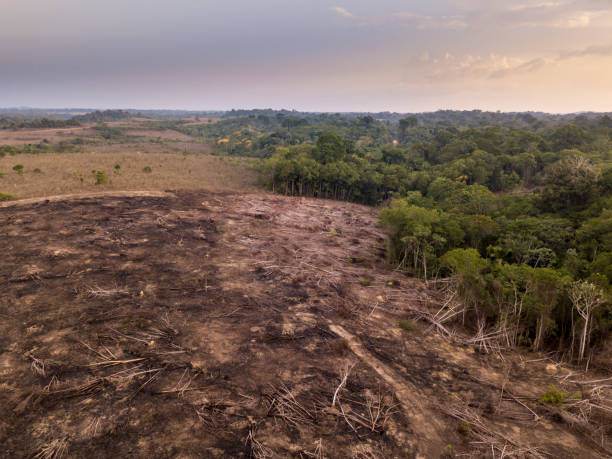
A new report by the Habitat Conservation Group has exposed the growing impact of deforestation and forest-related activities on women and girls in Nigeria’s Niger Delta region. The study, conducted across five communities in Cross River State in September 2025, revealed that forest depletion is forcing women to walk longer distances to fetch firewood, water, and wild fruits increasing their physical and economic burdens.
According to the report, more than 68 percent of women in the surveyed areas depend directly on forest products such as palm fruit, herbs, and firewood for their livelihoods. However, over half of the respondents said these resources have become scarce, resulting in a sharp decline in household income. Many women have turned to small-scale trading or taken loans to sustain their families.
Beyond economic strain, the report noted a rise in health and safety risks. Cases of persistent coughing, eye irritation, and waterborne infections were widespread, while many young girls were reported to miss school to help their mothers collect firewood. Some also faced harassment along remote forest paths.
Also Read: HYPREP Advances Ogoni Cleanup with New Hospitals, Water and Power Projects
Despite these challenges, the report highlighted examples of resilience among affected communities. Women in two of the surveyed areas have formed “Green Circles” volunteer groups promoting tree planting, clean cookstove use, and sustainable forest management practices.
Supported by the Global Greengrants Fund, the initiative has also engaged local leaders and policymakers, who pledged to integrate gender perspectives into community forestry programs. “This project gave women a voice in discussions that affect their survival. Forests are not just trees they are the backbone of many families’ livelihoods,” a member of the Habitat Conservation Group stated.
The organization is calling on government agencies and development partners to adopt gender-sensitive forestry policies, strengthen reforestation efforts, and expand access to clean energy solutions to reduce the burden on rural women and protect the environment across the Niger Delta.
