


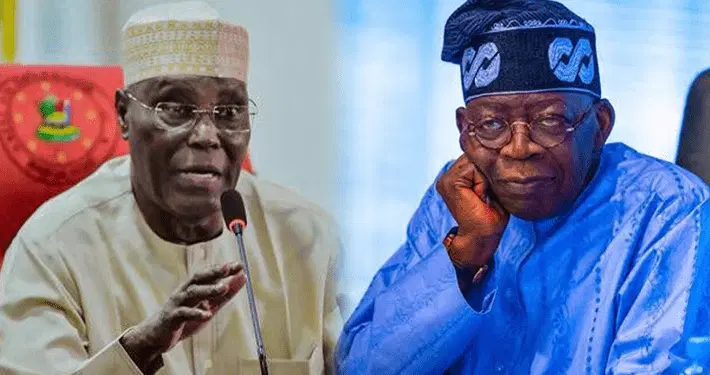
The Presidency and former Vice President Atiku Abubakar have renewed their dispute over his proposed production-based fuel subsidy, with both sides trading accusations over the Federal Government’s 30-day petrol discount and pricing framework ahead of the 2027 general elections.
The dispute followed Atiku’s criticism of the Nigeria National Petroleum Company Limited’s (NNPCL) petrol discount, which he described as a political gimmick, arguing that the government had adopted his production subsidy proposal without addressing its underlying principles.
Reacting on Sunday, the President’s Special Adviser on Media and Public Communications, Sunday Dare, described Atiku’s proposal as economically unrealistic, arguing that Nigeria lacked sufficient uncommitted crude oil to sustain such an intervention.
Dare cited Finance Minister Taiwo Oyedele’s explanation that although Nigeria produces about 1.8 million barrels of crude oil daily, contractual obligations, royalties and production costs leave the Federal Government with fewer than 700,000 barrels available for discretionary allocation.
Read Also: wike-okpebholo-oshiomhole-attend-dan-orbihs-funeral
He defended the NNPCL discount as a temporary market-stabilisation measure, insisting that it was not a return to fuel subsidy. He also described the proposed N1,350-per-litre ceiling on ex-gantry costs as a mechanism to cushion consumers against price volatility.
However, Atiku’s media adviser, Paul Ibe, rejected the Presidency’s position, saying the former vice president’s proposal involved targeted and transparent support for domestic refineries rather than distributing the country’s entire crude production for free.
Ibe also questioned the nationwide reach of the NNPCL discount, noting that its retail outlets represented only a small proportion of filling stations across the country. He further argued that the company’s decision to forgo profit carried an economic cost, even without direct spending from the Federal Government’s budget.
The exchange has intensified debate over how best to reduce petrol prices, support domestic refining and protect consumers without placing additional pressure on public finances.
