


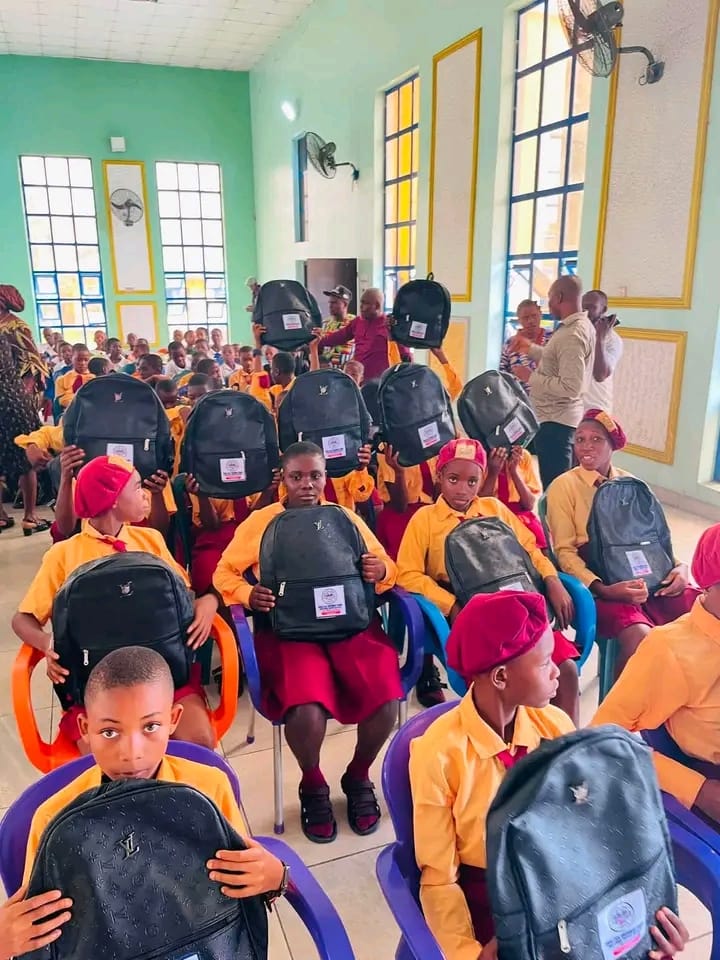
On September 21st, the Executive Chairman of Okrika Local Government Area, Chief Hon. Akuro Alfred Tobin, rolled out a Back-to-School Support Initiative, distributing books, school bags and other learning materials to pupils and students across the council.
It is a modest gesture in the scheme of governance, but modest gestures, done consistently, are often what education systems in Nigeria are missing.
The value of this intervention lies less in its scale than in its timing and reach. School resumption is when the gap between families who can afford basic learning materials and those who cannot becomes most visible. A child without a bag or a textbook does not stop attending school, but they start the term already behind.
By meeting that need directly, at the point families feel it most, the initiative addresses a real and immediate barrier rather than a symbolic one.
What also stands out is the initiative’s spread across different levels of basic education, rather than concentrating support on a single school or grade. That breadth suggests an understanding, one not always evident in local government interventions, that early investment in education has to be broad-based to matter.
Also Read: http://NPFL Matchday Five: Rivers United Eye Crucial Points Against Kun Khalifat
A child in primary one and a child in junior secondary school face different pressures, but both are better placed to learn with the right materials in hand.
None of this should be mistaken for a solution to Okrika’s deeper educational challenges. School infrastructure, teacher welfare, and learning outcomes are long-term problems that a bag and a textbook will not fix. But it would be equally wrong to dismiss the initiative simply because it is not a complete answer.
Governance is built from interventions like this one, provided they are followed by others, and provided they are not treated as an annual photo opportunity disconnected from sustained investment.
That is the real test ahead. Okrika’s children will remember, at best, that materials arrived at the start of term. For now, the initiative deserves recognition for what it is: a practical, well-targeted intervention that puts resources directly into the hands of children who need them. It tells Okrika’s pupils, tangibly, that their education is not an afterthought.
Whether that message is reinforced or forgotten will depend on what the local government does next. Education is one of the most enduring investments any society can make, but only if the investment continues past the first day of school.
