


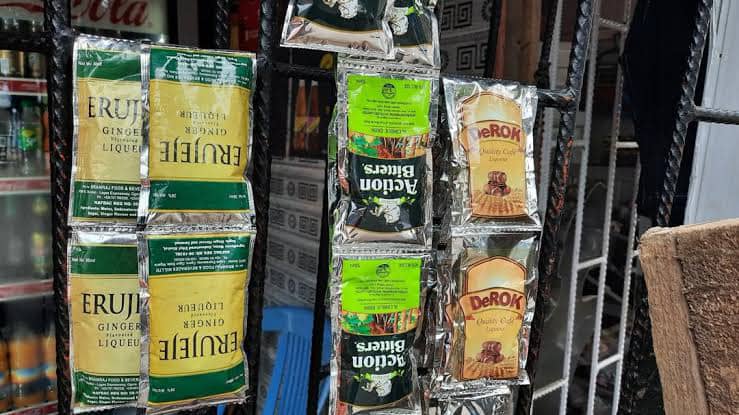
The enforcement of Nigeria’s ban on sachet alcohol and alcoholic drinks packaged in small bottles below 200ml is putting thousands of retailers under pressure, as the National Agency for Food and Drug Administration and Control (NAFDAC) intensifies its crackdown across the country.
The ban, which targets alcoholic beverages in sachets as well as PET and glass bottles below 20cl, is part of the Federal Government’s effort to reduce access to cheap and highly portable alcohol, particularly among young people. NAFDAC maintains that the policy is aimed at protecting public health and reducing harmful alcohol consumption.
However, for many small retailers, the enforcement has become an economic challenge. Traders say sachet alcohol has been an important source of daily income, particularly for neighbourhood shops, kiosks and petty retailers. With enforcement officers confiscating banned products, some traders are now counting losses from unsold stock and reduced sales.
Also see: USD to NGN Valuation Today, August 18, 2026
The issue has also triggered protests from retailers who argue that the crackdown is coming at a difficult time for businesses already struggling with rising operating costs and weak consumer purchasing power. Their concern is not only the loss of the products but also the impact on the wider chain of wholesalers, distributors and other small businesses that depended on their sale.
NAFDAC, however, has maintained that the industry was given a five-year phase-out period beginning in 2019, giving manufacturers and other stakeholders time to stop producing and distributing the affected products. The agency has also warned manufacturers, distributors and retailers who continue to violate the ban that they could face regulatory sanctions.
The enforcement has already exposed another challenge: illegal production. NAFDAC recently reported discovering concealed facilities producing banned sachet alcohol, suggesting that some operators are still attempting to keep the products in circulation despite the prohibition.
The controversy therefore goes beyond whether sachet alcohol should remain on Nigerian shelves. It has become a question of how the government can enforce a public-health policy without leaving small businesses struggling with heavy financial losses, while also ensuring that banned products do not simply move into illegal production and distribution channels.
As enforcement expands, the pressure will remain on NAFDAC to ensure that the ban is applied consistently, while retailers and manufacturers face the reality that sachet alcohol is no longer supposed to be part of Nigeria’s legal alcohol market.
