


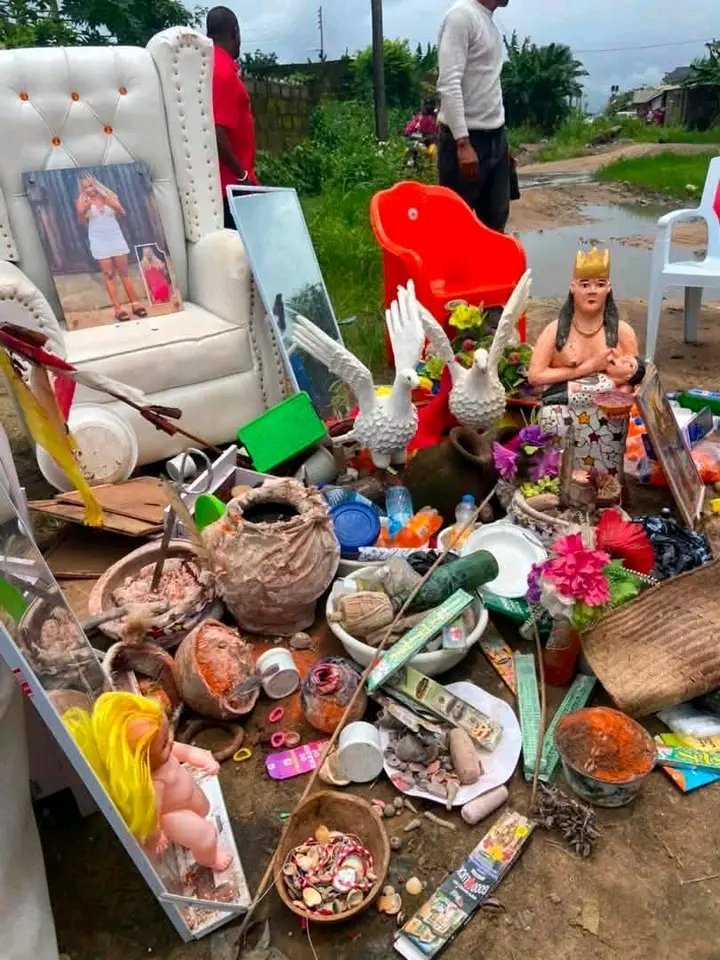
A Port Harcourt-based rights activist, Prince Wiro, has condemned the alleged invasion of a private residence and destruction of a shrine in Onne, Eleme Local Government Area of Rivers State.
Wiro, the National Coordinator of the Centre for Basic Rights Protection and Accountability Campaign, also called for the arrest and prosecution of those involved in the incident captured in a viral video.
The video shows youths allegedly entering the residence of a woman identified simply as “Eze Nwanyi”, searching through rooms and removing items they claimed were being used for traditional worship.
The youths reportedly said idol worship had been abolished in Onne decades ago.
Reacting to the incident, Wiro described the alleged invasion and destruction as a violation of the woman’s fundamental rights, arguing that disputes over religious practices should be handled through lawful channels.
He cited Section 38(1) of the 1999 Constitution, which guarantees freedom of thought, conscience and religion, including the right to practise and manifest one’s religion or belief.
Wiro argued that no community policy should override constitutional rights, adding that the alleged invasion could also amount to trespass and malicious damage.
He said those who believed the woman’s activities posed a threat to public peace should have reported the matter to security agencies rather than taking enforcement into their own hands.
“The youths went beyond their boundaries by invading a private residence and destroying property under the guise of community cleansing,” he said.
The activist further called on the Rivers State Ministry of Youth to encourage youth organisations to have access to legal advisers to prevent similar incidents.
He also advised the affected woman to seek legal redress by petitioning the Commissioner of Police or filing a lawsuit against those responsible.
Pastor Defends Action
Meanwhile, Pastor Elijah, who reportedly participated in the destruction, defended the action, saying the group acted after receiving reports that idol worship was taking place at the residence.
According to him, he and another pastor visited the property after hearing the allegations and claimed to have found materials they considered evidence of idol worship.
He referenced an alleged 1973 religious event in Onne, claiming that community leaders had made a covenant to reject idol worship in the area.
Pastor Elijah said the discovery had raised concerns among community leaders and called for collective prayers to address what he described as a violation of the community’s longstanding position.
He also warned residents and landlords against allowing what he described as “strange gods” or traditional worship practices to be introduced into homes in Onne.
The pastor further claimed that the group would continue to investigate reports of similar practices in the community.
The incident has sparked debate over religious freedom, traditional worship, community customs, private property and the limits of community-led enforcement.
