


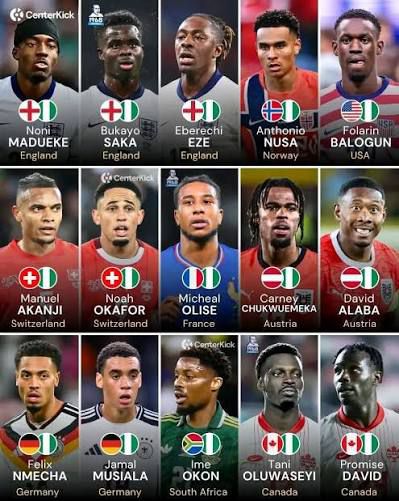
As the 2026 FIFA World Cup rolls on, one phenomenon can no longer be ignored: the proliferation of players of African descent representing teams from European nations, and across the globe.
The likes of England, France, Portugal, United States and nations throughout the Americas all boast players with African roots, whose parents either hail from the continent or have strong ties, donning a different shade of national colours and on occasion, locking horns with African sides on the biggest stage.
Not a new one, for decades, the continent’s premier talents have, following progression through established European and North American academies, elected to represent the countries in which they were born or reside, not their ancestral homeland.
A variety of factors drive these decisions: superior infrastructure, structured youth programmes, a degree of stability on and off the pitch and the chance to play regularly at the very highest level. Furthermore, sometimes a sense of allegiance to where they grew up can swing the decision. For African football, this remains an important conversation. Whenever a gifted individual with an African lineage impresses for a non-African nation, the what-ifs surrounding that player’s contribution to an African side emerge.
The challenge is not merely for the relevant governing bodies of football across Africa to lure these talented individuals to represent their respective countries of origin, but to develop a sporting infrastructure and playing environment that motivates that decision through youth development, strong organisational structures, competitive leagues and long-term strategy.
While this World Cup continues, the performances of such players serve as testament to Africa’s global football reach but also as a call to action.
