


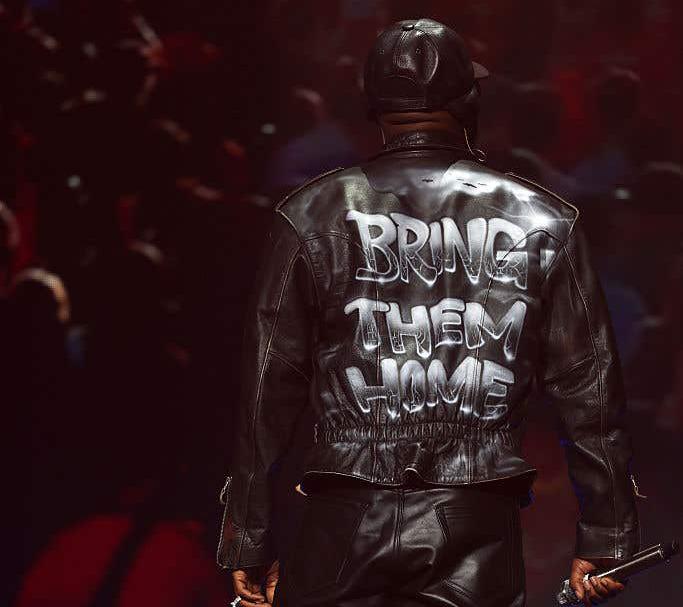
Davido’s appearance at the 2026 FIFA World Cup countdown concert, where he wore a black leather outfit marked “BRING THEM HOME” alongside the names of abducted Nigerian schoolchildren, has intensified public discussion around Nigeria’s insecurity crisis and the role of celebrity influence in national advocacy.
The gesture was widely interpreted as a direct intervention into a sensitive national issue, using a global entertainment platform to draw attention to ongoing schoolchild abductions. By shifting the message from local discourse to an international stage, the act elevated visibility of a crisis that often struggles to sustain attention beyond short news cycles.
Public reaction has remained divided. Supporters described the move as patriotic, arguing that high-profile entertainers are increasingly becoming alternative channels for national awareness, particularly when institutional communication fails to maintain global focus.
Critics, however, viewed it as symbolic activism, raising questions about whether visibility-driven statements translate into concrete outcomes such as improved security response, rescue operations, or policy reform.
The response from Nigerian politician , Peter Obi, who publicly commended Davido for highlighting the issue, further reinforced the political dimension of the moment. It demonstrated how celebrity interventions can quickly enter governance-related discourse, especially when they attract widespread public engagement.
Also see: Stakeholders Seek Protection For Journalists To Strengthen Election Credibility In Nigeria
Beyond Davido specifically, the development highlights a broader reality: public figures with large followings hold measurable influence over national conversations. In cases of insecurity or humanitarian crises, celebrities, influencers, and media personalities can significantly shape public awareness, sustain pressure on authorities, and keep issues within continuous public view.
This sustained visibility can indirectly affect government responsiveness, as issues that dominate public discourse are more difficult for institutions to ignore or deprioritise.
However, the impact of such influence depends on consistency and coordination. One-off statements or performances often generate attention but fade quickly. When multiple influential figures align, through repeated messaging, campaigns, or partnerships with civil society groups, the pressure on government institutions becomes more sustained and harder to deflect.
In that sense, the entertainment industry has the potential not only to amplify awareness but also to contribute to longer-term advocacy structures around unresolved national issues.
The situation therefore extends beyond a single performance. It reflects an evolving environment where celebrity voices increasingly intersect with governance, public accountability, and humanitarian advocacy.
