


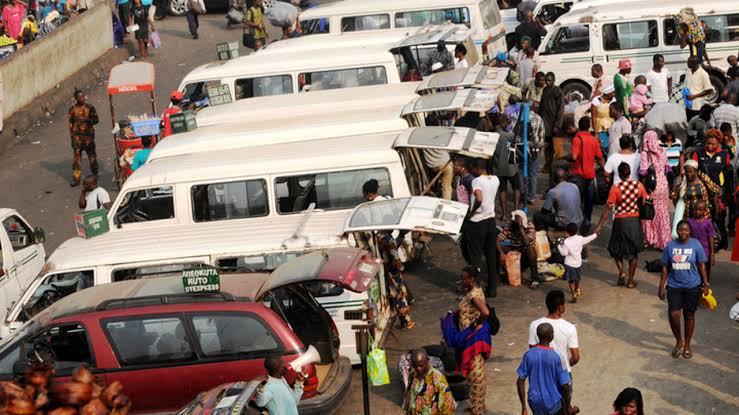
The relationship between commercial drivers, bus stop loaders, and commuters in Port Harcourt has long been a complicated one. For years, passengers have complained about fare hikes, while drivers have lamented the endless payments they are forced to make to various groups before they can even begin their daily work.
Recently, many commercial drivers in the city have renewed calls for government intervention, urging authorities to eliminate the activities of bus stop touts who collect fees from drivers each time they load passengers. According to the drivers, these collections have become an unnecessary burden that eats into their daily earnings and contributes to the rising cost of transportation.
At first glance, their argument appears straightforward. Why should a driver who already pays for fuel, vehicle maintenance, permits, and other operating costs be forced to hand over part of his earnings to individuals who simply stand at bus stops collecting money? Yet, like many issues in Nigeria, the situation is not entirely black and white.
The average commuter in Port Harcourt is likely to sympathize with the drivers until they remember their own experiences. Many passengers have found themselves at the mercy of drivers who increase fares without warning whenever demand rises.
A recent example occurred during the University of Port Harcourt’s convocation ceremony on June 5. Under normal circumstances, a trip from Rumokoro to the university area costs approximately ₦600. However, as thousands of students, parents, and visitors converged on the institution for the event, transportation fares reportedly skyrocketed. Some drivers charged as much as ₦2,000 for the same route.
Heavy traffic, increased demand, and the opportunity to maximize earnings during a busy period were cited as reasons for the increase. To the drivers, it was simple economics. To many passengers, it felt like exploitation.
This raises an uncomfortable question: if drivers complain about being exploited by loaders and touts, are passengers not equally justified in complaining about being exploited by drivers? Perhaps the truth lies somewhere in the middle.
Also see: Stakeholders Advocate Statewide Environmental Audit Beyond Ogoni Cleanup
Bus stop loaders and touts are often portrayed as individuals who contribute little while collecting money from hardworking drivers. In many cases, accusations of harassment, intimidation, and violence have followed some of these groups. Their activities have frequently been linked to disorder at major bus stops and transport hubs across the city.
However, some commuters and even drivers acknowledge that loaders occasionally play a role in regulating transport operations. They help organize queues, direct passengers, and in certain situations prevent drivers from charging outrageous fares.
There have been instances where drivers attempted to take advantage of high demand, only for loaders or transport officials at the bus stop to insist on maintaining the approved fare. While such interventions may not occur everywhere, they demonstrate that the role of loaders is not entirely without value. The real issue, therefore, may not be whether loaders should exist, but whether the current system is sustainable.
A modern city should not depend on informal collections and street-level negotiations to regulate public transportation. Neither should commuters be left vulnerable to arbitrary fare increases whenever traffic builds up or demand rises. What Port Harcourt needs is a more transparent and organized transport management system.
Government can introduce digital ticketing and revenue collection mechanisms that eliminate unauthorized levies while ensuring that legitimate taxes and transport fees are properly accounted for. Instead of allowing multiple groups to collect money at bus stops, payments could be centralized through registered transport unions and monitored electronically.
At the same time, there is an urgent need for stronger regulation of commercial transportation. While authorities focus on eliminating illegal collections, they must also address fare manipulation by drivers. A framework that establishes fair pricing guidelines, especially during major public events and peak periods, could protect commuters from excessive charges.
There is also room for a properly trained transport management workforce. Rather than allowing informal touts to dominate bus stops, government could employ and train transport marshals whose responsibilities would include maintaining order, assisting passengers, enforcing regulations, and ensuring that transport operators comply with approved standards.
Drivers deserve to earn a decent living without being subjected to endless unofficial levies. Passengers deserve protection from opportunistic fare increases. Government deserves a transparent mechanism for collecting legitimate transport-related revenue.
