


The Federal Government has adjusted the implementation of Executive Order 9 of 2026 concerning oil revenue remittances, allowing the Nigerian National Petroleum Company Limited (NNPCL) to retain responsibility for collecting royalties and taxes in crude oil form.
These will now be channelled into a dedicated account at the Central Bank of Nigeria (CBN), reliable sources told our correspondent on Monday.
The revision stems from last Wednesday’s meeting of the implementation committee, where stakeholders assessed operational difficulties arising from the original directive requiring all oil-related revenues to flow directly into the Federation Account.
Two high-ranking officials, speaking anonymously due to a lack of authorisation to speak publicly, indicated that the government has no intention of withdrawing the order. Instead, it is adapting the approach to align with sector realities.
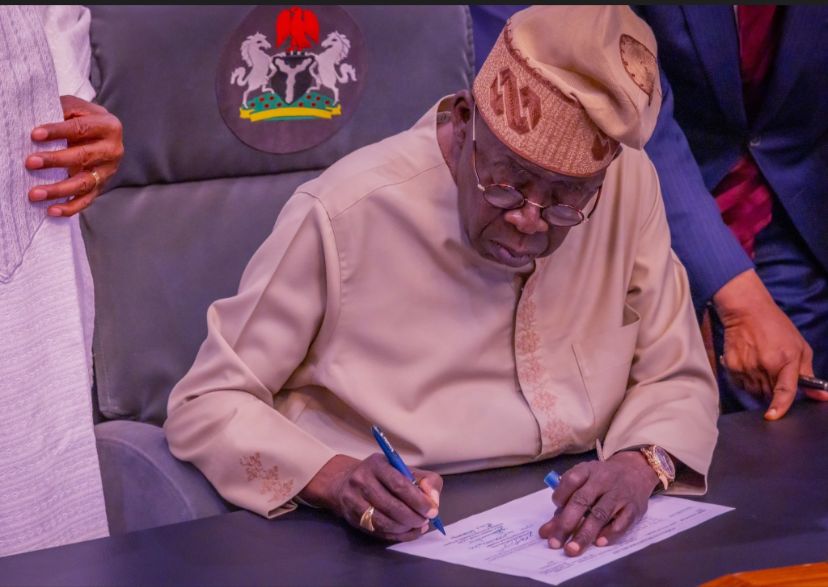
Issued last month by President Bola Tinubu, the executive order mandates direct payment into the Federation Account of royalty oil, tax oil, profit oil, profit gas, and other federation entitlements from production sharing, profit sharing, and risk service contracts.
It eliminates the 30 per cent Frontier Exploration Fund under the Petroleum Industry Act (PIA) and ends the NNPCL’s retention of a 30 per cent management fee on profit oil and gas. The measures, effective from February 13, 2026, aim to curb revenue leakages and bolster Federation Account inflows.
News: Tinubu Signs Order To End Excessive Oil Revenue Deductions
Citing constitutional provisions Section 5 and Section 44(3) the President highlighted how excessive deductions and structural inefficiencies have hampered remittances, depriving federal, state, and local governments of vital funds for development.
Following deliberations, the government has permitted the NNPCL to continue lifting and commercialising crude oil volumes on behalf of the federation before remitting net proceeds, rather than transferring the role to the Nigerian Upstream Petroleum Regulatory Commission.
Sources explained that royalties and taxes are customarily paid in crude barrels, not cash, rendering immediate direct cash remittance unfeasible.
Under the revised framework, these revenues will route through the new CBN account under the Accountant-General’s supervision.
Discussions on profit oil handling continue, with concerns that the changes may erode the commercial autonomy granted to the NNPCL by the PIA. Critics warn it risks reverting to pre-PIA practices, which caused cash call arrears exceeding $6 billion and operational constraints.
