


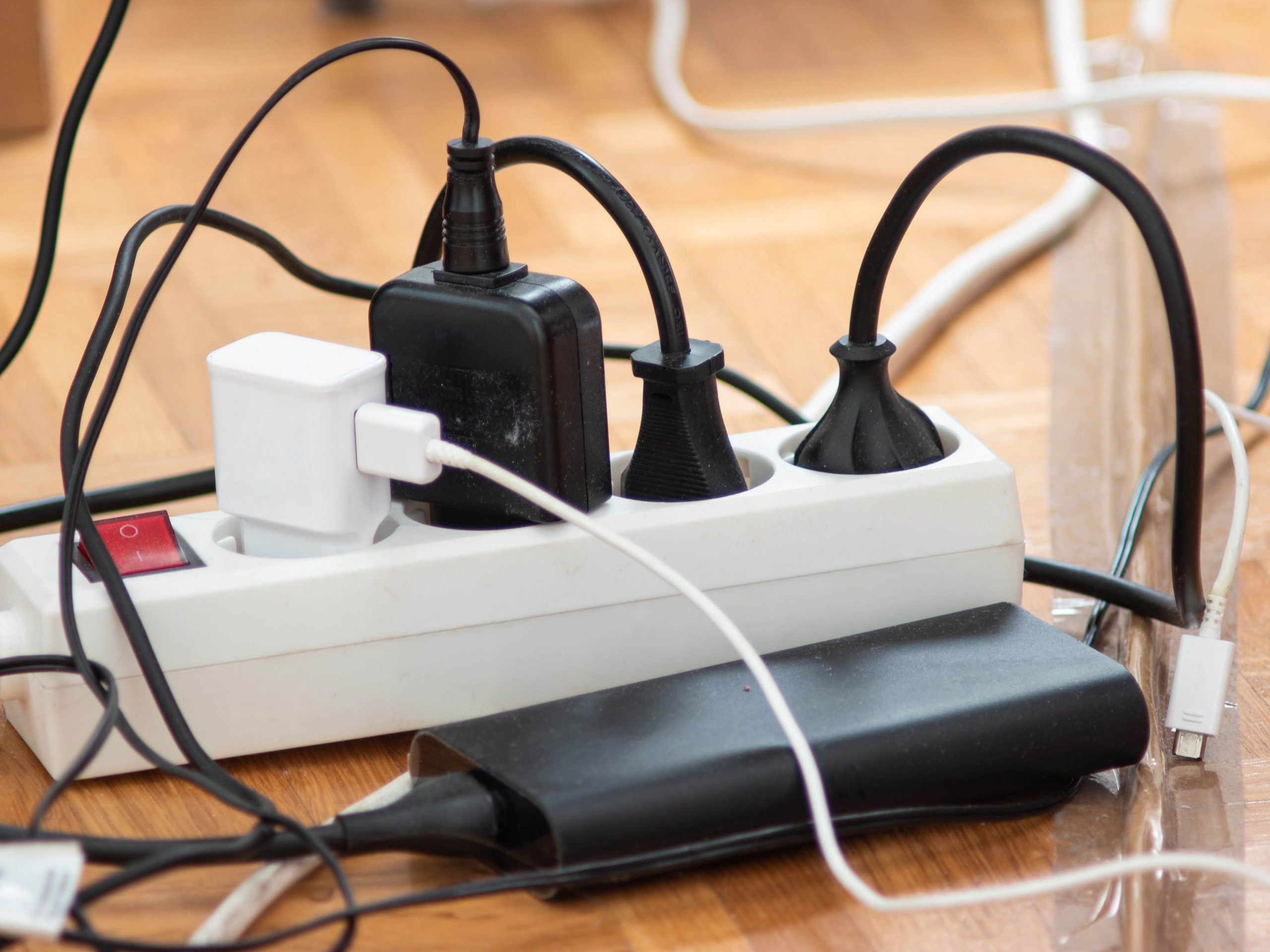
In today’s tech-driven homes, it feels like every corner has a device demanding electricity. Extension cords and power strips often seem like lifesavers, helping us connect multiple gadgets at once. But while they may work fine for small electronics, using them for high-powered appliances can be a recipe for disaster.
Certain devices pull far too much electricity for extensions to handle, increasing the risk of overheating, melted plugs, or even fire. To stay safe, here are seven common household appliances you should never connect to an extension cord or power strip.
1. Air Fryers
Air fryers have quickly become a kitchen favorite, but they are also energy-hungry. Large air fryers can draw up to 2,000 watts, which is far beyond what most extension cords are built to handle. Always plug them directly into a wall outlet, and only use them when needed to avoid accidents.
2. Microwaves
Microwaves may look harmless on the outside, but inside, they’re power-heavy machines. A countertop microwave requires a dedicated circuit to work safely. Connecting it to an extension cord could overload the wiring and put your kitchen at risk.
3. Extension Cords on Extension Cords
This might sound strange, but it’s common to see people plug one extension into another, a practice known as “daisy chaining.” It may seem like a smart hack, but it causes circuits to overheat and creates an immediate fire hazard.
4. Space Heaters
Electric space heaters are already a leading cause of household fires around the world. When plugged into extension cords, the chances of overheating increase drastically. The heating element demands too much power for anything other than a direct wall socket.
5. Toasters and Toaster Ovens
Don’t be fooled by their small size—these appliances are energy-intensive. A toaster oven can pull between 1,200 and 1,400 watts, enough to overwhelm a 14-gauge extension cord. Overheating cords are a hidden danger in the kitchen, and plugging these into the wall is the only safe option.
6. Refrigerators
Fridges may not use as much power at once as an air fryer, but they run constantly, placing long-term stress on any cord they’re connected to. Beyond fire risks, poor connections can even cause the refrigerator to malfunction, spoiling food or damaging the motor.
Also see: NUPENG Strike Continues as FG, Dangote Fail To Reach Agreement
7. Air Conditioners
Air conditioners are among the heaviest electricity users in the home. Even small units draw significant power and must always go into a wall outlet. Using an extension cord not only risks fire but also forces the compressor to work harder, leading to higher bills and potential breakdowns.
Conclusively, extension cords and power strips are meant for electronics like TVs, laptops, and phone chargers—not for appliances that cook, heat, cool, or run nonstop. When in doubt, go straight to the wall. Your safety, your appliances, and your peace of mind are worth more than the convenience of one extra socket.
