


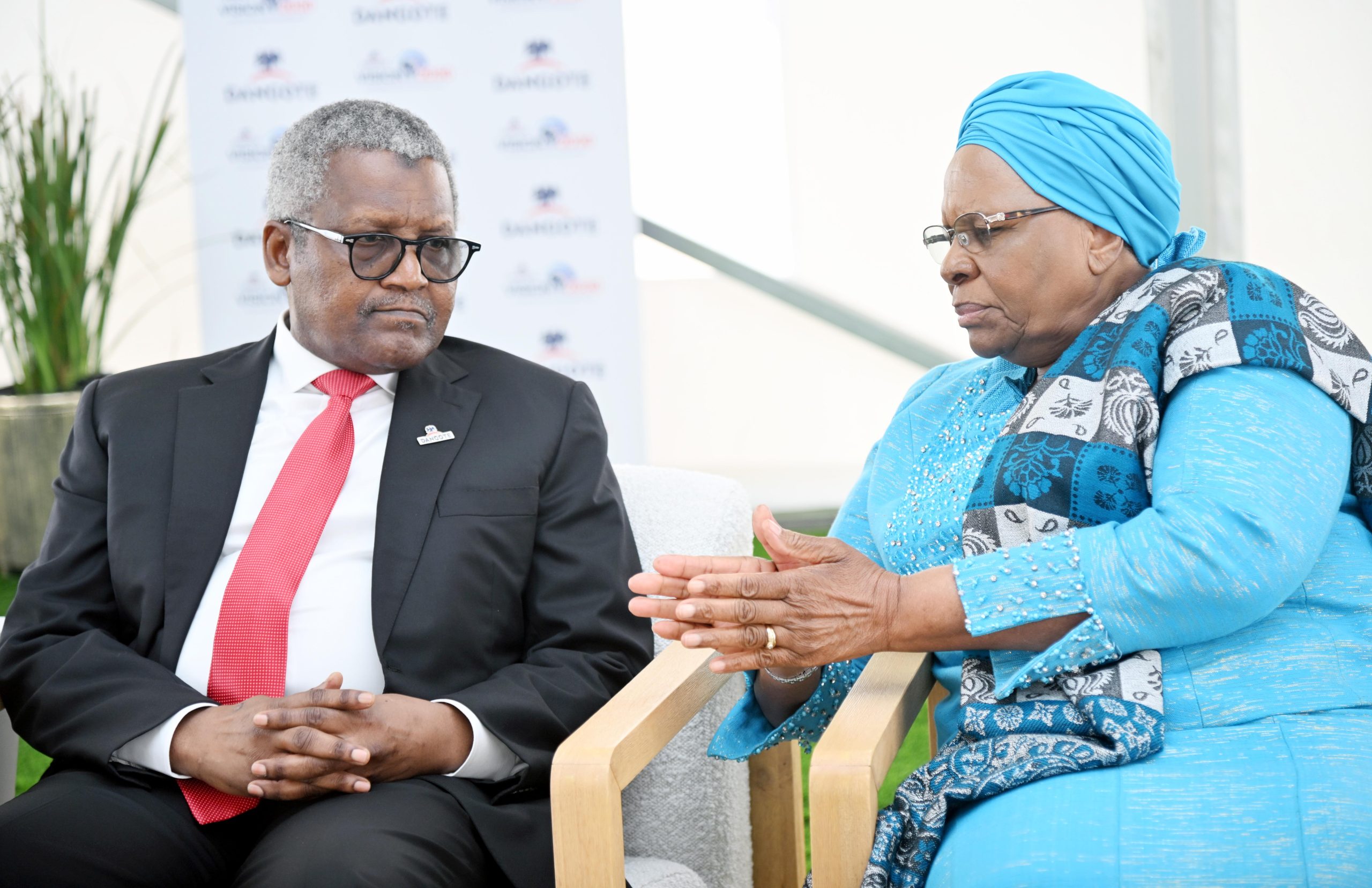
Dangote Industries Limited plans to employ more than 90,000 people across its refinery, petrochemical and fertiliser operations in Lagos by next year as it expands investments in energy, agriculture and industrial production.
The President and Chief Executive of the group, Aliko Dangote, disclosed this in an interview, adding that the company also plans to establish 20 fertiliser blending plants in strategic locations across Africa to improve farmers’ access to agricultural inputs.
The expansion forms part of a wider investment programme estimated at $65bn over four years, covering oil refining, fertiliser production, petrochemicals, power, pipelines and other businesses.
“By next year, we expect to have almost 90,000 people working on the refinery and fertiliser projects in Lagos,” Dangote said.
He described job creation as a major motivation behind the group’s expansion, noting that Africa’s growing youth population required more employment opportunities and stronger industrial development.
Dangote said the refinery expansion would add 700,000 barrels per day to its processing capacity, bringing the planned total to about 1.4 million barrels per day. The project will also include additional petrochemical facilities and supporting infrastructure.
Beyond the refinery, the group is expanding its fertiliser business to support agricultural production and improve food security across Africa.
Dangote said the company planned to begin mining potash and phosphate in Congo-Brazzaville, while working towards a urea production capacity of nine million tonnes.
Read Also: rivers-moves-to-curb-ponzi-schemes-demands-transparency-from-fund-managers
The expansion programme also includes plans for 1.2 million tonnes of diammonium phosphate (DAP) and one million tonnes of NPK blending capacity in Lagos.
He said the proposed 20 fertiliser blending plants would help ensure that farmers in countries where the group operates, as well as neighbouring markets, have access to fertiliser throughout the year.
According to him, local production and distribution would reduce delays associated with importing fertiliser and help farmers obtain supplies when needed.
Using Ethiopia as an example, Dangote explained that imported fertiliser often passes through Djibouti before reaching inland markets, creating transportation delays that could affect planting seasons.
He said local production would help address such challenges and improve the availability of agricultural inputs.
Dangote also recalled how the Russia-Ukraine crisis exposed Africa’s dependence on external fertiliser supplies, arguing that the continent must develop the capacity to meet its own agricultural needs.
He expressed confidence that access to sufficient natural gas would support a major increase in fertiliser production, adding that Africa could meet its estimated 30-million-tonne demand through local manufacturing.
The group’s wider investment plans also include developing 10,000 megawatts of power in partnership with some African countries and expanding its cement production capacity to 100 million tonnes.
Dangote said reliable electricity was essential for industrial growth, as it would enable African countries to process raw materials locally, retain more economic value and create jobs.
He disclosed that about $50bn of the proposed $65bn investment would go into existing businesses, while the remaining $15bn would fund new ventures, including projects yet to be announced.
The investment programme, he said, would be financed through free cash flow, internally generated equity and debt.
Dangote also urged African investors to take the lead in developing the continent, arguing that stronger domestic investment would encourage international investors to commit capital.
He maintained that African businesses must demonstrate confidence in the continent by investing in its industrial and agricultural sectors rather than relying mainly on foreign investment to drive development.
