

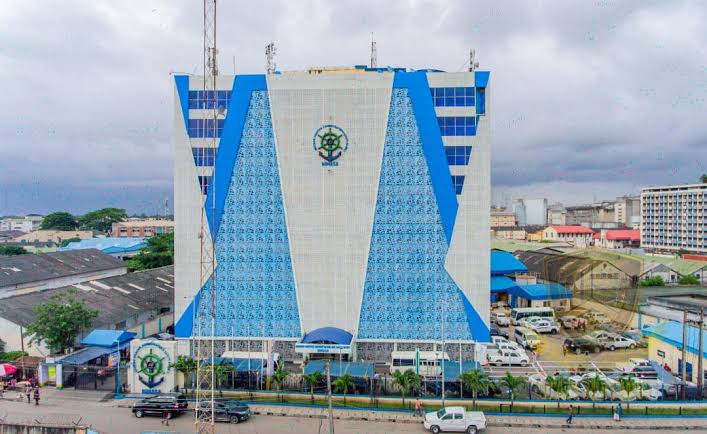
The Nigerian Maritime Administration and Safety Agency (NIMASA) has unveiled advanced surveillance technology, including unmanned aerial vehicles (UAVs), armoured vehicles and tactical equipment, to strengthen maritime security and combat illegal activities in Nigerian waters.
The equipment was presented on Tuesday by HLS International Chief Executive Officer, Tal Spektor, during the Africa International Defence Exhibition in Lagos. HLS International is a technical partner to NIMASA on the Deep Blue Project.
Spektor said the project, supervised by the Federal Ministry of Marine and Blue Economy in collaboration with the Ministry of Defence, combines intelligence gathering, surveillance and coordinated enforcement operations.
He explained that its Command and Control Centre tracks vessels entering Nigeria’s Exclusive Economic Zone, providing information on vessel ownership, International Maritime Organisation identification numbers and Automatic Identification System status to help identify suspicious movements.
The newly presented equipment includes a light utility vehicle, a vertical take-off and landing (VTOL) drone, an armoured vehicle and tactical gear for special operations personnel.
Read Also: totalenergies-completes-800m-divestment-deal-in-nigeria
According to Spektor, the drone can operate from land or vessels at sea, providing surveillance during daytime and nighttime operations, while the armoured vehicle will support special forces in different operational environments.
He stressed that maritime security extends beyond combating piracy and militancy to tackling illegal fishing, arms trafficking, hazardous waste disposal and other activities threatening Nigeria’s marine environment and coastal communities.
Spektor said improved surveillance and enforcement would help protect marine resources, safeguard government revenue and ensure compliance with maritime regulations.
He also linked Nigeria’s improved maritime security to gains in its international reputation, citing the country’s removal from international maritime blacklists and red lists and its election into Category C of the International Maritime Organisation Council.
He further referenced the lifting of American sanctions after 12 years as part of broader developments he associated with improvements in Nigeria’s maritime and security environment.
Spektor reaffirmed HLS International’s commitment to supporting Nigeria through technology, training and operational assistance, adding that sustained investment and cooperation among security agencies were essential to addressing evolving maritime threats.
