


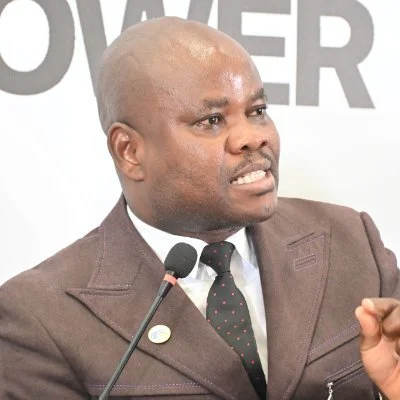
A democracy advocate, Mr Austin Aigbe, has said that the decision by some opposition party leaders to align with President Bola Tinubu does not threaten Nigeria’s democracy, arguing that such political relationships could encourage greater cooperation across party lines.
Aigbe, Regional Advocacy Officer of the West Africa Democracy Network, made the remarks in Abuja on Saturday.
The activist, who is also a prominent member of the Nigeria Civil Society Situation Room, said the development could contribute to the growth and maturity of the country’s democratic system by promoting bipartisan engagement.
His comments followed moves by some opposition leaders who accepted appointments to the Presidential Campaign Council of the ruling All Progressives Congress (APC), despite remaining members of other political parties.
Explaining the situation, Aigbe drew a distinction between opposition parties as institutions and the individuals who lead them. He argued that the political decisions of some party leaders should not automatically be taken as the position of the parties they represent.
According to him, there is a significant difference between an independent opposition party and one whose leadership maintains close political ties with the ruling party.
He cited the Minister of the Federal Capital Territory, Nyesom Wike, as an example, saying the Peoples Democratic Party faction under his influence maintains a close relationship with President Tinubu.
Aigbe added that such alliances have limited implications for governance at the state level, noting that political leaders sometimes make strategic decisions based on their relationships with the President.
He also pointed to the Wike-led Rainbow Coalition, which has backed candidates from different political parties in line with its political interests and support for Tinubu.
“That is why you see in Rivers Wike is presenting two party candidates: a candidate for the APC and a candidate for the PDP,” he said.
On the All Progressives Grand Alliance (APGA), Aigbe observed that Tinubu had played a role in supporting the political fortunes of Anambra State Governor Charles Soludo. He suggested that the President would naturally seek Soludo’s support in the state, particularly given the influence of Peter Obi, the presidential candidate of the Nigeria Democratic Congress (NDC).
He said Soludo’s political alignment could also be part of efforts to strengthen Tinubu’s electoral support in Anambra.
Turning to the Accord Party, Aigbe referred to Osun State Governor Ademola Adeleke, who recently secured re-election on the party’s platform and publicly thanked Tinubu for allowing his electoral victory.
However, he expressed doubts about Adeleke’s reported pledge to deliver 1.5 million votes to the President, questioning how the governor could promise a figure higher than the votes he secured in his own election.
“The vote he could not get, he wants to give to another person. That shows some level of insincerity in all of this bargaining,” he said.
Despite these cross-party alliances and political negotiations, Aigbe maintained that the development should not be viewed as a threat to Nigeria’s democratic institutions, arguing instead that it could create opportunities for cooperation among political parties.
