


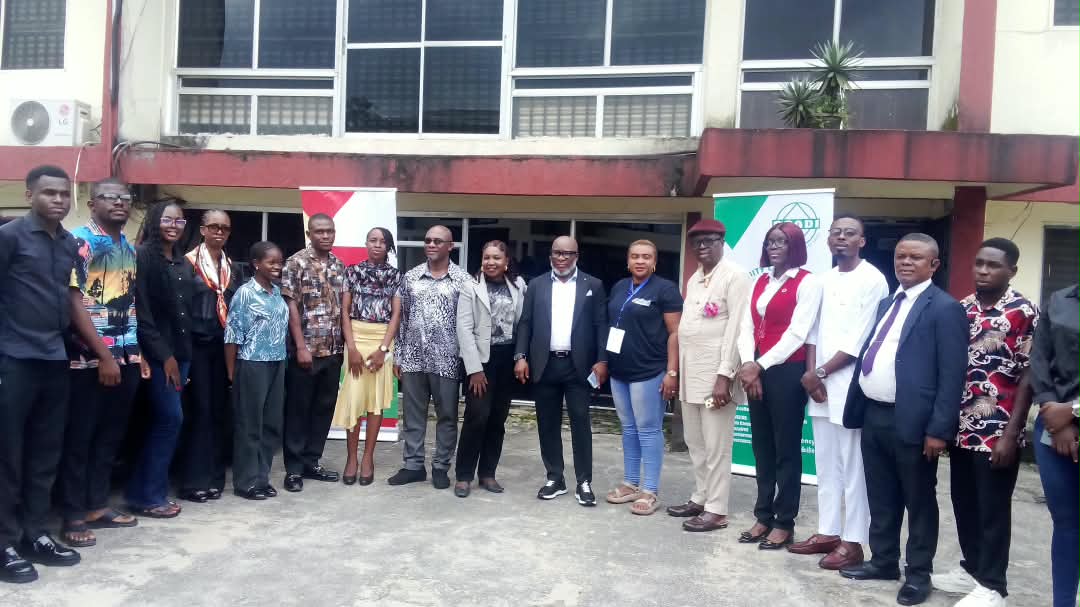
Digital content creators and social media influencers have been urged to provide accurate and well-informed information to the public on the Nigeria Tax Acts 2025 to help improve tax literacy and reduce misinformation.
The call was made at a one-day workshop on the Nigeria Tax Acts 2025, organised by the Community Conciliation and Development Initiative (CCADI), in collaboration with the Tax Justice and Governance Platform and Stakeholder Democracy Network (SDN), with support from the Rivers State Internal Revenue Service (RIRS).
The workshop, held in Port Harcourt, had the theme, “Leveraging Digital Content Creation for Tax Literacy in Rivers State, Nigeria.”
Speaking at the event, Executive Director of CCADI, Dr. Kelechi Justin, said the new tax legislation had generated controversies, limited public information, misinformation and disinformation, contributing to low public support for the law.
He said the situation was further compounded by uninformed content creators, influencers and other social actors who circulate inaccurate narratives about the Nigeria Tax Acts 2025 on digital platforms.
Justin said the workshop was designed to build the capacity of content creators, social media influencers, leaders of Students Tax Clubs and other actors in the digital economy to disseminate accurate information on taxation.
He said the implementation of the new tax administration framework had been gradual, noting that only about 18 of Nigeria’s 36 states had so far aligned or harmonised their federal and state tax laws.
He urged states yet to fully align with the new framework, including Rivers State, to take steps towards harmonisation to facilitate effective implementation and enforcement.
Justin also described the Rivers State Internal Revenue Service as critical to the success of the state’s 2026 budget, noting that internally generated revenue had recorded significant growth in recent years.
According to him, sustained advocacy and engagement with RIRS on digitalisation of tax services and the elimination of multiple and illegal taxes had contributed to improved revenue collection.
He stressed that improved internally generated revenue should not translate into multiple taxation, but should be driven by greater tax compliance and public awareness.
Also Read:http://Three Years After Angbashim’s Killing, Odiemudie Youths Vow Peace
Also speaking, a tax strategist and Fellow of the Chartered Institute of Taxation of Nigeria, Victoria Okokon, said every Nigerian earning an income is required to obtain a Tax Identification Number (Tax ID) and file tax returns, stressing that filing returns is different from paying tax.
Okokon explained that under the new tax framework, many low-income earners would have no tax liability, but would still be required to obtain a Tax ID and file their annual returns.
She said the first N800,000 of an individual’s taxable income is subject to a zero per cent tax rate, after applicable allowances, meaning that a large number of Nigerians may not have any tax to pay.
On presumptive taxation, Okokon said the Presumptive Tax Regulation 2026 was designed to simplify tax administration for small businesses and individuals whose incomes may not be easily assessed under conventional tax systems.
She said the framework was intended to bring small-scale operators into the formal tax system while ensuring that those whose incomes fall below taxable thresholds are not unfairly burdened.
Meanwhile, the Director of Information and ICT, Rivers State Internal Revenue Service, Dr. Fyneface Opubo, said the agency had improved transparency through the digitalisation of its operations.
Opubo said taxpayers could now register, make payments and generate receipts through the agency’s digital platforms without relying on intermediaries.
He said the agency, under the leadership of its chairman, Israel Okunefo, had prioritised tax education, engagement and compliance, adding that RIRS does not tolerate harassment or the use of crude methods in tax collection.
Addressing concerns over alleged double taxation, Opubo explained that Nigeria operates a federal system in which the federal, state and local governments have constitutionally defined taxing powers.
He said some complaints of double taxation were caused by taxpayers’ inability to distinguish between the different agencies authorised to collect specific levies and charges.
Opubo also denied that RIRS deploys personnel to roads to harass commercial transport operators or collect cash tolls.
He said individuals popularly referred to as “agberos” collecting money on roads were not agents of the Rivers State Internal Revenue Service.
According to him, RIRS follows due process in enforcing tax obligations through reminders, demand notices and, where necessary, legal action.
He added that the agency had arrested individuals found impersonating its officials and handed them over to the appropriate authorities, including the police.
Opubo urged members of the public to demand proper identification from anyone claiming to be an RIRS official and to report suspected impersonators to the agency.
