


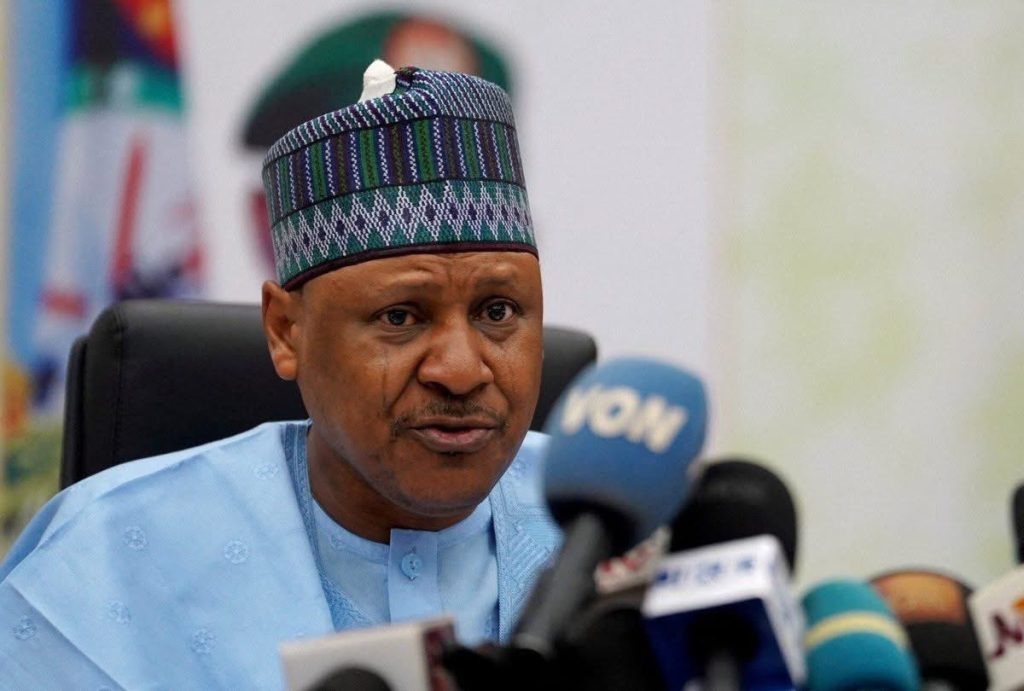
The Minister of Information and National Orientation, Mohammed Idris, has warned that restoring petrol subsidy could weaken Nigeria’s improving fiscal position and reverse gains achieved through the economic reforms of President Bola Tinubu’s administration.
Idris stated this in an opinion article titled “Restoring Fuel Subsidy Will Reverse Nigeria’s Economic Gains,” published on Monday.
He argued that returning to the former subsidy regime would recreate fiscal pressures, fuel scarcity and economic distortions while weakening investor confidence and reducing the government’s ability to fund critical sectors.
The minister recalled that Nigeria spent about $10 billion on petrol subsidy in 2022, despite declining oil production and shrinking government revenues.
Read Also: access-bank-moves-to-recover-%e2%82%a61-34bn-in-alleged-cyber-fraud
According to him, subsidy reforms freed about N15.8 trillion for the Federation between June 2023 and December 2025, comprising N5.43 trillion for the Federal Government, N6.52 trillion for states and N3.88 trillion for local governments.
He said the additional fiscal space had supported infrastructure, security, agriculture, human capital development and social investment programmes, while more than 10 million households had benefited from social transfers.
Idris, however, acknowledged that the government continued to bear significant electricity subsidy costs, estimated at N3.14 trillion between June 2023 and December 2025.
He warned that reintroducing petrol subsidy would place further pressure on public finances and urged Nigerians to consider the long-term benefits of sustaining the reforms.
“Nigeria cannot build tomorrow’s economy by returning to yesterday’s unsustainable subsidy regime. We have moved beyond that model,” he said.
