


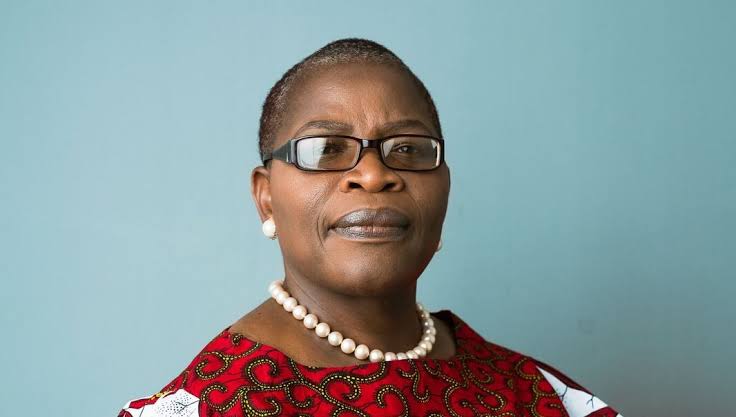
Ex-Minister of Education, Obiageli Ezekwesili, has urged President Bola Tinubu to pause and re-examine a £746 million maritime infrastructure agreement between Nigeria and the United Kingdom, contending that enhanced openness is imperative regarding the transaction’s fine print.
Ezekwesili issued the plea in a release where she queried the publication of specifics concerning the funding arrangement, including its yield structures, settlement schedules, and sourcing procedure. She noted these reservations were especially crucial given Nigeria’s existing debt burdens and the imperative for heightened oversight in administering state assets.
“President Tinubu must terminate this opaque deal. Suspend all drawdowns immediately and return to the National Assembly with a competitive concession framework for Apapa and Tin Can,” Ezekwesili said.
According to her, the credit setup entails a commercial facility structured by Citibank London and backed by UK Export Finance (UKEF), with British firms slated to engage in ventures tied to the transaction.
She contended that the administration ought to release the complete provisions of the pact to the public to permit objective evaluation of its monetary ramifications. “If the terms cannot withstand public scrutiny, they should not be implemented,” she said.
Ezekwesili additionally expressed worry over the prospective consequences of foreign-denominated liabilities on Nigeria, particularly considering fluctuations in the naira’s valuation.
She requested full disclosure of the arrangement’s yield rates, amortization plan, and any safeguards instituted to mitigate exchange-rate exposures.
Also see: Dangote Refinery Secures $1bn Backing Ahead of IPO
The former minister further challenged the sourcing protocols tied to the venture, demanding clarification regarding the designated vendors and the framework through which they were chosen. She likewise pressed the administration to clarify why non-governmental capital models akin to those utilized in constructing Lekki Deep Sea Port were bypassed for the restoration of Apapa and Tin Can Island facilities.
“The Lekki Deep Sea Port was built under a private BOT concession with zero sovereign debt,” she said, asserting that comparable frameworks could be evaluated for other primary maritime hubs.
Ezekwesili emphasized that Nigeria requires operational maritime hubs to bolster commerce and national expansion, but maintained that capital works must be paired with clear financing and vendor selection protocols.
She prompted civic groups to leverage available statutory channels, including Freedom of Information applications, to obtain specifics on the deal from pertinent Nigerian bodies.
“Civil society must file Freedom of Information requests with the Ministry of Finance, NPA, and the Attorney-General, and simultaneously invoke the UK FOI Act against UKEF to obtain full documentation of this transaction,” she said.
Ezekwesili noted her objections were not aimed at the imperative to upgrade Nigeria’s maritime facilities, but at what she characterized as the necessity for transparency in executing public fiscal choices.
“Nigeria desperately needs functional ports. The dysfunction of Apapa and Tin-Can ports has cost the country immeasurably. But legitimate aspirations cannot be condoned as an excuse for illegitimate processes,” she said.
She appealed to the Federal Government to publish the pertinent records and guarantee that any future credit or lease setup for the maritime hubs undergoes proper examination.
