


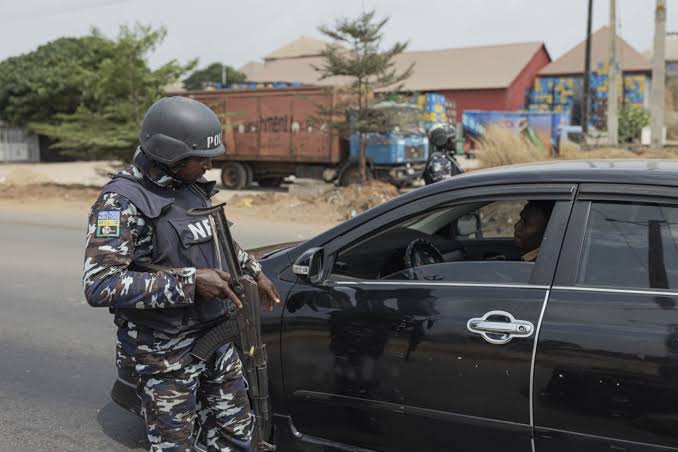
Across Nigeria’s highways, security checkpoints have become a familiar sight. Motorists slow down, roll down their windows, answer routine questions, and continue their journeys after a brief inspection.
In many places, these checkpoints are intended to reassure the public that security agencies are present and alert. Yet, despite their growing numbers, kidnapping, armed robbery, banditry and other violent crimes continue to threaten lives and livelihoods.
This contradiction forces us to confront an uncomfortable truth: security is not measured by the number of checkpoints on our roads. It is measured by the ability of the state to prevent crime before it happens. And prevention begins with intelligence.
No nation has ever defeated organised crime simply by mounting roadblocks. Criminals adapt quickly. They study security patterns, identify weak spots and change their routes or methods whenever necessary. While security officers remain stationed at fixed locations, criminal networks continue to evolve, often staying one step ahead. The result is a reactive approach to crime that catches too few perpetrators and offers little comfort to citizens living in fear.
This is not to suggest that checkpoints have no value. They can intercept stolen vehicles, recover illegal weapons, arrest fleeing suspects and deter opportunistic criminals. In emergencies, they are an important policing tool. However, they should complement a broader security strategy, not become the strategy itself.
Every successful kidnapping, armed robbery or terrorist attack follows a pattern. There is usually planning, surveillance, communication, financing and movement of people and equipment. Criminals do not simply appear from nowhere. They leave footprints, phone calls, financial transactions, suspicious meetings, unusual movements and local collaborators. Detecting these warning signs requires intelligence, not luck.
Technology must become central to Nigeria’s security architecture. Surveillance cameras in strategic locations, drones for monitoring forests and border communities, digital mapping, forensic laboratories, biometric databases, communication interception within the limits of the law, and data-driven policing should no longer be viewed as luxuries. They are essential instruments for modern security management.
Equally important is cooperation among security agencies. Crime does not recognise bureaucratic boundaries. Neither should intelligence. Beyond technology and institutional reforms lies perhaps the most valuable source of intelligence, the people.
Communities often know more about criminal activities than outsiders realise. Residents notice unfamiliar faces, suspicious gatherings, abandoned buildings used as hideouts, or unusual movements in forests and remote villages.
Building public trust is therefore just as important as deploying security personnel. Citizens are more likely to volunteer information when they believe it will be treated confidentially and acted upon professionally.
Intelligence also means understanding why crime thrives in certain areas. Persistent unemployment, poverty, weak border controls, illegal arms trafficking and inadequate governance create conditions that criminal groups exploit.
Another area requiring urgent attention is Nigeria’s vast forests and ungoverned spaces. Many criminal gangs establish camps in remote areas where government presence is minimal. Without reliable intelligence on these locations, security forces are often forced into difficult search operations after crimes have already been committed. The judiciary also has an important role in strengthening intelligence-led policing.
Nigeria’s security challenges are undoubtedly complex. They cannot be solved overnight, nor can they be solved by security agencies alone. Government, traditional institutions, religious leaders, civil society, the private sector and citizens all have roles to play. Security is everyone’s business, but leadership must come from a government willing to invest in prevention rather than merely responding to tragedy.
Nigeria does not need fewer security personnel; it needs smarter deployment of its security resources. It does not need more checkpoints simply for the sake of appearance; it needs stronger intelligence systems that allow officers to know where to be, when to act, and whom to pursue.
The nation has paid too high a price for reactive policing. Families have lost loved ones. Businesses have suffered. Communities have been displaced. Confidence in public safety has been shaken.
If Nigeria is to overcome insecurity, it must embrace a simple but powerful principle: checkpoints may slow criminals down, but intelligence stops them. The road to a safer nation does not begin at the next roadblock. It begins with better information, stronger coordination, modern technology, and the political will to prevent crime before it occurs.
