


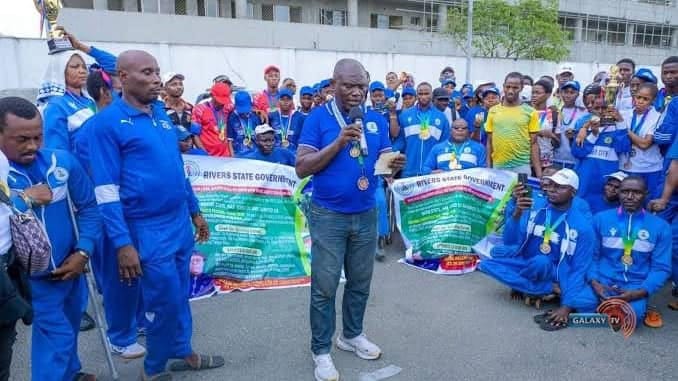
The recent protest by athletes representing more than 45 sporting disciplines in Rivers State has brought renewed attention to the condition of sports development in the state and the challenges confronting those who represent it at competitions.
The athletes reportedly staged a peaceful protest at the Rivers State Government House over alleged poor treatment and lack of recognition, raising questions about how much attention is being given to the welfare of sportsmen and women in the state.
For a state with a strong sporting history and a considerable pool of young talent, the development presents an uncomfortable question: what happens to athletes after they have represented Rivers State and returned from competitions?
Sports development goes beyond organising tournaments and celebrating victories. It requires consistent investment in training facilities, equipment, allowances, coaching, medical support and the general welfare of athletes. Without these structures, even talented sportsmen and women may struggle to reach their full potential.
The reported grievances also draw attention to the relationship between sporting achievements and government support. Athletes are often expected to compete, win medals and bring recognition to their state, but their own experiences and welfare should receive equal consideration.
Rivers State has the human resources to remain competitive in several sporting disciplines. However, identifying talent is only one part of the responsibility. Creating an environment where athletes can train, compete and earn a sustainable living from their abilities is equally important.
The protest should therefore be seen as an opportunity to examine the state’s sports administration and determine whether existing support systems are meeting the needs of athletes.
Ultimately, the value of sports development should not be measured only by medals won or competitions hosted, but also by how well the people responsible for those achievements are treated.
