


For decades, crude oil theft, pipeline vandalism, and illegal bunkering have remained among the most persistent threats to Nigeria’s oil and gas industry. Beyond the billions of naira lost annually, these activities have damaged the environment, endangered host communities, and weakened investor confidence in one of the country’s most strategic economic sectors. As the challenge continues to evolve, so too must the solutions.
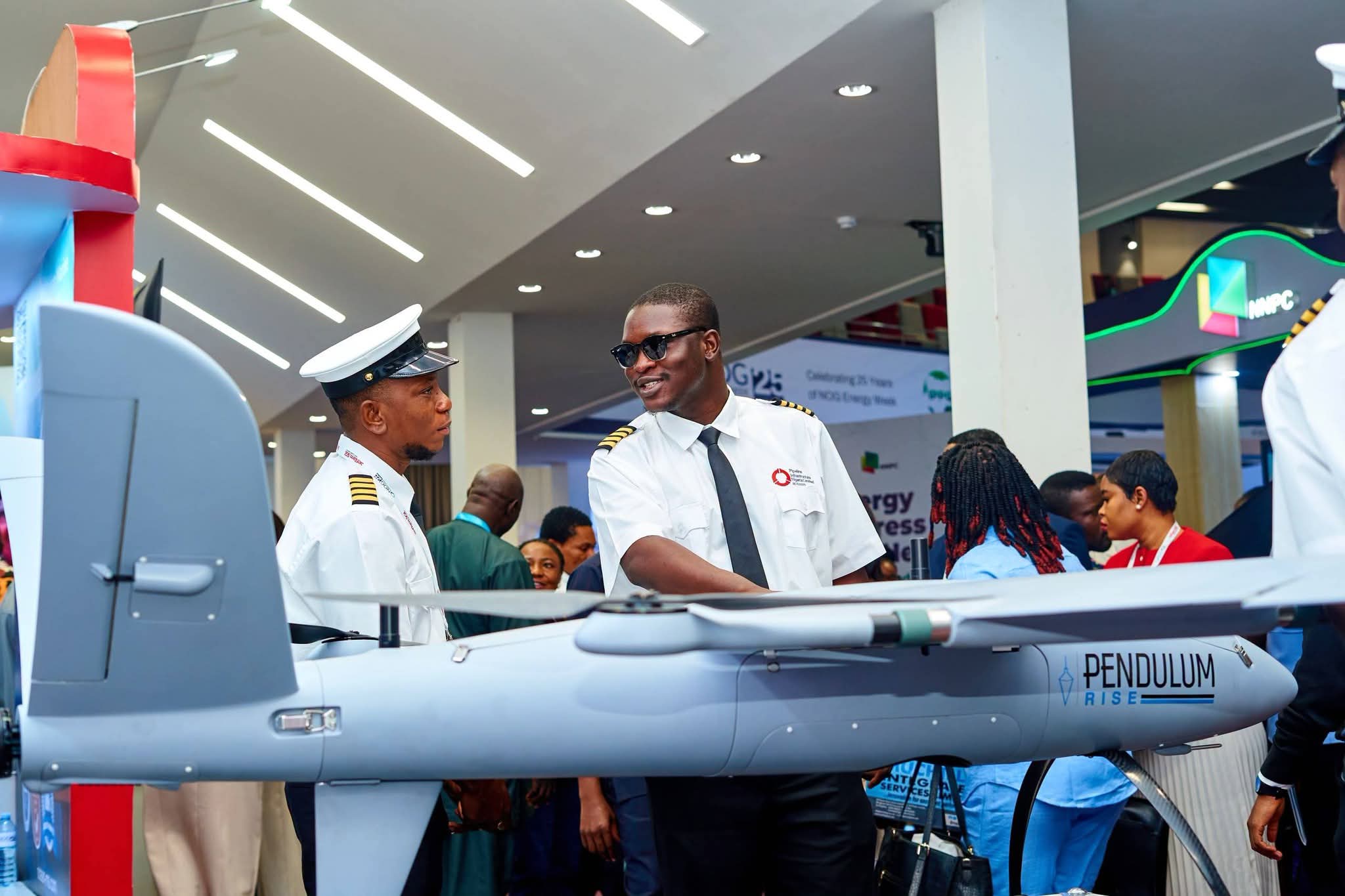
The recent procurement of the PR-001 VTOL Fixed-Wing Unmanned Aerial Vehicle (UAV) by Pipeline Infrastructure Nigeria Limited (PINL) represents a significant shift in how pipeline security is approached in the country.
Described as Nigeria’s first drone specifically deployed for pipeline surveillance and security, the acquisition has drawn commendation from the Niger Delta Social Media Bloggers Association (NDSMBA), which regards it as a landmark achievement in the protection of critical national infrastructure.
Unlike conventional drones, the PR-001 VTOL Fixed-Wing UAV combines the capabilities of a helicopter and an airplane. It is designed to take off and land vertically while covering long distances in flight, enabling it to monitor extensive pipeline networks that cut across forests, swamps, creeks, and remote communities in the Niger Delta. Its advanced surveillance capabilities allow security personnel to detect suspicious activities in real time, both during the day and at night, significantly improving response time to security threats.
Although deployed in 2019, the drone continues to stand as a symbol of technological innovation in Nigeria’s pipeline surveillance architecture. Its adoption reflects a growing recognition that traditional security measures alone are no longer sufficient to combat increasingly sophisticated criminal activities targeting oil infrastructure.
Speaking on the development, NDSMBA spokesman Peri Imaitor described the procurement as a record-breaking milestone capable of strengthening Nigeria’s fight against crude oil theft, pipeline vandalism, and illegal bunkering.
Also see: How Public Engagements Ensured the Return of the Oyo Children
According to the association, the deployment of cutting-edge surveillance technology has the potential not only to improve the security of oil facilities but also to reduce environmental degradation resulting from pipeline breaches and oil spills.
The significance of the initiative extends beyond security. A more secure pipeline network translates into improved crude oil production, increased government revenue, greater investor confidence, and enhanced economic stability. For a country seeking to maximise returns from its oil sector while diversifying its economy, safeguarding critical infrastructure has become an indispensable priority.
The initiative has also earned the support of host communities, traditional rulers, security experts, and stakeholders across the oil and gas industry. Many have described the investment as timely, noting that it strengthens collaboration between operators and host communities while complementing the Federal Government’s efforts to protect strategic national assets and boost oil production.
Modern threats demand modern solutions, and technology has increasingly become one of the most effective tools in surveillance, intelligence gathering, and rapid response.
The procurement of the PR-001 VTOL Fixed-Wing UAV therefore represents more than the acquisition of sophisticated equipment. It signals a gradual transformation in Nigeria’s approach to protecting one of its most valuable economic lifelines.
By embracing innovation, PINL has demonstrated that securing the nation’s oil and gas infrastructure requires foresight, investment, and a willingness to adopt technologies capable of staying ahead of criminal networks.
