


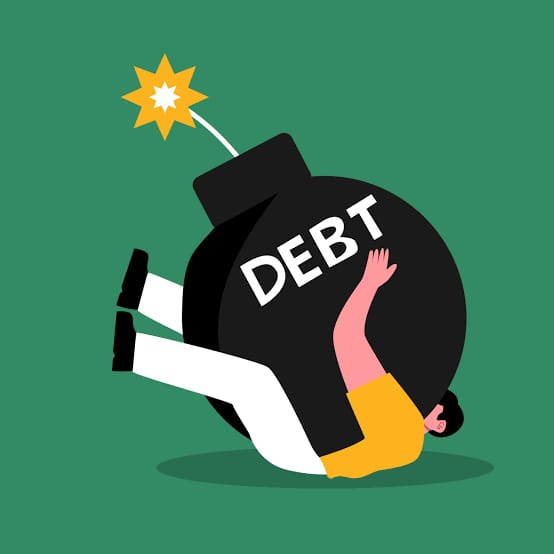
The Federal Government spent significantly more on debt repayments than was provided for in the amended 2025 budget during the first nine months of the year, according to new figures released by the Budget Office of the Federation.
The 2025 Third Quarter Budget Implementation Report revealed that debt-related payments, covering domestic and external obligations as well as contributions to the sinking fund, reached N12.63tn between January and September. This exceeded the prorated budget estimate of N10.74tn by N1.90tn, representing an increase of 17.65 per cent.
Most of the increase came from debt servicing costs, which amounted to N12.52tn during the period, compared with the budgeted N10.45tn. This resulted in an overspend of N2.07tn, or nearly 20 per cent above projections.
Domestic debt servicing accounted for N6.23tn, surpassing its allocation of N5.39tn by N832.42bn. External debt servicing also rose above expectations, reaching N6.30tn against a budget provision of N5.06tn, creating an excess of N1.24tn.
The report showed that debt servicing alone consumed 67.2 per cent of the Federal Government’s retained revenue of N18.63tn during the first three quarters of 2025. When sinking fund payments are included, debt-related obligations absorbed about 67.8 per cent of total revenue.
This means that out of every N100 retained by the government during the period, approximately N67 was used to meet debt obligations, leaving only about N33 for salaries, infrastructure projects, administrative costs, and other government responsibilities.
Also see: ESET Enhances Cybersecurity Awareness Through Capacity-Building Programme
Revenue performance also fell short of expectations. Total government revenue stood at N18.63tn, missing the projected N30.67tn target for the first nine months by N12.03tn, a shortfall of 39.24 per cent.
In the third quarter alone, revenue collection was N7.70tn, below the target of N10.22tn by N2.52tn. The Budget Office linked the weaker performance mainly to lower-than-expected oil revenue, despite improved earnings from non-oil sources.
The rising debt burden also limited spending on development projects. Capital expenditure for the first nine months was only N3.10tn, far below the budgeted N17.58tn. As a result, spending on debt obligations was more than four times higher than investment in capital projects.
According to the report, the high debt service-to-revenue ratio continues to put pressure on government finances, reducing available funds for development and other priorities. It stressed the need for stronger revenue generation and tighter spending controls.
Overall government expenditure reached N24.66tn during the period, lower than the prorated budget estimate of N41.24tn. However, debt servicing remained one of the government’s top spending priorities.
The fiscal deficit for the first three quarters stood at N6.03tn, compared with the budget target of N10.58tn. Financing sources totalled N12.07tn, largely driven by N4.81tn in multilateral and bilateral project loans and N7.08tn from domestic borrowing.
The figures highlight Nigeria’s ongoing fiscal challenge, with insufficient revenue generation continuing to strain public finances while growing debt costs consume a large share of government income and restrict investment in infrastructure.
To ease the pressure, the Federal Government is exploring options to refinance some of its expensive debt and secure additional funding to support budget implementation, supported by improved investor confidence and stronger oil market conditions.
