


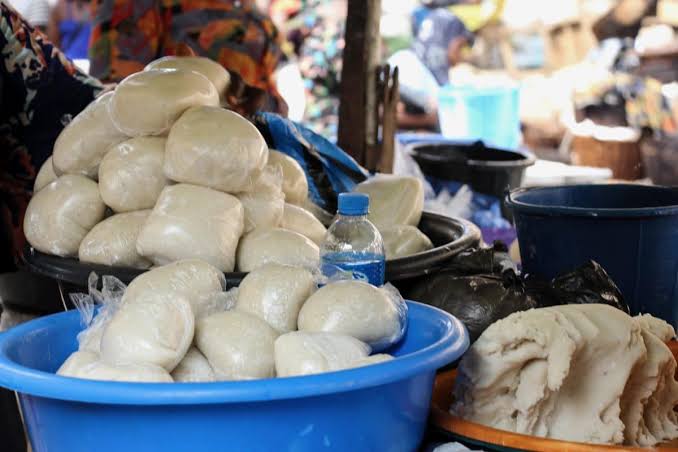
A food scientist, Chukwudi Ogbete, has warned fufu processors against using substances such as detergent and kerosene during cassava processing, saying residues may remain in the finished product and pose potential food-safety risks.
Ogbete said the substances may not be detected through ordinary sensory examination, meaning contaminated fufu could appear normal in colour, smell and taste.
He gave the warning while speaking at the 2026 Women Conference of Deeper Life Bible Church, Ikwuano Region, held at Ndoro Oboro in Ikwuano Local Government Area of Abia State.
Speaking on the topic, “What Women Should Know About Fufu Processing and Food Safety,” Ogbete highlighted food-safety concerns associated with the processing and consumption of fufu.
According to him, some processors add detergent to cassava because they believe it helps to soften the product more quickly during processing.
He described the practice as unsafe and urged processors to discontinue it.
Ogbete also advised consumers who purchase fufu from markets to pay attention to the source of the product and, where possible, buy from trusted processors and vendors.
He said the issue emerged during a research project conducted in Imo State about two years ago as part of an RTD Foods project.
According to him, researchers provided cassava to farmers and asked them to process it into fufu using their usual local methods. The exercise was intended, among other things, to determine whether variations in the quality of the finished product were linked to cassava varieties or processing methods.
Ogbete said researchers subsequently observed some processors adding detergent and, in another case, kerosene during processing.
Read Also: rsmoh-shuts-21-health-facilities-arrests-3-over-quackery
“When we asked them why they were adding these substances, they said that was how they produced fufu in their communities,” he said.
He explained that while some processors acknowledged that the substances were not suitable for food processing, others said they were unaware of the potential consequences.
According to Ogbete, some processors believed the substances would be eliminated during processing and therefore would not remain in the finished product.
He said researchers subsequently conducted laboratory tests to determine whether the substances were completely removed.
Ogbete said the laboratory investigations detected residues after processing, indicating that the substances did not completely disappear.
He further said the researchers conducted sensory evaluations of fufu produced using the observed processing methods.
According to him, the panellists were unable to identify the contaminated samples based on appearance, smell or taste.
“That is exactly how it is in the market. You go to the market, buy fufu, and you will not know that such has been used to produce it,” he said.
He said the finding highlighted the difficulty consumers could face in identifying potentially contaminated fufu through ordinary sensory checks.
Ogbete noted that researchers were able to identify the practice because they had observed the substances being added during the processing stage.
He therefore called on processors to adhere to safe food-processing practices and avoid introducing non-food substances into cassava products.
He also urged consumers to be cautious about where they purchase fufu and to patronise reliable vendors.
Ogbete stressed that proper processing practices and greater awareness among producers and consumers were necessary to reduce preventable food-safety risks associated with fufu production.
