


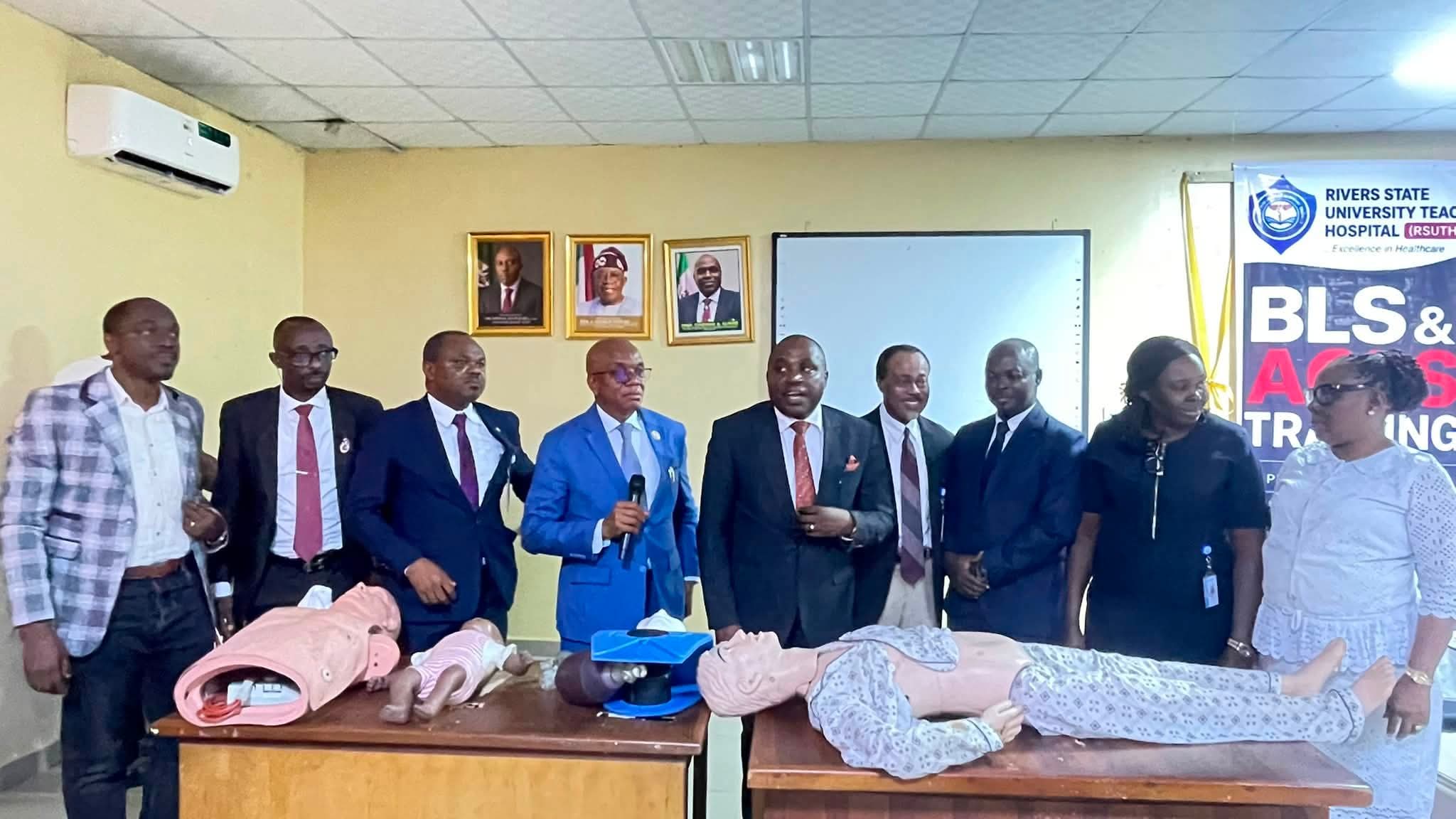
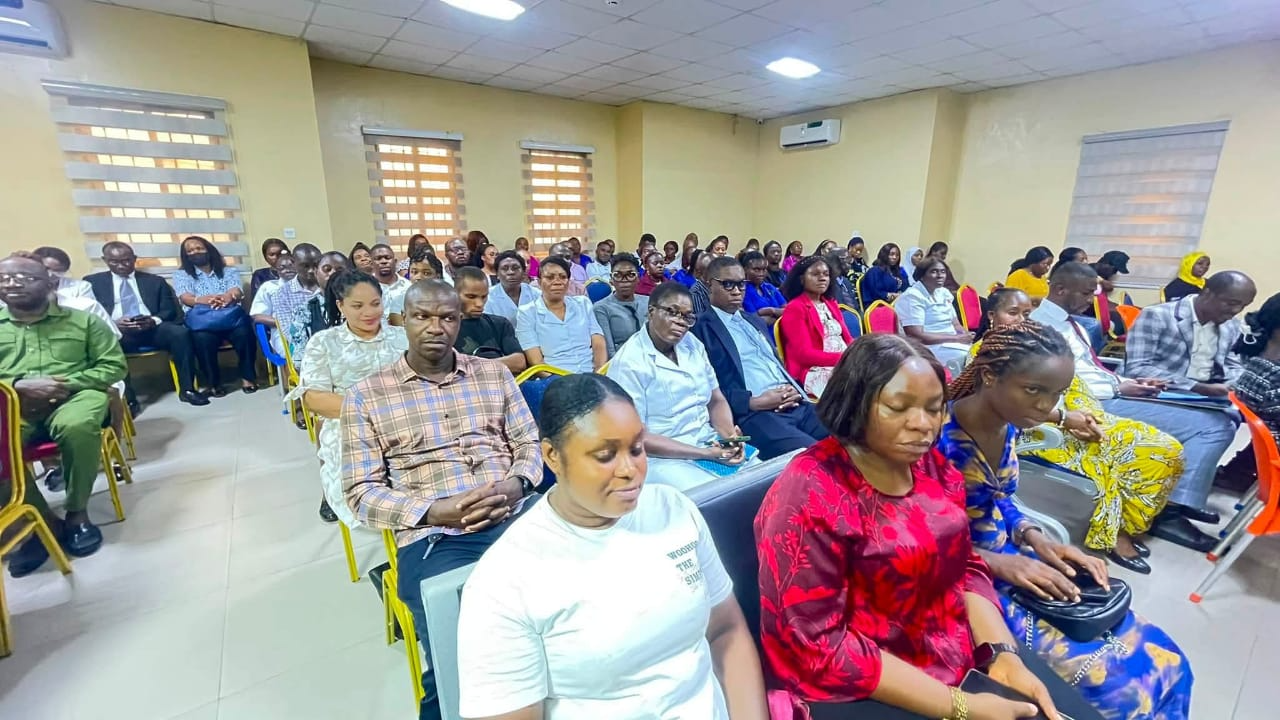
The Rivers State University Teaching Hospital (RSUTH) has commenced Basic Life Support (BLS) and Advanced Cardiovascular Life Support (ACLS) training for 50 health personnel as part of efforts to strengthen emergency response and lifesaving skills among healthcare workers.
The Chief Medical Director of RSUTH, Prof. Chizindu Alikor, disclosed this while flagging off the first batch of the training in Port Harcourt on Monday, 24 August, 2026.
Alikor said the programme was designed to equip health personnel with modern resuscitation skills in line with American Heart Association (AHA) training guidelines, with participants to receive certification and documentation under the AHA trainer-trainee programme.
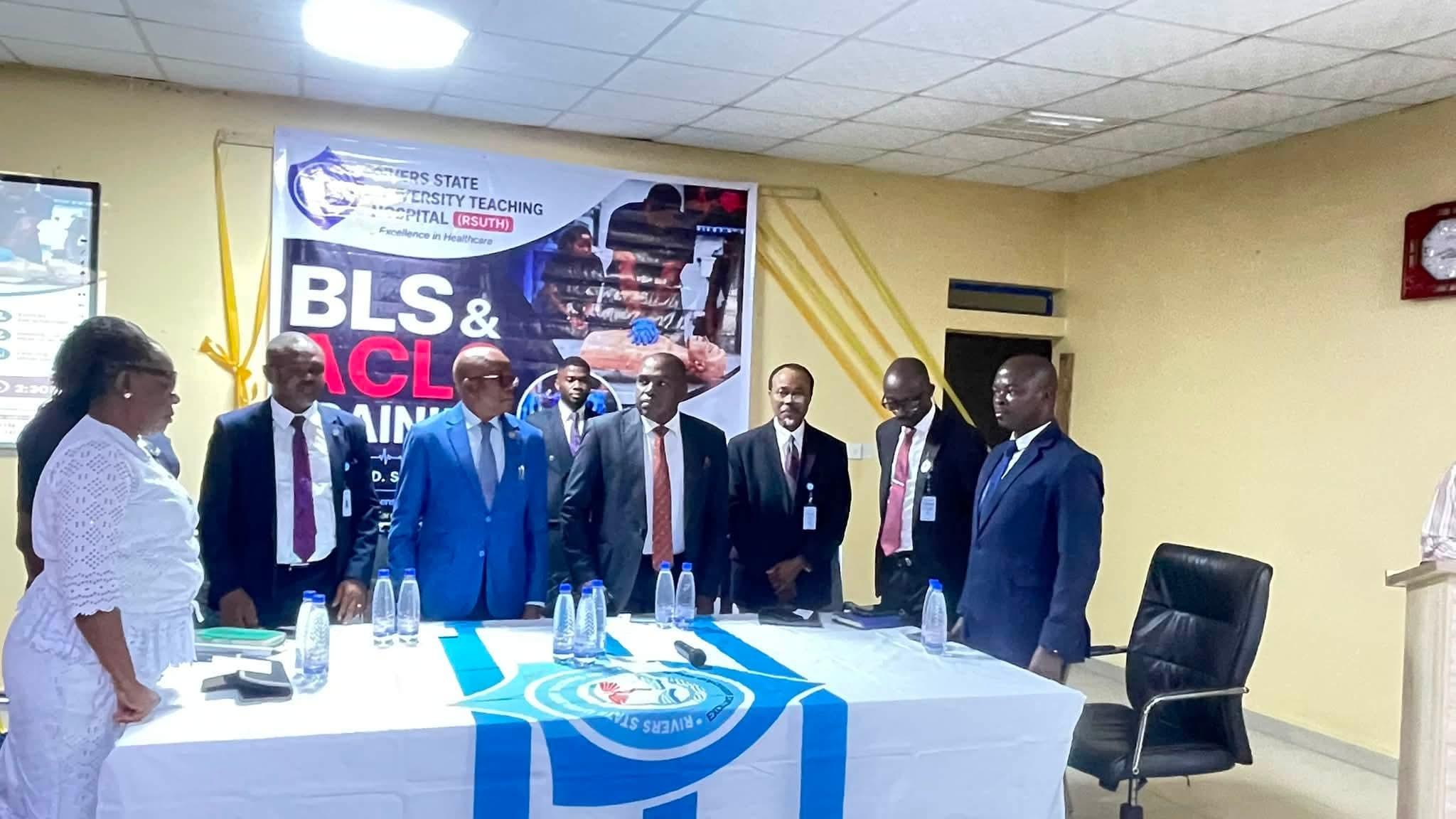
He said the initiative underscored the hospital’s commitment to setting a standard for emergency preparedness, stressing that excellence in patient care could not be achieved without adequate preparation for critical moments.
“BLS and ACLS are not just clinical courses. They are lifesaving competencies. They transform diligence into confidence, confidence into decisive action and decisive action into the possibility of another heartbeat, another breath and another chance at life,” he said.
According to him, the training would initially focus on doctors and nurses from the Accident and Emergency, Cardiology and Anaesthesia/Intensive Care units, with plans to expand the programme to other healthcare workers and communities across Rivers State.
Alikor said the training was fully sponsored by the hospital for the first batch of 50 participants, adding that the management also planned to introduce emergency resuscitation kits at strategic public places and expand basic emergency response training to members of the public.
Read Also: ncdmbs-ezeobi-urges-igboukwu-undergraduates-to-embrace-writing-education-for-future-success
He urged participants to continually refresh their skills and make simulation and mock resuscitation exercises part of the hospital’s institutional culture.
“The true measure of today’s programme will not be the number of participants trained or certificates awarded. Its true measure will be in the emergencies where a life is saved because someone knew how to respond,” he said.
Also speaking, the Permanent Secretary, Rivers State Ministry of Health, Dr Vincent Wachukwu, described BLS as an essential skill that should be within the reach of every healthcare provider, irrespective of professional discipline.
Wachukwu said basic life support could become critical in unexpected situations, recalling an incident during a flight to Morocco when an air hostess suddenly collapsed.
He said he and another Nigerian doctor on board administered CPR and successfully revived the woman, who was later discovered to be three months pregnant.
The Permanent Secretary urged participants to take the training seriously, noting that sudden medical emergencies could occur anywhere, including homes, workplaces, aircraft and public places.
He commended the RSUTH management for the initiative and expressed the state government’s commitment to supporting efforts to improve healthcare delivery and professional development.
The Team Lead of the training, Dr Ovundah Nyeche, said RSUTH’s Accident and Emergency Department was advancing the science of resuscitation from conventional cardiopulmonary resuscitation (CPR) to extracorporeal cardiopulmonary resuscitation (ECPR).
Nyeche explained that ECPR involves the use of extracorporeal membrane oxygenation (ECMO) technology to provide heart and lung support during resuscitation, describing it as an emerging advancement in emergency medicine.
He said the hospital’s teaching status placed a responsibility on it to become a centre of excellence in resuscitation science and expressed appreciation to the management for its support.
He added that the training represented the beginning of a broader programme aimed at strengthening emergency response capacity within RSUTH and eventually extending such capacity across Rivers State.
