


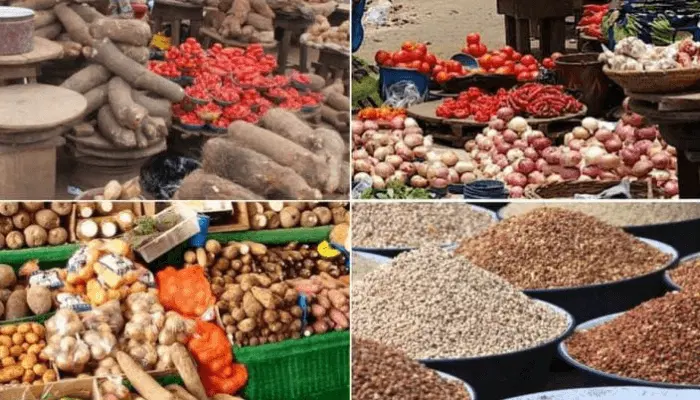
Nigeria is blessed with vast arable land, a favourable climate, and millions of energetic young people. Yet, despite these enormous advantages, the country continues to struggle with food insecurity. The irony is difficult to ignore.
A nation that should be feeding itself, and even exporting surplus food, is increasingly grappling with rising food prices, dwindling agricultural output and growing dependence on imports.
Food has become one of the biggest concerns for millions of Nigerian families. Across markets, the prices of rice, garri, beans, yam, tomatoes and other staple foods have climbed beyond the reach of many households. For families already battling inflation and declining purchasing power, the daily question is no longer what to eat but whether there will be enough to eat.
Food security is often discussed only when prices soar or shortages occur. That approach is short-sighted. A country that cannot guarantee a steady supply of affordable food leaves itself vulnerable to economic shocks, social unrest and worsening poverty.
The root of the problem goes beyond climate change or population growth. Insecurity has become one of the greatest threats to agriculture in Nigeria. Across many farming communities, farmers are forced to abandon their farmlands because of attacks by bandits, kidnappers and violent clashes. When farmers cannot safely cultivate their land, harvests decline, supply drops, and food prices inevitably rise. Protecting farming communities must become an urgent priority.
Another challenge is the continued neglect of agriculture by successive governments. For decades, the country has relied heavily on crude oil while agriculture has received inconsistent attention. Policies are often announced with fanfare but are rarely implemented effectively. Budgetary allocations to agriculture remain inadequate, while many genuine farmers struggle to access affordable loans, improved seedlings, fertilisers, irrigation facilities and extension services.
Nigeria must also begin to change the way it views farming. For too long, agriculture has been seen as an occupation of last resort rather than a profitable business. Many young people have little interest in farming because they associate it with hardship and low returns. Yet around the world, modern agriculture has become a thriving industry driven by technology, innovation and entrepreneurship.
If Nigeria is serious about achieving food security, farming must be made attractive again. Young people should be encouraged to venture into agriculture through access to land, affordable financing, mechanised equipment, training and guaranteed markets for their produce. Agriculture should not be presented as charity but as a viable business capable of creating wealth and employment.
Equally important is the need to reduce post-harvest losses. Every year, enormous quantities of food are wasted because of poor storage facilities, inadequate transportation and weak processing capacity. Farmers often lose a significant portion of their harvest before it reaches consumers. Investing in rural roads, storage centres, cold-chain infrastructure and agro-processing industries would help preserve food, increase farmers’ incomes and stabilise market prices.
State governments also have a critical role to play. Every state has unique agricultural strengths that can be harnessed. Rather than waiting for federal interventions, governors should identify crops and livestock suited to their environments and develop policies that support local production. Partnerships with the private sector can also attract investment into commercial farming and agro-processing.
The private sector, financial institutions and development partners must equally support efforts to transform agriculture. Farmers need easier access to credit at reasonable interest rates, while investors require clear policies that encourage long-term investment in the agricultural value chain. Without private sector participation, the goal of sustainable food production will remain difficult to achieve.
Consumers, too, have a role to play. Patronising locally produced food not only supports Nigerian farmers but also strengthens the economy and reduces pressure on foreign exchange. A stronger agricultural sector benefits everyone—from the farmer in the village to the trader in the market and the family struggling to put food on the table.
Food security cannot be achieved through emergency interventions alone. It requires consistent planning, investment and political commitment. It demands policies that outlive administrations and place agriculture at the centre of national development.
The conversation about Nigeria’s future should not revolve around oil alone. The true wealth of this nation lies in its ability to feed its people. A country that cannot produce enough food for its citizens cannot claim to be economically secure.
Making farming a national priority is no longer a matter of choice; it is an economic necessity. The future of Nigeria depends not only on what lies beneath the ground but also on what grows from it.
