


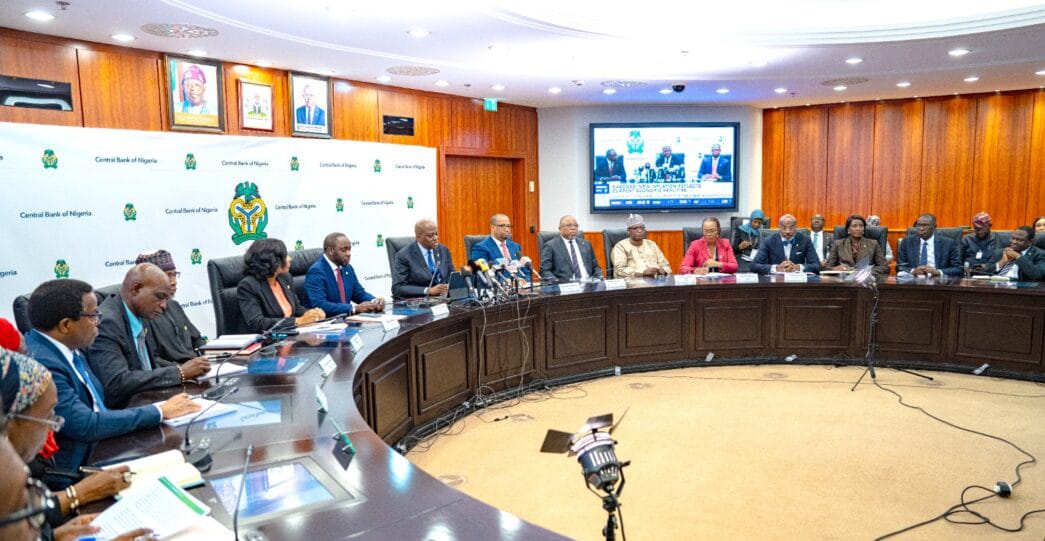
The Central Bank of Nigeria (CBN) has commenced its latest Monetary Policy Committee (MPC) meeting, with financial markets, businesses and households awaiting what could be one of the most closely watched economic decisions of the year.
The meeting is expected to determine the direction of Nigeria’s benchmark interest rate amid signs of easing inflation, improving foreign exchange stability and growing calls for policies that stimulate economic growth.
The meeting comes just days after the National Bureau of Statistics (NBS) reported another decline in Nigeria’s headline inflation rate, reinforcing optimism that the country’s aggressive monetary tightening may finally be producing the desired results. Inflation has gradually moderated in recent months, while the naira has shown greater stability against major foreign currencies compared to the volatility experienced over the past year.
These developments have placed the CBN in a delicate position. Having spent the last two years aggressively raising the Monetary Policy Rate (MPR) to curb inflation and stabilise the economy, the apex bank must now decide whether those gains are strong enough to justify a shift in policy or whether maintaining its current stance remains the safest course.
Most financial analysts expect the committee to leave the benchmark interest rate unchanged. Their argument is straightforward: while inflation is easing, prices of food, transportation, electricity and other essential commodities remain high, and cutting interest rates too soon could reverse the progress already made in stabilising the economy.
A decision to retain the current rate would signal that the CBN remains committed to consolidating recent gains before considering monetary easing.
The outcome of the meeting extends far beyond the banking sector. The MPR serves as the foundation for lending rates across the financial system. A higher rate means commercial banks continue to offer loans at relatively expensive rates, making it difficult for businesses, particularly small and medium-sized enterprises, to access affordable financing for expansion. For households, it translates into more expensive mortgages, personal loans and business credit.
Also see: FIFA’s Biggest Test Is Not the Final, but Fairness
Conversely, maintaining higher interest rates has also encouraged savings by offering better returns to depositors while helping to moderate excess liquidity within the economy. This has been one of the key tools deployed by the CBN to contain inflationary pressures.
Investors are equally monitoring the MPC’s decision. Stable monetary policy, combined with improving foreign exchange conditions, has helped restore confidence among domestic and foreign investors. Any unexpected change in interest rates could influence capital flows, exchange-rate movements and investor sentiment in the months ahead.
The Federal Government has repeatedly emphasised that recent economic reforms are beginning to yield positive results. Fiscal Policy Chairman Taiwo Oyedele recently stated that Nigeria has moved beyond economic stabilisation and must now focus on ensuring that ordinary Nigerians benefit through lower living costs, increased employment and stronger purchasing power.
For millions of Nigerians struggling with the high cost of living, the expectation is not merely for a policy announcement but for decisions that translate into tangible economic relief. Whether through sustained price stability, improved access to credit or stronger investor confidence, the outcome of this MPC meeting will provide one of the clearest indications yet of where Nigeria’s economy is headed in the second half of 2026.
