


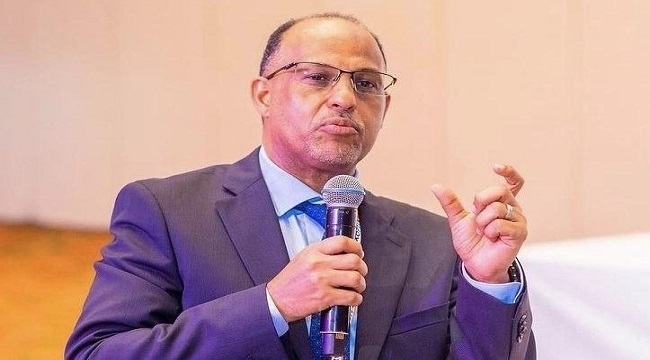
The Nigerian Communications Commission (NCC) has formally inaugurated the new board of the Nigerian Internet Protocol version 6 (IPv6) Council in Ikeja, Lagos. Mr. Muhammed Rudman, the Chief Executive Officer of the Internet Exchange Point of Nigeria (IXPN), will continue in his role as Chairman.
This inauguration signifies a crucial milestone for Nigeria’s telecommunications industry, as the global demand for IPv4 now surpasses the available IPv4 address space.
After the event, Rudman expressed gratitude for the contributions of previous board members, including Olusola Teniola (former President, ATCON), Funke Opeke (Founder, MainOne), Mary Uduma (former President, NiRA), and Lanre Ajayi (past President, ATCON), highlighting that their participation was vital in laying the groundwork for the nation’s IPv6 migration initiatives.
Rudman pointed out that membership in the IPv6 Council is based on institutions. The newly formed board consists of Mr. Muhammed Rudman as Chairman and a representative from the NCC serving as Co-Chairman.
Institutional representatives from NITDA, ATCON, NIRA, ALTON, ISPON, and NgREN are included as board members, with Dr. Chris Uwaje and Prof. Latif Ladid serving as Advisers. This team is tasked with spearheading the nationwide transition from IPv4 to IPv6.
”The shift to IPv6 is a strategic national imperative. It is crucial for facilitating Nigeria’s digital transformation, fostering economic growth, and enhancing global competitiveness.
The council’s strategy recognizes IPv6 as a key driver for national development, concentrating on three main pillars: supporting emerging technologies such as 5G and the Internet of Things (IoT), encouraging economic diversification, and delivering improved security and performance compared to traditional solutions like Network Address Translation (NAT),” Rudman remarked.
In order to meet these goals, the council has developed an action plan centered on two main initiatives: raising awareness and building capacity.
The board will focus on enhancing national awareness of IPv6 by organizing specific events and workshops, in addition to offering IPv6 training for network engineers from a range of operators, such as ISPs, telecommunications firms, educational institutions, and financial entities.
These initiatives are anticipated to support the adoption and implementation of IPv6 across Nigerian networks.
