


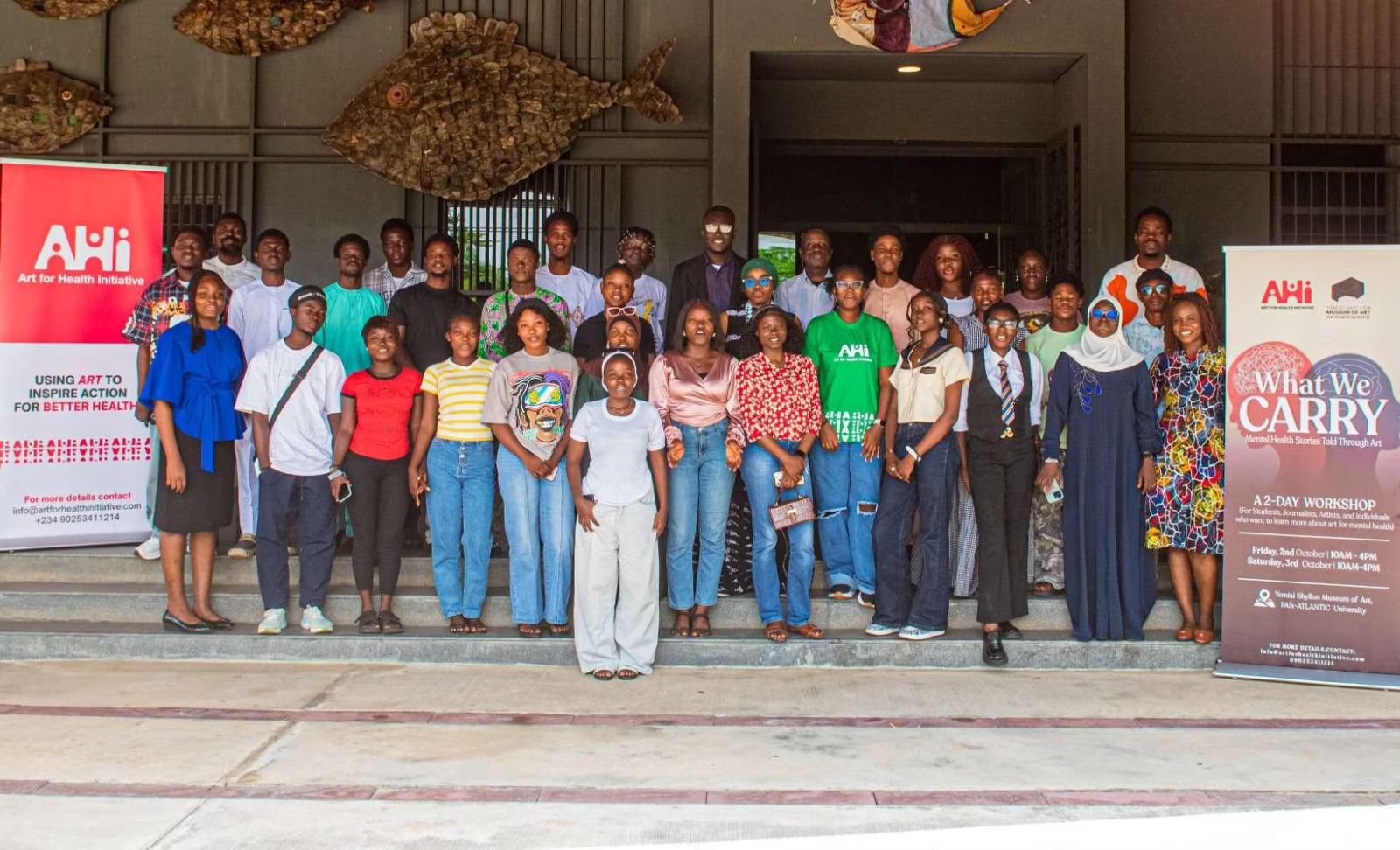
The Yemisi Shyllon Museum of Art (YSMA), Pan-Atlantic University, in collaboration with the Art for Health Initiative (AHI), has organised a two-day workshop to promote mental health awareness and resilience through artistic expression.
The workshop, themed “What We Carry: Stories of Mental Health and Resilience,” held on October 2 and 3, 2026, brought together 25 art students from the Yaba College of Technology (Yabatech), Epe Annex.
The programme, known as the Health Story Lab, explored how art can provide an alternative platform for communicating sensitive experiences, including stress, grief, fear, family expectations, and social pressure, while encouraging empathy and meaningful conversations about emotional well-being.
Participants attended sessions on public health communication, mental health and resilience, artistic expression, and the role of art in social change.
The sessions were facilitated by public health strategist Dr Olayinka Badmus, psychiatrist and psychotherapist Dr Emmanuel Abayomi, art project lead Temitope Oladeji, and art historian and museum educator Charles Udeh, who also led a guided tour of the museum.
The students reflected on the emotional challenges facing young people and explored how their artistic skills could be used to communicate mental health issues.
They subsequently developed creative concepts and presented their ideas for feedback from facilitators and fellow participants.
Read Also: rsphcmb-urges-residents-to-care-for-mental-health
Speaking on the initiative, YSMA’s Head of Corporate Communication and Visitors’ Services, Solomon Nkwagu, said the workshop helped students understand that art could serve purposes beyond aesthetics.
He noted that the participants began to recognise how their creative abilities could stimulate conversations about public health, communicate relatable experiences and encourage audiences to reflect on mental well-being.
Founder of AHI, Chidera Rosecamille Aneke, said the programme was designed to promote more participatory, culturally relevant and emotionally engaging approaches to health communication.
She explained that health messages could be communicated not only through statistics and clinical information but also through stories, images, symbols and lived experiences.
The organisers also emphasised ethical storytelling, ensuring that participants were not pressured to disclose personal traumatic experiences publicly and that their creative work avoided stigma and harmful stereotypes.
Following the workshop, the students are expected to develop original artworks inspired by the sessions, with the works scheduled for presentation at a micro-exhibition in Lagos later in November 2026. The exhibition date is yet to be announced.
The collaboration highlights the potential of partnerships between cultural institutions, artists and public health practitioners to raise mental health awareness, encourage emotional expression and foster more inclusive conversations about the challenges affecting individuals and communities.
