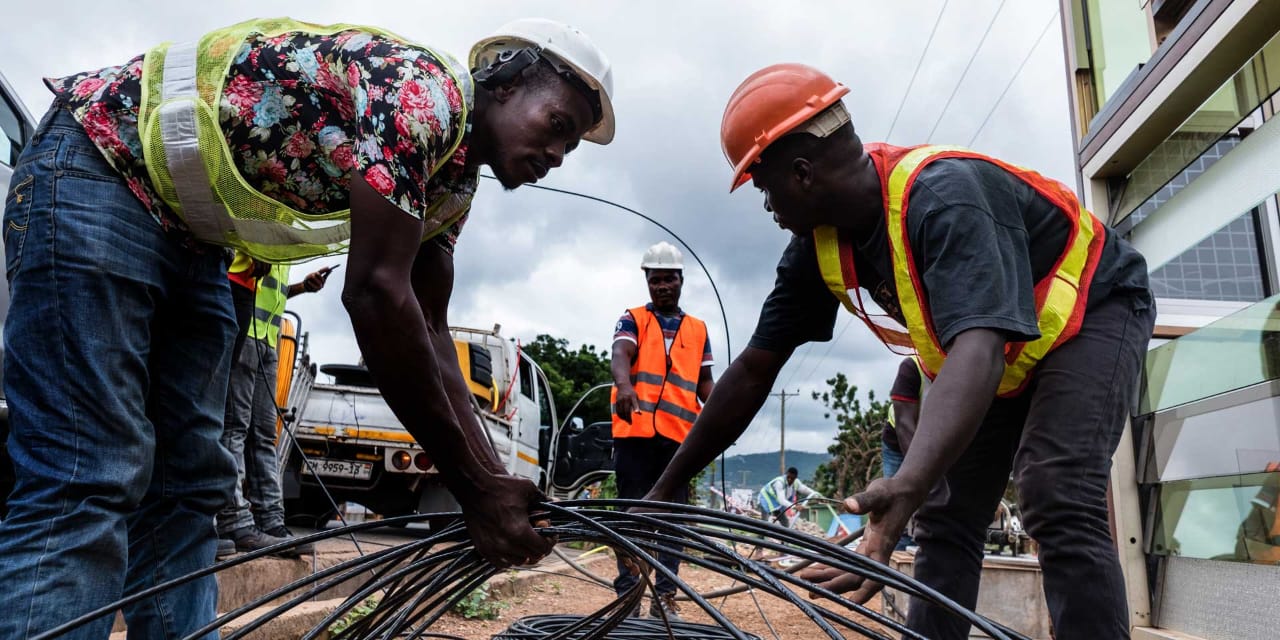
The Federal Government has announced plans to deploy 90,000 kilometres of open-access fibre-optic cables across Nigeria’s 36 states and the Federal Capital Territory by 2028, in a major effort to expand broadband connectivity and strengthen the country’s digital economy.
The initiative, known as Building Resilient Digital Infrastructure for Growth (Project BRIDGE), is expected to increase Nigeria’s fibre-optic backbone from approximately 35,000 kilometres to 125,000 kilometres and connect more than 200,000 schools, healthcare facilities and other public institutions.
The National Chairman of the All Progressives Congress, Professor Nentawe Yilwatda, disclosed the plans during a virtual executive session with chief executives in the information technology industry.
Yilwatda said the physical rollout was scheduled to begin in October 2026, with the implementation period shortened from five years to three years. He described reliable and affordable digital connectivity as essential to Nigeria’s ambitions in artificial intelligence, cloud computing, digital inclusion and economic transformation.
According to him, approximately $800 million in sovereign financing had been secured for the project. The funding comprises $500 million from the World Bank, $100 million from the European Bank for Reconstruction and Development and $200 million from the African Development Bank, alongside a €22 million grant from the European Union.
However, Yilwatda disclosed that the project still requires about $1.2 billion in private-sector investment to meet its estimated $2 billion funding needs.
The initiative will operate through Bridge Open Access, an independent company established to deliver the network under a public-private partnership arrangement. Private investors are expected to retain the majority ownership and operational control.
Yilwatda also identified high right-of-way charges, multiple permits, inconsistent regulations and damage to fibre infrastructure as major challenges facing telecommunications operators.
He stressed that fibre deployment alone would not guarantee digital inclusion without complementary investments in electricity, telecom towers, affordable devices and data services.
The government believes the project will improve internet access in underserved communities, strengthen public services and create a foundation for Nigeria’s expanding digital economy.
FG Plans 90,000km Fibre Rollout Nationwide to Boost Internet Access