


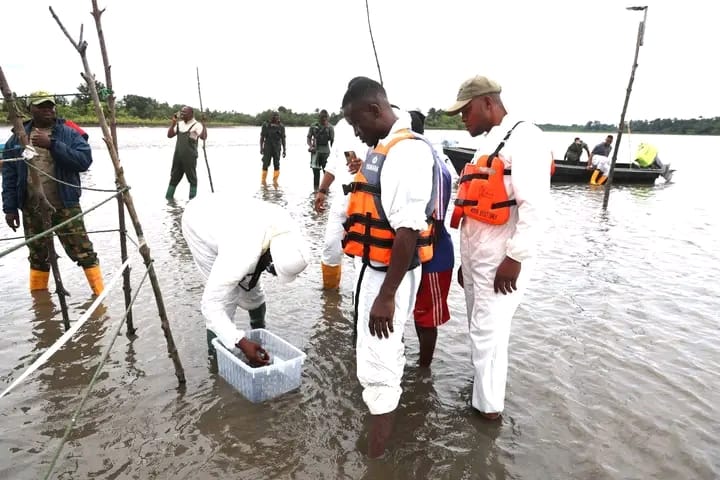
On the Bomu tidal flat, more than 55 periwinkle harvesters were counted in a single field exercise. The image is a hopeful one. Not long ago, this creek was so damaged by oil that its shellfish were scarce and its livelihoods were collapsing. This week, periwinkle, dogwhelk, and swim crabs are returning, and a southern pink shrimp was seen leaping across the exposed flat. That crowd is proof that the cleanup is working. It is also a warning.
Recovery attracts pressure. The same flat that is healing is now a beehive of harvesters, and HYPREP’s Project Coordinator, Prof Nenibarini Zabbey, has noted on Saturday, 26 September, that over-harvesting is slowing restoration. If too many people strip the creek too quickly, the gains could be undone before the ecosystem is strong enough to sustain them. The women who pick periwinkle deserve to benefit from the return of food species, but a creek harvested to exhaustion will feed no one.
That brings us to a hard truth: recovery is a shared duty. HYPREP can breed bloody cockles in salinity-controlled water, release larvae into the creek, and implant spent cockles in culture beds. It can restore mangroves and clean shorelines. What it cannot do alone is police every tidal flat. Cutting juvenile mangroves, trespassing and poaching in the cockle beds are human choices, and they are slowing the healing of creeks that communities depend on. Ogoni people cannot merely receive a cleanup. They must guard it.
That means accepting sustainable harvesting practices and, where necessary, a temporary moratorium to let stocks rebuild. It means community-led monitoring of culture beds and mangrove areas, backed by traditional leaders who can enforce local rules. Sacrifice, however, must not fall on the poorest alone. If women pickers are asked to stop harvesting, they need support in the meantime, whether through alternative livelihoods, training or other assistance.
Yet community discipline is only half the story. Ogoni’s recovery is being delivered in patches, one creek and one shoreline at a time, while decades of pollution still lie across large areas. HYPREP is now in Phase 2 of Shoreline Cleanup and Mangrove Restoration, and the results at Bomu show what is possible with science, funding and persistence. That is precisely why government must do more, not less.
The Federal Government should ensure HYPREP is fully and promptly funded so that work does not stall between phases. Contractors must be held to timelines and standards, with results published for the public to see. The Rivers State government should support enforcement and livelihood programmes alongside the cleanup. Clean-up must also reach every polluted community in Ogoniland, not only the sites that make good field visits.
Ogoni has waited too long. Bomu Creek shows that nature responds when it is given a chance, and that communities will embrace recovery when they see it. Let the community protect what has been restored, and let the government finish what it started. A shrimp leaping across a tidal flat is a small miracle. The land deserves many more.
