


The 36 state governors operating under the framework of the Nigeria Governors Forum, NGF, have distanced themselves from allegations that sub-national administrations have failed to properly account for revenues derived from the withdrawal of fuel subsidies.
The governors stated that such accusations regarding the mis-management of subsidy proceeds by them should not arise. They also endorsed the proposed implementation of the National Affordable CNG Transit Programme (NACTP), asserting that it will assist in lowering transit expenses across the nation.
Emerging from its third assembly at the NGF Secretariat in Abuja from Wednesday night through early Thursday morning, the state executives emphasized that the scheme seeks sub-national governments’ backing for CNG vehicle conversions, fleets, and other supportive infrastructure targeted at minimizing commuter prices.
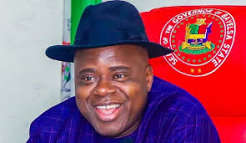
Bayelsa State Governor Douye Diri, who read the official statement issued at the conclusion of the session on behalf of the Chairman of the Body, Governor AbdulRahman AbdulRazaq of Kwara State, attributed rising national inflation to escalating transit costs, while revealing that the leaders noted the NACTP holds the “potential to ease transportation costs, and agreed on the need to further consider its financing and implementation framework.”
When questioned on whether the collective would accept blame that sub-nationals had not been properly accountable for funds obtained from the removal of fuel subsidy, Governor Diri stated: “That cannot be true. That cannot be true. But we’ll leave that debate for another day.”
According to Diri, the state executives intend to collaborate with private enterprise to introduce additional CNG vehicles into the country, given that “gas is cheaper than petrol, which will actually reduce the costs of transportation.”
He expressed conviction that this strategy would trigger a ripple effect across all other domains, noting, “The impact is expected to be on our people, the common man.”
Diri shared that the Minister of Industry, Trade and Investment, Dr. Jumoke Oduwole, briefed the leaders regarding prospects for regional involvement in CANEX Weekend 2026 and the Intra-African Trade Fair (IATF) 2027, slated for Lagos.
The governor, who highlighted that as state leaders they voiced a shared commitment to participate, noted, “Governors noted the platform’s potential to showcase investment-ready projects, promote local exports and tourism, and connect State MSMEs with African and global investors and buyers. The Forum assured the Honourable Minister of its support in achieving these objectives.”
The official statement outlined: “The Forum received a presentation from the Honourable Minister of Industry, Trade and Investment, Dr Jumoke Oduwole, on opportunities for State participation in CANEX Weekend 2026 and the Intra-African Trade Fair (IATF) 2027, both scheduled to be held in Lagos. Governors noted the platform’s potential to showcase investment-ready projects, promote local exports and tourism, and connect State MSMEs with African and global investors and buyers. The Forum assured the Honourable Minister of its support in achieving these objectives.
“The Forum received a presentation on the proposed National Affordable CNG Transit Programme (NACTP), a State-led initiative designed to translate the lower operating cost of CNG into reduced transport fares for citizens. The proposal envisages State support for CNG vehicle conversions, fleets and enabling infrastructure, alongside fare commitments from participating operators, with an indicative target of reducing passenger fares. Governors noted the initiative’s potential to ease transportation costs and agreed on the need to further consider its financing and implementation framework. “
Also see: Stakeholders Pushes for Water Policy That Recognises Indigenous Rights
Probed regarding the timeline for executing the NACTP, Diri mentioned that specifics would be mapped out between the collective and the organizers, adding that “those details will be worked out between the Forum and those who have come to present to the Forum.”
The state leaders, who likewise defended the choice to focus relief efforts on mobility, explained that the expense of moving citizens and freight bears a direct bearing on market costs for food and basic items.
The NGF stated: “Transportation is key. Transportation is key to several other factors. Say, for instance, you are talking about foodstuffs—increase in the cost of foodstuffs. They will tell you that ‘I’m moving from point A to point B, the transport cost is XY.’
“And so for that reason, the cost of my yam, the cost of my garri… And so by the time you reduce the cost of transport, as I said earlier, it will have a multiplier effect on several others.”
Addressing the broader dialogue surrounding subsidy removal and demands for a policy rollback, Diri, who pointed out that the NACTP is among several measures intended to cushion the impact of the reform on Nigerians, remarked: “These are part of the issues that have been addressed, particularly with the number two that I just talked about today about transportation fares.
“And you see that the rise in the cost of every other thing is also hinged on the increase in transport. And so now that the Forum is going in league with the private sector to see how we can bring in CNG, and you know that gas is cheaper than petrol and others, which will actually reduce the costs of transportation.
“And it will have a multiplier effect on every other sector. And that’s because there is now the removal of subsidies. And the impact is expected to be on our people—the very common man that we all talk about.”
