


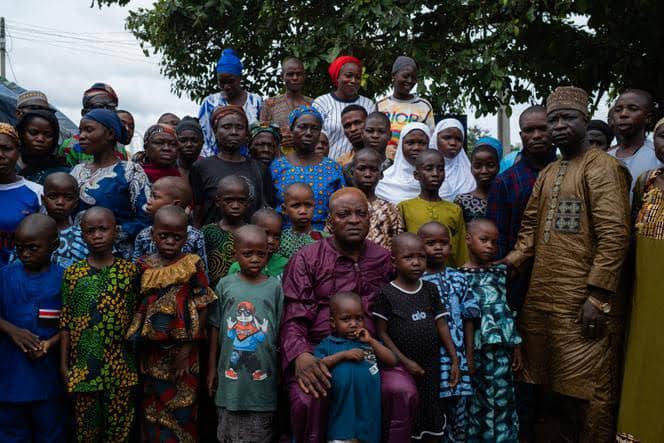
The rescue of 308 abductees by Nigerian security forces marks one of the most significant breakthroughs in the country’s long-running battle against banditry and mass kidnappings. Coming at a time when insecurity continues to dominate national discourse, the operation has reignited hope that coordinated security efforts can produce tangible results in regions that have endured years of fear and violence.
According to the Presidency, the victims were rescued during coordinated, intelligence-led operations carried out by a joint security team across parts of Niger and Kwara states.
The operation led security forces into forest hideouts where many of the abductees were being held, resulting in the safe recovery of 163 victims kidnapped from Woro community in Kwara State earlier this year and another 145, mostly from neighbouring Niger State.
Authorities described it as the largest single-day hostage rescue in Nigeria’s history, although specific operational details were withheld for security reasons.The Significance of Nigeria’s Largest Hostage Rescue
The rescue of 308 abductees by Nigerian security forces marks one of the most significant breakthroughs in the country’s long-running battle against banditry and mass kidnappings. Coming at a time when insecurity continues to dominate national discourse, the operation has reignited hope that coordinated security efforts can produce tangible results in regions that have endured years of fear and violence.
According to the Presidency, the victims were rescued during coordinated, intelligence-led operations carried out by a joint security team across parts of Niger and Kwara states.
The operation led security forces into forest hideouts where many of the abductees were being held, resulting in the safe recovery of 163 victims kidnapped from Woro community in Kwara State earlier this year and another 145, mostly from neighbouring Niger State. Authorities described it as the largest single-day hostage rescue in Nigeria’s history, although specific operational details were withheld for security reasons.
For many communities in northern Nigeria, abductions have become an unfortunate reality. Schools, highways and rural settlements have repeatedly come under attack, with families often forced to pay huge ransoms or wait anxiously for news of their loved ones.
Against this backdrop, the successful rescue of more than 300 victims is more than just another security operation, as it represents a major humanitarian achievement and a morale boost for citizens who have questioned the state’s ability to protect lives.
Also see: FG Moves to Blacklist Schools, Publishers Using Unapproved Textbooks
The operation also reflects the importance of intelligence-driven security strategies. While military offensives remain necessary, recent successes suggest that better coordination among the armed forces, intelligence agencies and local security networks can significantly improve outcomes. The rescue demonstrates that well-planned operations can save lives while disrupting criminal networks that have thrived on fear and ransom payments.
However, celebrations should not overshadow the larger challenge. The frequency of kidnappings in parts of the country shows that criminal groups still possess the capacity to strike vulnerable communities. Rescuing victims is commendable, but preventing future abductions remains the greater test. This requires sustained military pressure, improved surveillance, stronger policing of rural areas and better protection of schools and major transport routes.
The government must also address the social and economic conditions that allow criminality to flourish. Poverty, unemployment and weak state presence in remote communities continue to create opportunities for armed groups to recruit and operate. Lasting security cannot be achieved through military action alone; it must be supported by economic development, improved education, stronger local governance and greater investment in communities that have long been neglected.
Equally important is the welfare of those who have regained their freedom. Many of the rescued victims are likely to return home carrying deep psychological and emotional scars after enduring traumatic experiences in captivity. Supporting survivors is an essential part of restoring public confidence and demonstrating that the government’s responsibility extends beyond rescue operations.
While the successful operation deserves commendation, it should also serve as a benchmark for future security efforts. Nigerians will judge progress not only by the number of victims rescued but by a sustained reduction in the frequency of kidnappings and attacks across the country. Consistency, rather than isolated victories, will ultimately determine whether the nation is gaining the upper hand against criminal groups.
