


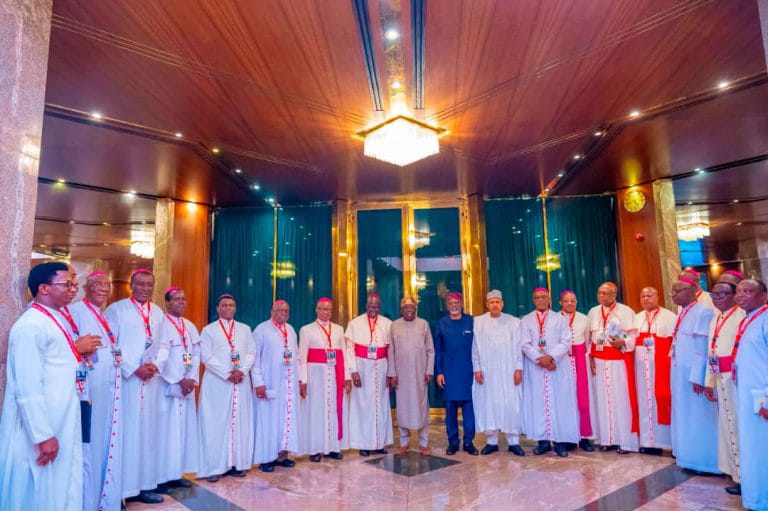
When President Bola Tinubu met with the Catholic Bishops’ Conference of Nigeria in Abuja, the President defended his administration’s economic reforms and security policies, insisting that Nigeria is gradually emerging from a difficult period.
He maintained that investments in intelligence gathering, military operations and security infrastructure are beginning to produce results, while arguing that economic reforms introduced since he assumed office are laying the foundation for long-term stability and growth.
The President also sought to reassure Nigerians about the country’s democratic future, stating that the Independent National Electoral Commission (INEC) remains independent and that every political party will have a fair opportunity to participate in the 2027 general elections. His remarks come at a time when concerns over political inclusiveness and electoral credibility continue to dominate public discourse.
Also see: NIMASA ADR Delay: Petitioners Stand Firm
The Catholic bishops, however, used the meeting to present a different perspective they raised concerns over the rising cost of living, persistent insecurity, unemployment and the growing pressure on households struggling to cope with inflation. They also urged the government to protect democratic institutions and ensure that governance remains transparent, accountable and responsive to citizens.
The exchange shows an important reality in Nigeria’s current political landscape. While government points to improving economic indicators and ongoing reforms, many Nigerians continue to judge progress by what they experience in their communities whether food has become more affordable, businesses are surviving, roads are safer and opportunities are expanding.
Ultimately, the significance of the meeting lies not only in the assurances given but in the expectations they have created. Religious leaders remain influential voices in Nigeria’s national conversation, and their engagement with government reflects the concerns of millions of citizens looking for tangible results rather than optimistic projections.
As Nigeria navigates economic reforms, security challenges and preparations for another election cycle, the real measure of success will not be official declarations but the extent to which policies improve the everyday lives of the people they are intended to serve.
