


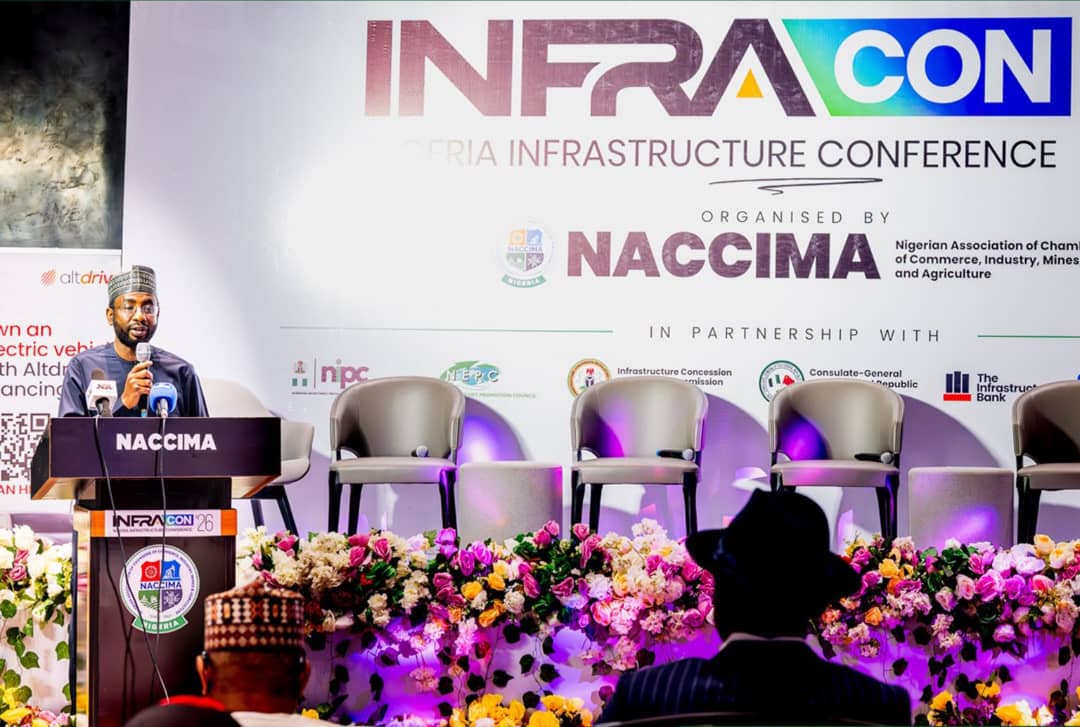
The National Information Technology Development Agency (NITDA) has described digital infrastructure as critical to Nigeria’s ambition of building a $1 trillion economy, saying investments in technology must complement traditional infrastructure to drive sustainable economic growth.
The Director-General of NITDA, Kashifu Inuwa Abdullahi, made the remarks while speaking at the Nigeria Infrastructure Conference (INFRACON 2026), organised by the Nigerian Association of Chambers of Commerce, Industry, Mines and Agriculture (NACCIMA).
Inuwa said while investments in roads, railways, power and other physical infrastructure remain essential, digital infrastructure has become equally important in today’s technology-driven economy.
He stressed the need to integrate digital technologies into conventional infrastructure projects, noting that smart cities, broadband connectivity, cloud infrastructure and digitised government services are essential to supporting economic growth.
According to him, technology now underpins virtually every sector of the economy, making digital infrastructure a key driver of innovation, productivity and national competitiveness.
The NITDA Director-General said the agency is collaborating with NACCIMA to digitise the association and support its members in developing digital infrastructure that will strengthen businesses and expand Nigeria’s digital economy.
He also welcomed increased private sector participation in infrastructure development, citing President Bola Tinubu’s approval of the reviewed Public-Private Partnership (PPP) framework as a step towards attracting more investment into critical infrastructure projects.
Inuwa said stronger collaboration between the public and private sectors would accelerate digital transformation, create opportunities for innovation and lay the foundation for sustainable economic growth.
The conference brought together policymakers, investors, development partners and industry leaders to examine Nigeria’s infrastructure gaps and explore innovative financing models and Public-Private Partnerships across the transport, energy, housing and digital sectors.
