


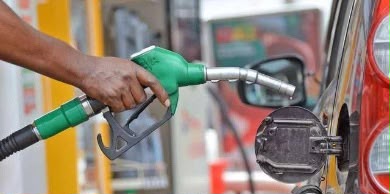
The Federal Government has announced a significant increase in domestic petrol production, revealing that local refineries are now producing about 48 million litres of petrol daily, compared to virtually no local production in 2023.
The Special Adviser to the President on Energy, Mrs. Olu Verheijen, disclosed this during the Nigerian-British Chamber of Commerce Energy Day 2026 held in Lagos.
Speaking on the theme, “Energy in Nigeria: From Potential to Reality,” Verheijen said the country has reached a major milestone, with most of the petrol consumed by Nigerians now being refined locally.
She explained that the growth in local refining has reduced the country’s dependence on imported fuel, easing pressure on foreign exchange demand and supporting the stability of the naira.
According to her, spending on petrol imports dropped sharply from about N2.3 trillion in the first quarter of 2025 to less than N90 billion within a year due to increased domestic refining capacity.
Verheijen noted that reducing fuel imports has helped conserve foreign exchange and strengthen the economy, adding that energy security and currency stability are closely connected.
She also highlighted improvements in crude oil production, stating that Nigeria’s crude oil and condensate output averaged 1.64 million barrels per day in 2025. The figure represents an increase of about 400,000 barrels per day compared to 2023 and marks the highest level of onshore production recorded in two decades.
Also see: Rivers Police Chief Orders Removal of Illegal Roadblocks
The presidential adviser further disclosed that international oil companies have completed divestments worth more than $4 billion, a development she said has increased indigenous participation in onshore operations while allowing major firms to focus on deep-water and gas projects.
Reflecting on the challenges inherited by the current administration in 2023, Verheijen said the oil and gas sector was burdened by unsustainable fuel subsidies, foreign exchange distortions, weak investment levels, and mounting debts in the power sector.
She explained that the government moved quickly to address these issues by removing fuel subsidies and implementing exchange rate reforms aimed at restoring confidence in the economy.
According to her, the reforms have yielded positive results, with total federation revenue rising from approximately N12 trillion in 2023 to about N21 trillion in 2024.
Despite the deregulation of the downstream sector, Verheijen said the government has successfully avoided the widespread fuel shortages and long queues that previously characterised petrol supply across the country.
She expressed confidence that ongoing reforms in the energy sector would continue to drive investment, boost production, and strengthen Nigeria’s economic growth.
