


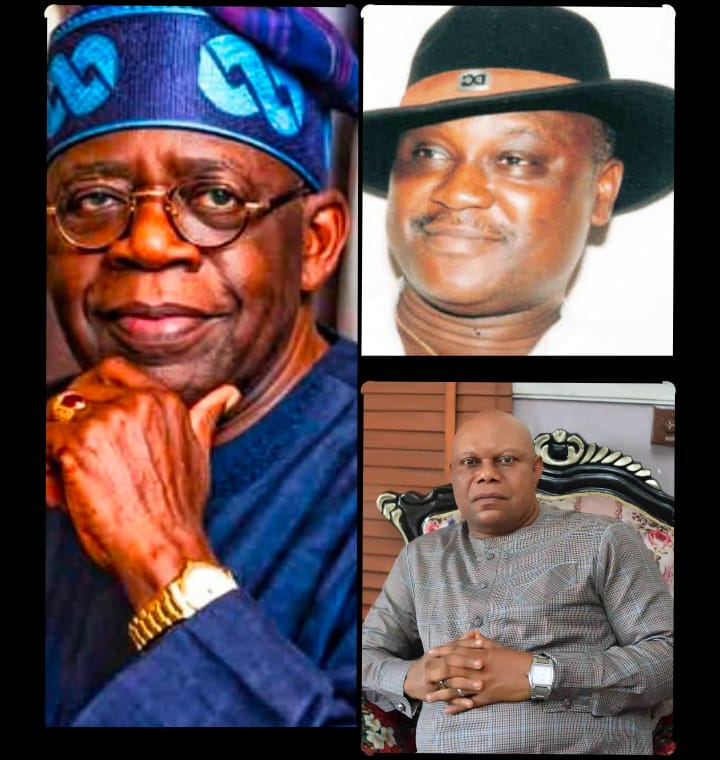
Reactions have continued to trail the Democracy Day address delivered by President Bola Ahmed Tinubu on June 12, with stakeholders expressing divergent views on the content and focus of the speech.
Some political actors who spoke with our correspondent in Port Harcourt, faulted the President’s address, arguing that it failed to adequately address the pressing challenges confronting Nigerians.
A former South-South Vice Chairman of the Labour Party and current Chairman of the South-South Democratic Movement, Prince Favour Reuben, said the speech did not reflect the realities facing citizens.
According to him, the President’s advisers have not provided the necessary guidance, alleging that the inner circle of this administration is filled with sycophants.
Reuben maintained that Nigeria is yet to practice true democracy, describing the current system as partly democratic governance and godfatherism.
“What we have in Nigeria is not pure democracy. It is partly democracy and partly godfatherism. What we are practicing is government of the godfather, by the godfather and for the godfather.”
He further explained that the South-South Democratic Movement was established as a pressure group to hold elected officials accountable and ensure they deliver dividends of democracy to the people.
Reuben criticized the performance of public office holders and interventionist agencies, particularly the Niger Delta Development Commission (NDDC), alleging that many communities in the region still lack basic amenities such as potable water, electricity, and jobs.
Speaking on the state of the nation, he expressed concern over rising insecurity, economic hardship, and the increasing cost of living, noting that fuel prices remain high while small businesses struggle to survive due to poor power supply.
He added that the President’s speech focused more on ceremonial issues rather than addressing urgent national concerns such as insecurity, inflation, and economic hardship.
“The government must prioritize the welfare of the people. Nigerians need security, stable electricity, and economic relief, not just political rhetoric,” he said.
Reuben also warned that growing hardship could trigger widespread protests if urgent steps are not taken to address citizens’ grievances.
Meanwhile, a former member of the House of Representatives and a chieftain of the All Progressives Congress (APC), Ogbonna Nwuke, viewed in it in a different perspective.
Nwuke explained that while Nigeria’s democracy has made progress since the annulment of the June 12, 1993 election won by late Chief M.K.O. Abiola, more work remains to be done.
He described Nigeria as one of Africa’s largest democracies and noted that the country has sustained uninterrupted civilian rule for over two decades, marking a departure from years of military governance.
According to him, the President’s Democracy Day speech was aimed at inspiring hope and reinforcing national unity despite prevailing economic and security challenges.
He, however, stressed that political leaders must make reasonable sacrifices to improve the living conditions of Nigerians.
“There is progress at the macro level, but the reality at the micro level is different. Nigerians expect to see improvements in their daily lives,” he said.
Nwuke urged the government to intensify efforts in tackling inflation, insecurity, and economic instability, noting that these issues remain critical to the country’s democratic development.
He added that while citizens are often called upon to make sacrifices, leadership must also demonstrate commitment by prioritizing policies that directly impact the welfare of the people.
