


More than 9.2 million Nigerians have benefited from the Federal Government’s Household Prosperity and Empowerment Cash Transfer Programme, with about 688 billion naira disbursed within two years.
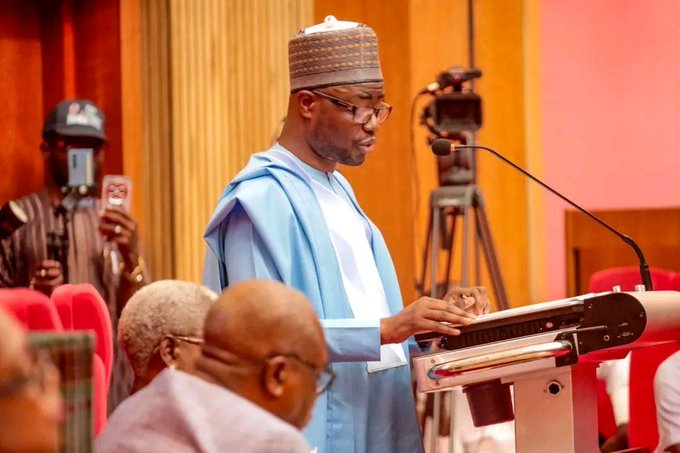
The Minister of Humanitarian Affairs and Poverty Reduction, Bernard Doro, disclosed this in Abuja during an update on the HOPE Cash Transfer programme.
The initiative, based on the National Social Register, is one of the government’s major social protection efforts to mitigate the impact of recent economic reforms on vulnerable households.
The programme is being implemented in partnership with key institutions, including the National Identity Management Commission, the National Social Safety Nets Coordinating Office, the National Cash Transfer Office, and the National Social Investment Programme Agency.
Doro explained that the initiative was introduced as a response to economic pressures affecting low-income households. He noted that each beneficiary receives seventy-five thousand naira in three instalments to support basic needs such as food, healthcare, and education.
According to him, over 9.1 million households have already received the first instalment of twenty-five thousand naira, showing the wide reach of the programme. He added that more than 7.2 million beneficiaries have received the second instalment, while over 6.4 million have received the third, with payments still ongoing across the country.
Also Read: http://Niger Delta Summit Targets $5bn Investment, 500,000 Jobs
He further stated that the intervention ran from November 2023 to February 2026 and requires beneficiaries to be registered and verified using either a National Identification Number or a Bank Verification Number to ensure accountability.
Providing a breakdown, the minister said women account for about 58.7 percent of beneficiaries, while men make up 41.3 percent, noting that empowering women strengthens families and communities.
Also speaking, the Director General of the National Identity Management Commission, Abisoye Coker-Odusote, said identity verification has improved transparency in the programme. She emphasised that identity provides access to opportunities, social protection, and full participation in national benefits.
She revealed that over 13.2 million records were submitted for verification, with about 11.8 million successfully confirmed, while others that failed verification have been reviewed with solutions provided. She added that an additional 3.1 million records are currently being processed.
The Minister of Information and National Orientation, Mohammed Idris, represented by Dr Suleiman Haruna, said the programme has brought relief to millions of Nigerians, especially those at the grassroots, by demonstrating government commitment to improving their welfare.
Similarly, the Minister of State for Humanitarian Affairs and Poverty Reduction, Yusuf Sununu, noted that the initiative is designed to stabilise vulnerable households and build resilience. He added that the use of digital payment systems and the National Social Register has improved transparency, targeting and financial inclusion.
Earlier, the Programme Manager of the National Cash Transfer Office, Abdullahi Alhassan, disclosed that the programme is funded through an 800 million dollar facility from the International Development Association of the World Bank. He also stated that the number of beneficiaries has been increased from 10.4 million to 15 million vulnerable Nigerians.
