


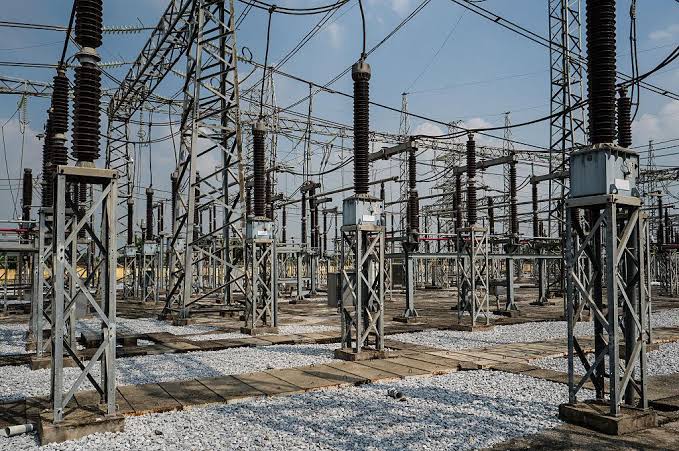
The FGN Power Company is targeting $20 billion in fresh investments to expand Nigeria’s electricity infrastructure and improve power supply, as the Federal Government disclosed that it has invested over N10 trillion in the sector since privatisation in 2013.
Managing Director and Chief Executive Officer of FGN Power Company, Kenny Anuwe, disclosed this at the 6th Annual Conference of the Power Correspondents Association of Nigeria (PCAN) in Abuja.
Anuwe said the company was seeking $1 billion in recapitalisation, with the Africa Finance Corporation (AFC) expected to provide a matching amount, while other financiers would contribute $18 billion to achieve the investment target.
He explained that the proposed funding would support investments across the electricity value chain, including generation, transmission and distribution, rather than flow directly into FGN Power Company.
He said the company was exploring blended financing and viability gap funding to attract private and institutional investors and reduce dependence on government guarantees and counterpart funding.
Meanwhile, the Minister of Power, Chief Joseph Tegbe, announced plans to establish pilot 24-hour electricity zones in Lagos-Ogun and Abuja, which collectively account for more than 50 per cent of national electricity demand.
Represented by his Special Adviser on Administration and Projects, Marrins Olajide, the minister said the initiative formed part of a four-pronged strategy covering grid stabilisation, sector liquidity, asset optimisation and grid expansion.
He identified three priority electricity corridors as Lagos-Ogun, Benin-Enugu-Port Harcourt and Abuja-Kaduna-Kano, noting that implementation would depend on technical readiness and commercial viability.
Read Also: okrika-communities-end-30-year-power-outage
Tegbe also disclosed that President Bola Tinubu had approved a N3.3 trillion plan to settle verified legacy debts owed to electricity generation companies, with N1.23 trillion already raised.
He said the intervention had eased financial pressure on power generators and improved their capacity to pay for gas and maintain their plants.
The minister further revealed that more than 15,000MVA of transmission capacity had been added to the national grid between 2023 and October 2026, while over 2.8 million electricity customers had been metered under the Presidential Metering Initiative.
He added that construction had commenced on a new National Grid Control Centre in Osogbo to replace the existing facility, which is more than 60 years old.
On infrastructure development, Anuwe said FGN Power was implementing a $2.3 billion project portfolio under the Presidential Power Initiative, comprising $1.3 billion in European financing and $1 billion from China.
The projects are expected to add 5,540 megawatts of transmission capacity and improve grid reliability by at least 60 per cent by 2029.
Anuwe, however, warned that government investment alone could not meet Nigeria’s growing electricity infrastructure needs, calling for improved regulations, predictable policies and commercially viable projects to attract private capital.
Earlier, PCAN Chairman, Obas Esiedesa, said Nigeria’s ambition of building a $1 trillion economy by 2030 depended heavily on reliable electricity supply.
He urged the government and relevant stakeholders to address recurring power generation challenges, particularly between November and March, when reduced water inflows affect hydroelectric plants and gas supply constraints affect thermal stations.
Esiedesa also identified inadequate transmission and distribution infrastructure, liquidity challenges, and regulatory uncertainty as major obstacles to electricity sector growth.
He called for stronger coordination among government, regulators, generation companies and gas suppliers to ensure sustainable electricity supply across the country.
