


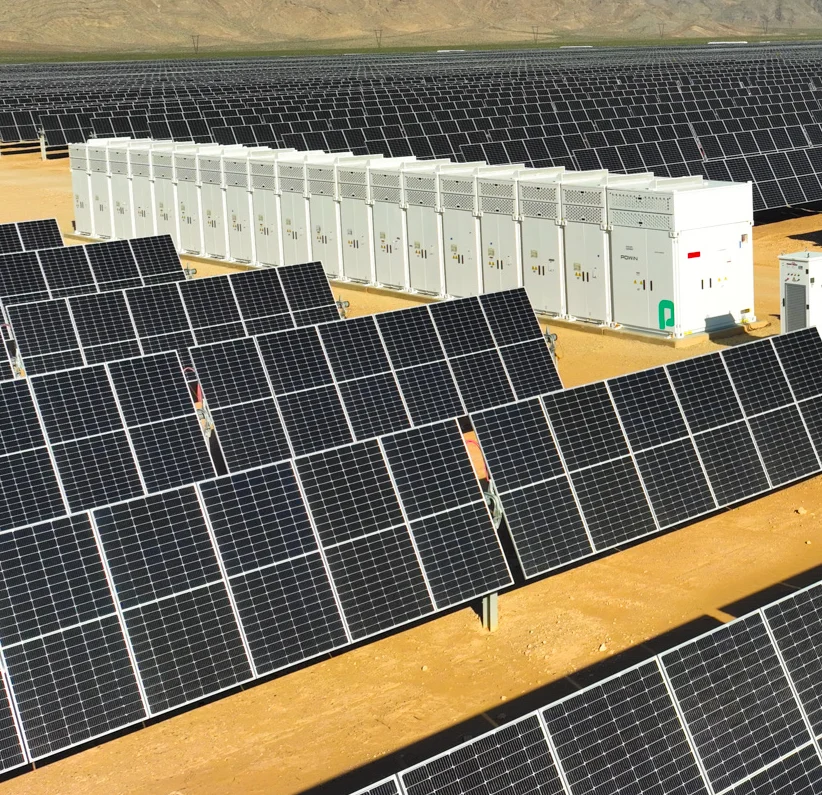
Capital expenditure on solar and onshore wind projects in emerging and developing markets is projected to reach $356 billion by 2040, as rising demand for clean energy creates fresh investment opportunities, according to Rystad data.
The outlook comes amid growing interest in renewable energy investments, although high financing costs and concerns over credit risks continue to slow project development across many emerging economies.
The International Energy Agency (IEA) estimates that renewable energy could account for 42 per cent of electricity generation in emerging and developing countries by 2030 under its base-case scenario, requiring an additional 3,251 gigawatts (GW) of capacity.
Under an accelerated scenario, net renewable energy additions could exceed 4,000 GW. Global installed electricity capacity from all sources stood at 10,195 GW in 2025.
The IEA also projects that emerging and developing economies will need to invest $300 billion annually in grid infrastructure to accommodate rising electricity demand and new renewable energy capacity.
However, the high cost of capital remains a major barrier, as investors demand higher returns to compensate for perceived financing, operational, and political risks.
The weighted average cost of capital (WACC), which measures the cost of financing projects through debt and equity, reflects the extent of the challenge. The IEA estimates that the average WACC for large solar photovoltaic projects in major emerging economies was up to twice the level recorded in advanced economies between 2015 and 2024.
Credit risk, particularly the possibility of borrowers defaulting on loans, is another factor driving up financing costs.
Read Also: nigerias-power-market-leaves-n387bn-in-unpaid-electricity-bills
A 2025 analysis by the Organisation for Economic Co-operation and Development (OECD) found that 80 per cent of rated African countries were classified as high-risk or very-high-risk borrowers, partly reflecting concerns about the availability of reliable information for assessing investment risks.
However, data from the Global Emerging Markets Risk Database (GEMs), established by the European Investment Bank and the International Finance Corporation, suggest that perceived risks may exceed actual lending losses.
The database, which draws on more than 30 years of lending records from multilateral development banks and development finance institutions, found that private-sector loans in emerging markets recorded an average lending spread of 377 basis points between 2006 and 2025.
Over the same period, the average realised loss rate was 90 basis points, leaving a 287-basis-point difference between lending margins and actual losses.
The findings suggest that investors may be pricing emerging-market risks higher than the losses lenders ultimately experience.
GEMs data also showed that private-sector borrowers in emerging markets recorded default probabilities comparable to those in advanced economies, while recovery rates were higher than expected.
For renewable energy projects, loans provided to more than 804 private entities across 159 countries between 1994 and 2025 recorded an average default rate of 2.61 per cent and a recovery rate of 71.8 per cent.
Regionally, renewable energy projects in the Middle East and North Africa recorded the lowest default rate at 0.17 per cent, while Sub-Saharan Africa posted the highest recovery rate among emerging and developing regions at 87.5 per cent.
A separate Moody’s assessment of green loans also indicated that emerging and developing economies performed slightly below advanced economies in recovery rates. However, a smaller group of countries outside the European Economic Area and OECD recorded lower default rates on green loans than advanced economies.
The findings highlight the importance of reliable credit-risk data in correcting investment perceptions, reducing financing costs, and unlocking capital for renewable energy development across emerging markets.
