


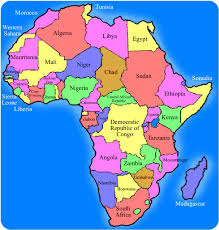
Every day, sparks of counter narratives prop up to question most of the general assumptions we have about Africa and the black race in general.
Botswana developed a policy that taught the world how to avoid the resource curse, and countries like Norway adopted it, turning the idea into a $2 trillion sovereign wealth stash.
At a time most state-owned airlines were struggling to break even, and apostles of neo liberal market economies were busy promoting privatisation of everything that has breath as the only available option for survival, mass-marketing their anti-state capitalism mantra. Ethiopian Airlines came up with something totally different.
They launched a hybrid commercial-state model which is 100% owned by the Ethiopian government via the Ethiopian Investment Holdings sovereign wealth fund, yet it runs with the total autonomy, financial discipline, and profit-driven focus of a private enterprise.
The guys at Wall Street launched at them and prophesied doom, but the people at Addis Ababa remained focused with skin in the game.
Today, not only is Ethiopian Airlines Africa’s largest and most consistently profitable carrier, but its growth is sustainable because it is built on self-sufficiency rather than subsidy.
And its model has been copied by other state-owned airlines and scaled to tremendous levels like Emirates, Qatar, Etihad, amongst others. It has evolved from a modest regional operator into a global aviation group serving over 160 destinations across five continents.
In the past eight years alone, passenger numbers rose 80%, cargo surged 97%, and annual revenue climbed 120%. For the 2025/26 fiscal year, it carried 20.7 million passengers and generated $9.1 billion in revenue.
The strategies behind this performance are deeply institutional. Ethiopian has cultivated a leadership pipeline that promotes from within, ensuring continuity and deep operational knowledge at every level.
The Airline’s multi-hub strategy, such as the partnership with ASKY in Lomé, covers West Africa; that of Malawi Airlines in Lilongwe and Zambia Airways in Lusaka is fast-growing to take care of Southern Africa.
And the one with Air Congo in Kinshasa has extended its reach into the heart of the continent without the capital burden of wholly owned subsidiaries.
Most critically, Ethiopian invested early in self-reliance: its in-house MRO facility, established in 1957, is Africa’s largest, and its Aviation University trains pilots, technicians, and managers at scale.
Ethiopians showed their technical know-how and dexterity during the COVID-19 shutdown by converting 25 passenger aircraft into freighters within weeks, posting profits in 2020, 2021, and 2022 while well-known global airlines burned through reserves and sacked workers.
When the talks of building one of the world’s largest aviation hubs came up, other countries, including Nigerians, were comparing our aviation infrastructure investment with what Ethiopia was doing at the Bishoftu mega-hub.
I laughed louder and told them to stop comparing Apples and Oranges; they didn’t understand me.
I did not know how to educate them on the fact that Ethiopian Airlines funds 30% of the $12.5 billion Bishoftu mega-hub from internal resources, diversifying remaining financing across multiple geopolitical blocs to avoid single-source dependency.
How do you want to compete with them when you are borrowing?
This is an airline that is self-funding its fleet renewal strategy. The first includes 20 Boeing 787-9s on order, aligning growth with operational efficiency rather than volume alone.
With Vision 2035 targeting 271 aircraft and $29 billion in revenue, Ethiopian’s trajectory is not merely ambitious; it is underwritten by eight decades of building the capabilities that make ambition executable.
When it comes to human capital development, Ethiopian Airlines has quietly become the aviation world’s executive nursery such that wherever airlines seem to be in trouble with making huge losses, and in need of a miracle, they dial Addis Ababa.
For example, Tewolde Gebremariam, who was CEO of Ethiopian for over a decade, was just tapped by Air India to steer its turnaround after record losses.
It was Pakistan Airlines that first announced its intention to get him, but Air India acted faster.
Also Read: http://Four Suspected Criminals Confess to Robbery, Murder in Rivers
Girma Wake, the airline’s former architect, was summoned by Uganda’s President to rescue Uganda Airlines from governance chaos.
And beyond these headline grabs, former Ethiopian Airlines management staffers now run ASKY in Togo, Malawi Airlines, and Zambia Airways.
Ethiopians are exporting aviation management talent worldwide, not just in Africa.
Unfortunately, when the Nigerian government had the opportunity to get Ethiopian Airlines to help Nigeria launch a national carrier, “Nigeria happened” to that idea by pushing deceit first; they spurned such a great opportunity with their corrupt mindset.
It was like that proverbial saying in Igbo that someone was given the chance to go into a barn filled with livestock and take whatever catches his fancy, but he chose a He-Goat. That is how Nigerian leadership thinks.
So why are Ethiopian Airlines managers so adept at turning bad situations around?
The Airline grew into Africa’s largest and most profitable carrier without government subsidies or fat-cat allowances, forcing executives to master cost discipline and route economics the hard way.
They developed customized curricula at its Aviation University, which churns out not just pilots but leaders who understand the entire ecosystem, from maintenance to catering.
That is why when a struggling airline needs someone who has already solved fleet scheduling, labor training, and yield management in a brutal environment, an Ethiopian-trained executive isn’t a gamble. It is a pattern.
Kelechi Deca
