


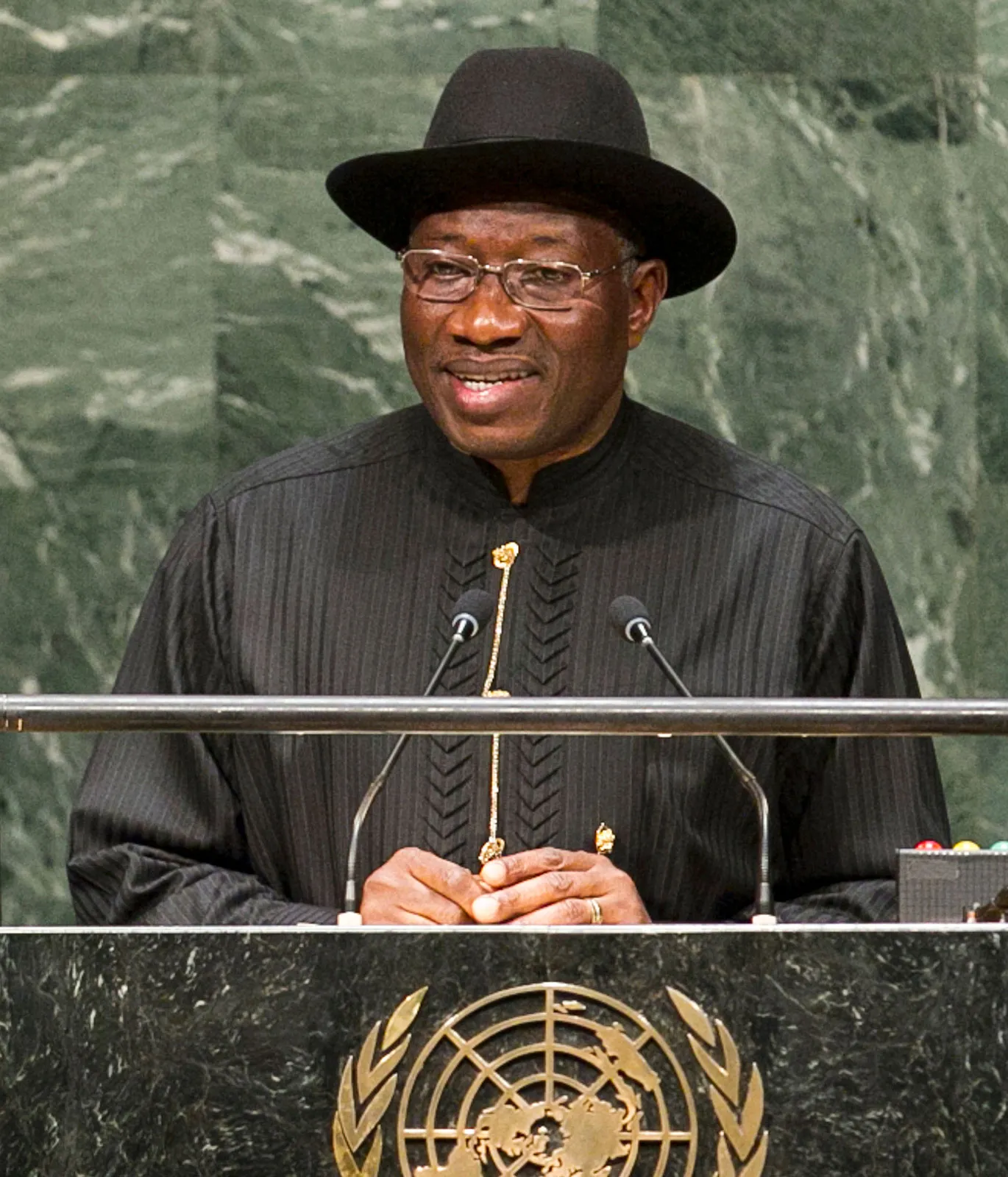
Former President Goodluck Jonathan has called on Nigerian politicians to put the country’s interests above party loyalty and ethnic or regional considerations, stressing that Nigeria is bigger than any political party or individual.
He also urged leaders to promote national unity, strengthen democratic institutions and demonstrate greater commitment to good governance. He said former deputy governors had an important role to play in national development by using their experience to guide the country’s political leadership.
Jonathan made the call on Tuesday at the 5th National Conference of the Forum of Former Deputy Governors of Nigeria in Abuja.
Represented by former Adamawa State Deputy Governor Bala Ngilari, the former president warned that ethnic, religious and regional divisions remained major challenges to Nigeria’s political development.
Jonathan, who served as deputy governor and governor of Bayelsa State before becoming vice-president and president, said his experience in public office had taught him the value of consultation, teamwork and strong institutions.
He urged former deputy governors to encourage healthy working relationships between serving governors and their deputies, mentor younger politicians and discourage politics that promotes division.
According to him, political positions are temporary, but the decisions taken by those who occupy them can affect generations. He therefore urged former public office holders to guide emerging leaders towards integrity, accountability and responsible leadership.
The former president expressed confidence in Nigeria’s future, citing the resilience and creativity of its people, particularly young Nigerians. He said the country’s youth needed the right opportunities to work, innovate and achieve their potential.
Also speaking at the conference, former Kano State Governor, Dr Abdullahi Ganduje, called on Nigerians to embrace their diversity and build a stronger national identity, warning that ethnic-based politics continued to hamper nation-building.
Ganduje, the immediate past national chairman of the ruling All Progressives Congress, traced Nigeria’s challenges with national integration to its colonial history but acknowledged the contributions of First Republic politicians to the country’s independence struggle.
He also criticised the lack of continuity between successive administrations, noting that disagreements between serving governors and their predecessors often resulted in the abandonment of projects and programmes.
According to him, such practices undermine sustainable development, while continuity allows governments to consolidate existing achievements and pursue long-term progress.
Ganduje also expressed concern about the strength of democratic institutions, including the judiciary, and questioned how meaningful judicial reforms could be achieved.
He further called for greater recognition of deputy governors’ contributions to governance, arguing that they should not be treated merely as replacements for governors.
In his remarks, former Delta State Governor, Ifeanyi Okowa, said the growing gap between government policies and the everyday experiences of citizens had weakened public confidence in government.
Okowa maintained that nation-building required a social contract based on accountability, inclusion and shared responsibility between leaders and citizens.
He added that many Nigerians increasingly felt disconnected from government because their expectations and aspirations were not being adequately addressed.
