


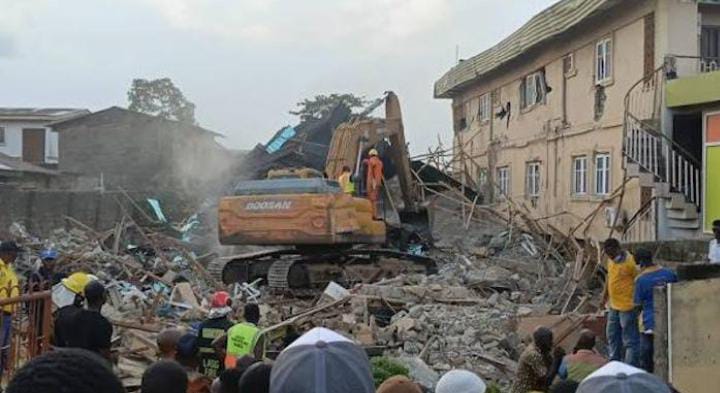
The Rivers State Government’s move to inspect ageing buildings in Port Harcourt has brought renewed attention to the safety of structures that have stood for decades across the city.
The exercise, which follows the reported collapse of part of a two-storey building on Club Road in Old Port Harcourt Township, raises an important question about how many buildings in the city remain safe for residents, tenants and business owners.
The government’s inspection exercise reportedly began in Diobu, with plans to extend the assessment to other parts of Port Harcourt. The objective is to identify buildings that may pose safety risks and determine where urgent intervention is needed.
For a city where many people depend on rented accommodation and commercial properties for their daily activities, the inspection is more than a routine government exercise. It is an opportunity to address concerns about building maintenance, structural integrity and the enforcement of safety regulations.
Ageing buildings are not necessarily dangerous simply because of how long they have existed. Their safety depends on factors such as construction quality, maintenance, exposure to environmental conditions and whether previous structural problems have been properly addressed. However, where inspections are neglected, signs of deterioration can go unnoticed until a building failure puts lives at risk.
The challenge for the Rivers State Government will be to ensure that the exercise goes beyond identifying old structures. Buildings found to be unsafe will require proper technical assessments, clear safety notices and appropriate action to protect occupants. Property owners must also be held responsible for maintaining their buildings in line with established safety requirements.
For residents, the exercise could provide reassurance, particularly in older neighbourhoods where buildings accommodate families, shops and other businesses. However, any decision to evacuate occupants must also consider the immediate housing and livelihood difficulties that affected residents may face.
The current exercise is therefore an important step, but its real value will depend on what follows. Residents need to see that dangerous buildings are identified early, property owners comply with safety requirements and government agencies consistently enforce the rules.
