


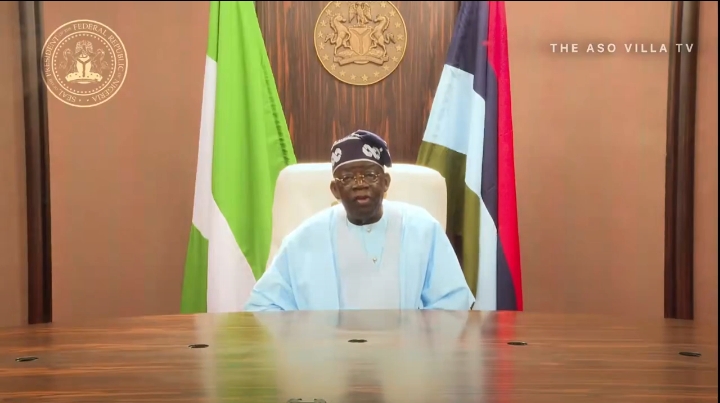
President Bola Ahmed Tinubu has defended his administration’s economic reforms, describing them as difficult but necessary steps toward building a stronger and more prosperous Nigerian economy.
Tinubu made the remarks in his 2026 Independence Day address to Nigerians on Thursday, October 1, as the country marked its 66th anniversary of independence.
Reflecting on Nigeria’s journey since independence, the President acknowledged the country’s history of civil war, military rule, economic crises, insecurity and political upheavals, but said Nigeria had continued to endure because of the resilience of its people.
He commended farmers, traders, teachers, young entrepreneurs and members of the Armed Forces and security services for their contributions to the country’s development and security.
According to Tinubu, Nigeria’s independence was about more than achieving sovereignty, arguing that the founding fathers envisioned a country where citizens would have the freedom to shape their own destiny and enjoy greater opportunity, dignity and prosperity.
The President, however, said the country had reached a critical economic point by 2023, with poverty rising and public confidence severely tested.
He likened Nigeria’s economic situation to that of a patient diagnosed with cancer, saying difficult treatment was necessary if the underlying problem was to be addressed rather than merely managed.
“We chose to excise the cancer,” Tinubu said, referring to the reforms implemented by his administration.He acknowledged that the reforms had produced significant difficulties for Nigerians, describing their effects as real and painful, but maintained that the measures were aimed at addressing longstanding structural weaknesses in the economy.
Tinubu argued that the reforms did not create Nigeria’s economic problems, but were introduced to confront what he described as longstanding distortions.He criticised previous approaches that, in his assessment, relied on unsustainable arrangements while postponing difficult economic decisions.
The President also rejected calls for a return to what he described as “addictive subsidies,” urging Nigerians to remain committed to the reform process despite the difficulties associated with it.
He said the administration was determined to continue along the path of reform, arguing that abandoning the process because of its immediate challenges could undermine efforts to achieve sustainable economic growth and prosperity.
IneThe President concluded by calling on Nigerians to remain focused on building a nation capable of providing opportunity, dignity and a better quality of life for present and future generations.
