


The Federal Government may spend about N2tn on electricity subsidies in 2026 as it maintains that there are no immediate plans to increase electricity tariffs.
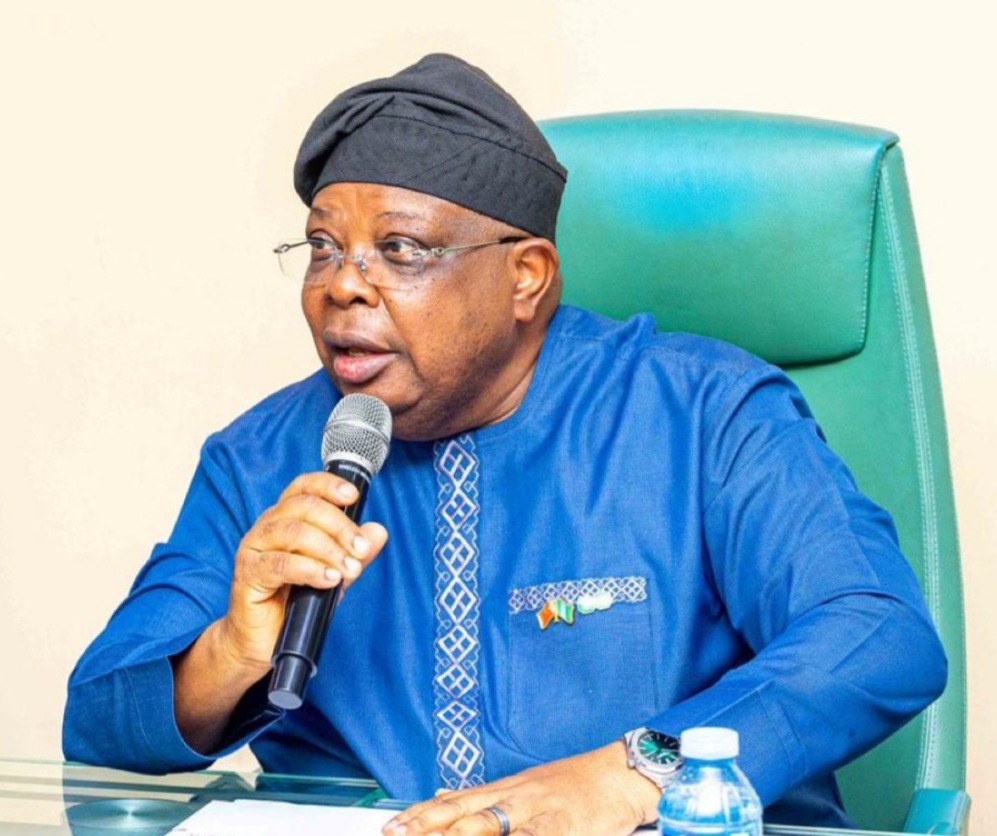
The Minister of Power, Joseph Tegbe, disclosed the government’s position on Monday in Abuja during a media parley marking his first 100 days in office.
“There are no immediate plans to increase electricity tariffs. Our goal is to build a commercially viable power sector while protecting vulnerable consumers,” Tegbe said.
The minister’s position comes against the backdrop of the N1.93tn electricity subsidy incurred by the Federal Government in 2025, according to the Nigerian Electricity Regulatory Commission’s 2025 Annual Report.
NERC said the subsidy obligation accounted for 57.44 per cent of the total Nigerian Bulk Electricity Trading invoice during the year, averaging N160.69bn monthly.
According to the commission, the subsidy arose because approved electricity tariffs remained below cost-reflective levels, leaving the Federal Government to cover the resulting shortfall.
“In the absence of cost-reflective tariffs, the government undertakes to cover the resultant gap (between the cost-reflective and allowed tariff) in the form of tariff subsidies,” NERC stated.
The regulator added that the government’s subsidy obligation reached N1.93tn in 2025 because cost-reflective tariffs were not applied across all electricity distribution companies.
With the government maintaining its position against an immediate tariff increase, the subsidy burden could remain around the N2tn mark in 2026. The government’s subsidy obligations had also approached N2tn in 2024 and 2025 despite the introduction of the Band A to E tariff structure in 2024.
While Band A customers generally pay tariffs closer to the cost of supplying electricity, customers in other bands continue to benefit from government subsidies.
The development has also raised concerns among power producers, who have questioned whether the Federal Government’s N4tn Presidential Power Sector Debt Reduction Programme will adequately address the liquidity crisis in the sector.
The Association of Power Generation Companies warned that additional liabilities estimated at more than N7tn could accumulate before the debt-reduction programme is fully implemented.
The association said it was not opposed to the government’s plan to raise bonds to settle outstanding obligations but argued that the initiative would not provide a lasting solution as new debts continue to accumulate across the electricity value chain.
APGC Chief Executive, Joy Ogaji, said monthly shortfalls in payments by distribution companies and other market participants were adding to the sector’s liabilities.
Read Also: petroan-orders-nationwide-checks-of-fuel-dispensing-meters
“The N4tn legacy debt is until December 2024. So, how about the accumulation for 2025? And what is already accumulated for 2026?” Ogaji asked, questioning how the government planned to prevent fresh debts from undermining the debt-reduction programme.
She also urged the Federal Government to adopt a more sustainable approach to electricity subsidies, arguing that the current arrangement lacks corresponding budgetary provisions.
According to Ogaji, the government should determine the level of subsidy it can afford and make explicit budgetary provisions for it instead of maintaining a broad subsidy regime that contributes to rising debts across the electricity value chain.
Speaking on his first 100 days in office, Tegbe said the administration was working to address the sector’s long-standing debt, revenue leakages, metering deficiencies and infrastructure challenges.
He said the period, covering June 8 to September 16, had focused largely on diagnosing problems across the electricity value chain, stabilising existing infrastructure and restoring discipline in the electricity market.
According to the minister, gas supply to power plants had been constrained by damaged pipelines and commercial conditions that discouraged investment. He added that ageing equipment, deferred maintenance and stalled projects had also prevented available generation capacity from reaching consumers.
Tegbe further disclosed that generation companies were receiving only 27 per cent of their bills, a situation he said had weakened their ability to maintain power plants and meet payments to gas suppliers.
“When President Bola Tinubu entrusted me with the responsibility of serving as Minister of Power, I made four promises to Nigerians. I promised a disciplined approach to solving the sector’s problems. I promised to pursue grid stability through structured, strategic reforms. I promised visible incremental improvements,” he said.
The minister said the government’s assessment revealed challenges across every segment of the electricity value chain, from gas supply and generation to transmission and distribution.
He added that transmission infrastructure was under pressure from vandalised towers and lines, overstretched equipment and frequent system failures.
NERC explained in its 2025 report that, under the existing subsidy framework, the government covers the difference between cost-reflective and approved electricity tariffs.
The regulator said the subsidy is applied to the generation costs payable by distribution companies to NBET, while the portion of generation costs not covered by the DisCos is invoiced to the Federal Ministry of Finance for settlement.
According to NERC, the framework was introduced partly to prevent unpaid subsidy obligations from accumulating on the balance sheets of distribution companies and limiting their ability to secure financing for critical network investments.
The N1.93tn subsidy obligation recorded in 2025 underscores the financial cost of maintaining electricity tariffs below the cost of supplying power.
In 2026, the government’s decision not to immediately increase tariffs means it will continue to shoulder a significant portion of electricity costs while pursuing measures aimed at improving revenue collection, infrastructure, gas supply, and overall service delivery.
