


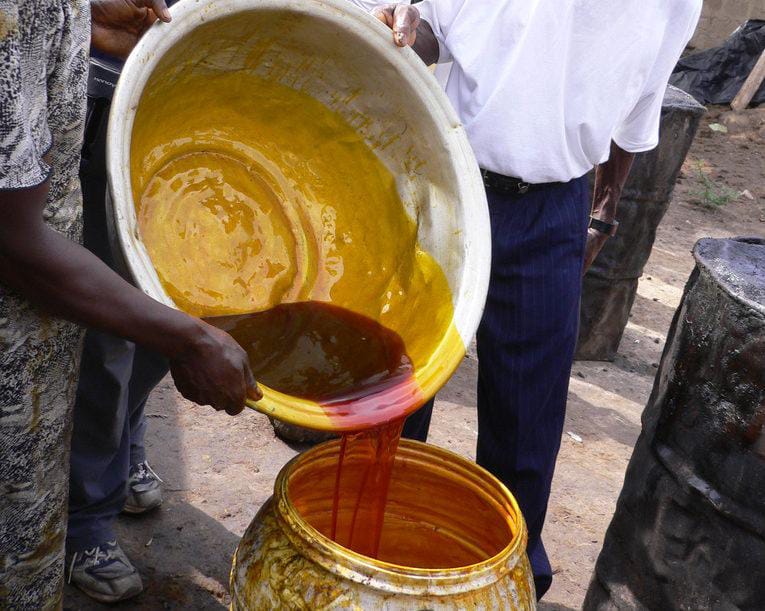
For generations, palm oil has been one of the easiest things to recognise in a Nigerian kitchen. Its deep native flavor, familiar aroma and rich taste have made it almost impossible to confuse with anything else.
Now, Nigerians are looking at their palm oil a little differently, and some are even conducting experiments before allowing it anywhere near their pots.
The renewed concern over adulterated palm oil began after a viral video appeared to show a man adding colouring to palm oil to make it look richer and more attractive. The video triggered outrage online, with health professionals warning that consumers could unknowingly be buying oil containing substances never meant to be eaten.
Then came Aproko Doctor. The popular Nigerian medical doctor and health communicator brought the matter even closer to home by demonstrating ways consumers could check suspicious palm oil. His message quickly travelled across social media, turning what would ordinarily be a routine market purchase into a mini science experiment. Nigerians have clearly been paying attention.
His video on identifying fake palm oil has recorded more than a million views on X showing just how much the issue has struck a nerve with consumers.
Now, what exactly are Nigerians supposed to be looking for?
Genuine palm oil naturally gets its characteristic colour from pigments in the palm fruit. Extremely unusual colour, suspicious texture, an abnormal smell or oil that leaves an intense dye-like stain can raise questions. Some reports have also highlighted palm oil that appears unusually bright or sticky as possible warning signs.
Also see: Rivers Police Dismiss Three Officers Over Obodo’s Killing
Aproko Doctor’s viral demonstration has also encouraged people to try the water test at home. The basic idea is simple: place a small quantity of palm oil in water and observe how it behaves. However, this should not be treated as a definitive laboratory test. Some adulterants, particularly oil-soluble dyes, may not be exposed by a simple water experiment.
That distinction matters because the internet has a way of turning a useful tip into a supposed scientific law overnight.
The bigger issue, however, is not whether every unusually red bottle of palm oil is fake. It is whether consumers can trust what they are buying.
Reports have raised concerns about traders adulterating palm oil to increase volume, reduce production costs or make lower-quality oil appear more attractive. Health officers have particularly warned about the use of unsafe industrial dyes, some of which may pose serious health risks.
That is why the palm-oil conversation has moved beyond social media jokes and kitchen experiments.
For many Nigerians, the frightening part is the thought that something as ordinary as buying a bottle or keg of red oil could require detective work. The oil meant to give a pot of soup its signature colour may itself be the thing consumers need to investigate.
For now, the safest approach is simple: buy palm oil from trusted sources and be suspicious of products with unusual characteristics.
Because apparently, in 2026 Nigeria, before asking whether your palm oil will make your soup delicious, you may first have to ask a more serious question: Is this actually palm oil?
