


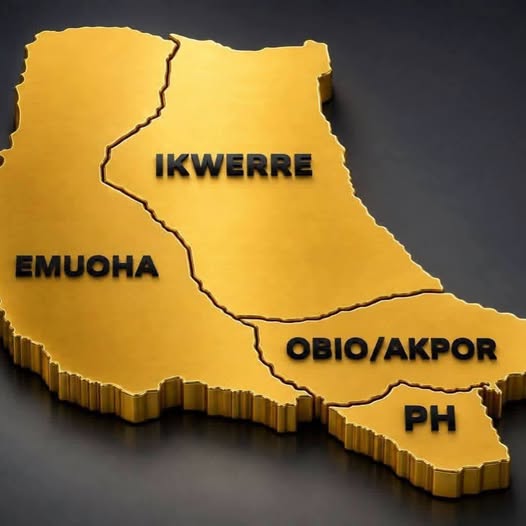
Journalist and social critic, Onyeche Wofurum Igwe, has rejected claims that the Ikwerre people are of Igbo origin, describing such assertions as an attempt to distort the history and identity of the Ikwerre ethnic nationality.
Wofurum, in a commentary titled “Ikwerre Is Not Igbo,” argued that Ikwerre remains a distinct ethnic group with its own history, cultural identity, traditional institutions and socio-political structures.
He maintained that the presence of Igbo families in some Ikwerre communities should not be interpreted as evidence of an Igbo origin, noting that some Igbo settlers entered Ikwerre communities through trade, labour, slavery and subsequent assimilation.
According to him, descendants of some of these settlers became integrated into Ikwerre society through adoption and residence while still retaining knowledge of their ancestry.
Wofurum argued that historical accounts should be based on credible evidence and long-standing oral traditions rather than what he described as politically motivated narratives.
He said research into the origins of the Ikwerre people points to migration from different directions, including Benin through Ekpeye, as well as Izon, Abua and other areas.
The writer acknowledged the considerable influence of Igbo culture on Ikwerre society, particularly in language, dressing and social practices. However, he argued that cultural influence resulting from prolonged interaction does not necessarily determine ethnic identity.
Wofurum attributed part of the linguistic and cultural influence to historical interactions, including the presence of Igbo teachers in Ikwerre schools who introduced Igbo orthography and instructional materials.
He cited what he described as “Cultural Osmosis,” a process through which the culture of a dominant group can gradually influence or replace aspects of a less dominant culture.
He further argued that the level of Igbo linguistic influence differs across Ikwerre communities, with areas farther from Igbo-speaking neighbours retaining fewer Igbo lexical borrowings.
Also Read: http://Top FMCG Firms Boost Earnings by 35% Despite Stagnant Topline Growth
The writer also referred to the 1928 Obio Intelligence Report, which he said documented the settlement of Aros in parts of Obio following invitations by Ikwerre communities to assist with arbitration and conflict resolution.
According to him, some of the Aros were allocated land to establish shelters for ease of access to communities, while subsequent intermarriages contributed to further cultural exchange and assimilation.
Wofurum maintained that linguistic similarities alone cannot conclusively determine ethnic identity, pointing to examples of communities that have lost aspects of their original language after prolonged interaction with neighbouring groups.
He also recalled historical developments during the colonial and pre-Civil War periods, when people of Igbo origin occupied administrative and traditional positions in parts of Ikwerre territory, which he said further increased Igbo cultural influence.
Citing the account of late Elder Monday Wehere, Wofurum alleged that several streets and communities in Rebisi and Diobu were renamed using Igbo names during the period of the old Eastern Region.
He said some Ikwerre communities subsequently reverted to their original names after the Civil War, although several street names remain unchanged.
Wofurum concluded that historical interaction, assimilation and cultural borrowing should not be used to erase the distinct identity of the Ikwerre people.
He maintained that Ikwerre has its own genealogy, cosmology, traditions and socio-political institutions and should therefore be recognised as a distinct ethnic nationality.
Onyeche Wofurum Igwe, also known as Humble Lion, is a journalist, social critic, human rights crusader and Publicity Secretary of the Iwhuruohna Journalists Forum (IJF). He writes from Port Harcourt.
