


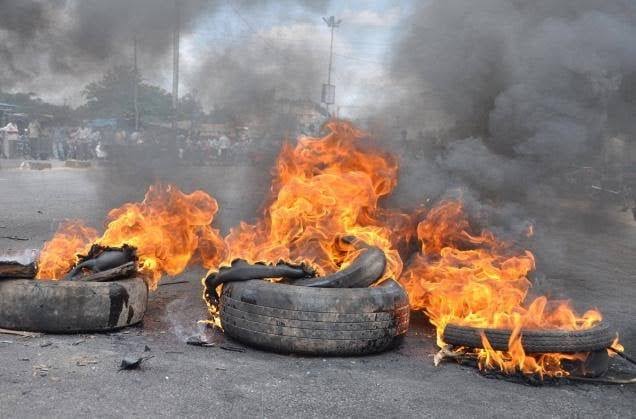
There was no courtroom, no investigation and no verdict, only an accusation and a crowd willing to turn that accusation into a death sentence.
The recent killing of 25-year-old University of Jos graduate, Ibrahim Pilasar Mbaya, has once again brought Nigeria’s troubling culture of jungle justice into sharp focus. Mbaya was allegedly beaten to death in Jos on July 26 after he was accused of stealing an iPhone. The phone was reportedly never found in his possession.
According to the Police, information about the assault reached the police after a Good Samaritan reported that an unconscious young man had been taken to the Hospital. Mbaya was later confirmed dead. Police investigations led to the arrest of four suspects, while two others were still being sought as of the latest update.
The details are disturbing not only because a young man lost his life, but because the allegation against him never went through the process that separates suspicion from guilt. There was no police investigation before the assault, no opportunity for the accused to explain himself and no judicial determination of guilt. A crowd effectively assumed the roles of investigator, prosecutor, judge and executioner.
That is the central danger of jungle justice in Nigeria: it turns an allegation into a punishment before the truth has had a chance to emerge.
Mbaya’s death is not an isolated incident. Barely weeks earlier, Aliyu, a young man, was reportedly killed by a mob after being falsely accused of kidnapping a child. The incident, like many others before it, raised questions about the ability of security agencies to protect people accused of crimes from violent crowds.
The recurrence of such incidents suggests that jungle justice is no longer simply a reaction to individual criminal allegations.
Also see: Power Shortage Linked to Nigeria’s Population Growth
Nigeria’s justice system certainly has its weaknesses. Criminal investigations can be slow, court cases can drag on for years, and many Nigerians have legitimate concerns about policing and access to justice. But those failures cannot give citizens the authority to decide who lives and who dies. If anything, the weaknesses in the justice system make due process more important, not less.
The danger becomes even greater in the age of social media. An accusation can now spread across WhatsApp groups, TikTok, Facebook or X within minutes, often long before facts are established. A photograph, a video or an unverified claim can be enough to attract an angry crowd. In some cases, the rush to record and share violence appears to compete with the instinct to save a life.
Following Mbaya’s death, the National Association of University Students launched a nationwide campaign against jungle justice and urged students to report suspicious activity to security agencies rather than taking matters into their own hands. The group also warned against filming or livestreaming violent incidents instead of seeking help.
The message is particularly important for Nigeria’s tertiary institutions, where several cases of mob violence have involved students or young people. Universities should be environments where evidence, reasoning and accountability are encouraged. When allegations of theft or other offences are met with beatings and killings, it exposes a disturbing gap between education and civic responsibility.
There is also a serious legal consequence for those who participate. Jungle justice does not become lawful because several people commit it together. A person accused of stealing remains entitled to due process, while those who assault or kill that person can themselves face criminal prosecution. This distinction must become clearer in public consciousness: justice is not punishment without trial.
Most importantly, Nigerians must resist the temptation to confuse anger with justice. The lives lost cannot be undone by the arrest of suspects or by public outrage after the fact. What can still be changed is what happens the next time an allegation is made in a market, on a street, on a campus or anywhere else in the country. Nigeria cannot build a society governed by law while allowing the crowd to decide guilt.
