


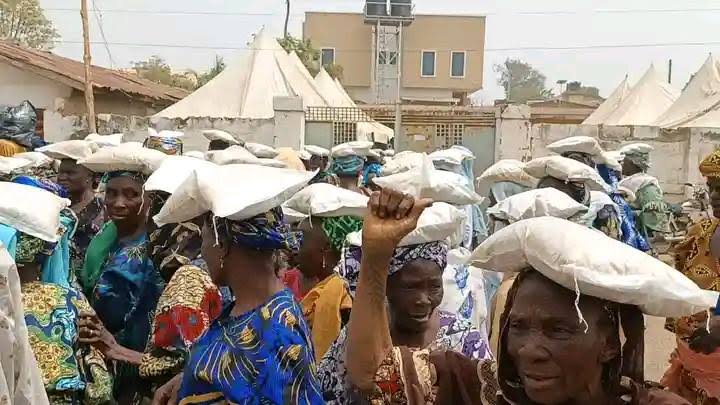
Nigeria’s election season has increasingly become a theater of deception, where politicians re-emerge as actors armed with sacks of rice and recycled promises. For years, citizens have witnessed the same pattern: leaders vanish after campaigns, only to resurface when elections approach, dangling inducements as bait.
This cycle of manipulation insults the intelligence of the electorate and reduces democracy to a mere transaction. Recently, I came across a video of an angry citizen lamenting that the last time he saw his representatives was during the 2022 campaign. Now, with elections drawing near, he warned t
hat they would soon remember where they got their votes from and that he would be waiting. His frustration is not isolated; it echoes the sentiments of millions who feel abandoned by leaders who only reconnect when power is at stake. Across the country, empowerment programmes and palliative distributions have become spectacles tied to electoral calculations. In Owerri, members of the Village Boys Movement disrupted an empowerment event, scattering the exercise and carting away as many items as they could carry while organisers fled.
Such incidents reveal both the desperation fueled by poverty and the opportunism that often defines election periods. In other areas, palliatives were packaged in boxes associated with fasting periods, raising questions among citizens: why now, and not earlier? Why only when votes are needed? Perhaps the most glaring example of this hypocrisy is the widespread distribution of rice. Reports indicate that rice was distributed nationwide during Ramadan and Lent under government-backed initiatives.
News: Committee Applauds RIVCHPP for Service Delivery
While presented as humanitarian support, the timing suggests political intent. In some cases, beneficiaries were reportedly asked to present voter identification before receiving aid. This reduces citizens to bargaining chips, trading their democratic rights for temporary relief. Yet, a critical question remains: can a sack of rice sustain a citizen for four years? The answer is obvious, but the practice persists because politicians assume hunger can override accountability.
Election campaigns also bring a surge of exaggerated promises. Politicians pledge to build airports in rural communities and transform villages into global cities. They visit grassroots communities, sharing meals and portraying themselves as relatable figures. These performances are often short-lived. Once elections are over, the promises disappear, leaving behind unmet expectations and disillusionment. What is presented as governance is, in reality, carefully staged deception.
More troubling is the rise of threats and intimidation within the political space. Some individuals have openly warned politicians against entering certain states, a dangerous development that undermines democratic principles. Security agencies must act decisively to curb such trends, as politics should be driven by ideas, service, and accountability not fear. Despite this troubling landscape, there are signs of growing awareness among citizens. In places like Kano, some residents have openly rejected the distribution of rice and other inducements. I
n one instance, a young teacher who refused such items reportedly faced suspension, yet his stance reflects a shift in public consciousness. Nigerians are beginning to question the culture of inducement and demand accountability beyond election cycles. This awakening suggests that the electorate may no longer be willing to exchange their votes for short-term benefits. Democracy cannot thrive on handouts; it depends on trust, performance, and consistent leadership.
As campaigns intensify, the real question is whether politicians will abandon these outdated tactics or continue to rely on them. Nigerians deserve more than seasonal gestures and symbolic distributions. They deserve leaders who engage with them consistently, address their needs sincerely, and govern with integrity throughout their tenure not just on the eve of elections.
